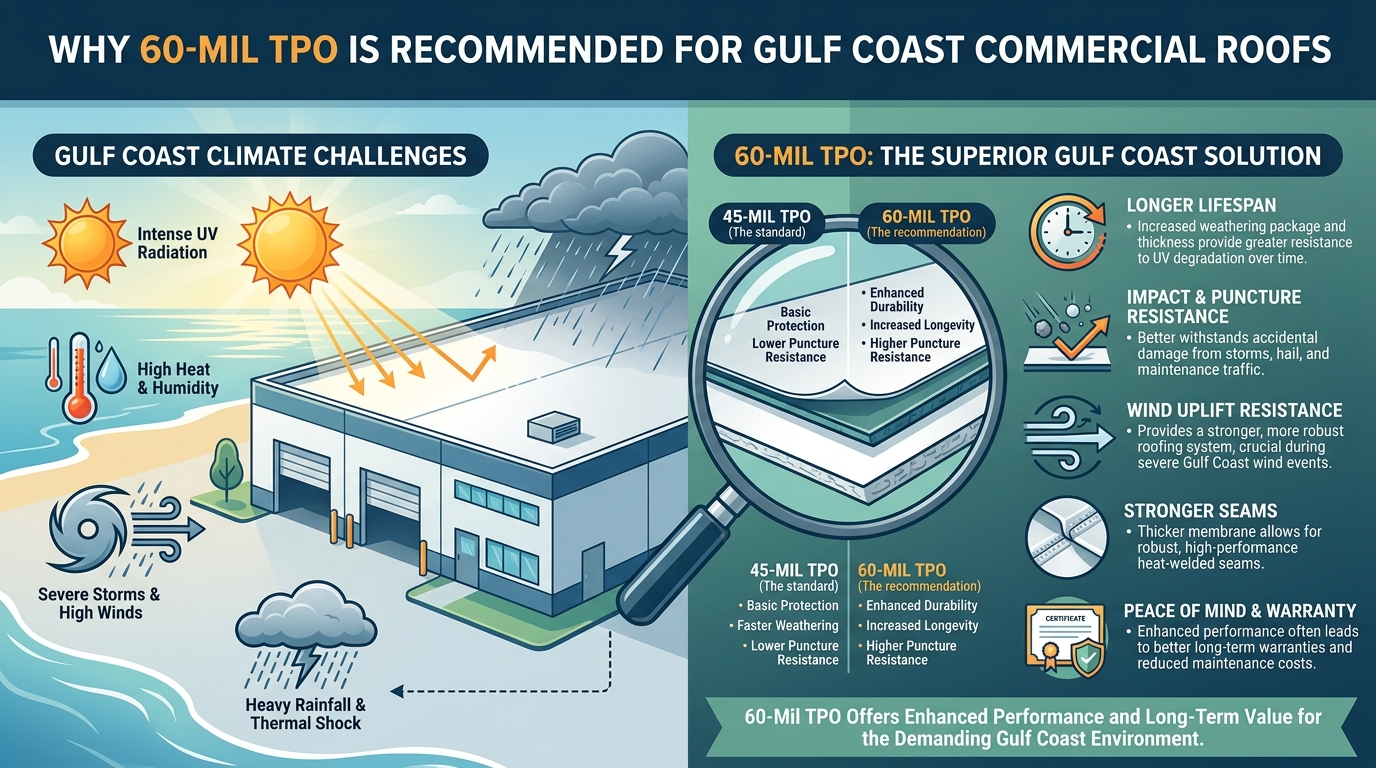
If you own or manage a commercial property anywhere along the Gulf Coast, 60-mil TPO roofing is the minimum thickness roofing professionals consistently recommend for your climate. The combination of hurricane-force winds, intense UV exposure, high humidity, and frequent heavy rain events makes this region one of the most demanding environments a flat or low-slope roof will ever face. A 60-mil TPO membrane is engineered to handle all of it without giving out prematurely.

What “60 Mil” Actually Means and Why It Matters Here
A mil is one-thousandth of an inch. So a 60-mil TPO membrane measures 0.060 inches thick, roughly the thickness of a credit card. That extra material compared to a standard 45-mil sheet is not just padding. It translates directly into stronger puncture resistance, better tear strength at seams, and a thicker top-ply layer that shields the reinforcement scrim from UV degradation, thermal cycling, and physical abuse.
In a quality 60-mil membrane, the top performance layer, the side of the membrane exposed to the elements on the rooftop, can be manufactured at 30 mils thick, providing enhanced durability that thinner options simply cannot match.
For Gulf Coast building owners, that top-ply thickness is everything. When rooftop surface temperatures climb above 160°F during a Texas or Louisiana summer, it is the top-ply that takes the punishment. A thicker layer means slower UV-driven degradation and a longer service life before cracking, shrinkage, or seam failure becomes a concern.
As one of the leading providers of commercial roofing in Houston, we have seen firsthand how membrane thickness determines whether a roof survives storm season intact or requires emergency attention shortly after.
The Gulf Coast Climate Demands More Than a 45-Mil Membrane
A 45-mil TPO membrane works perfectly well in mild climates with low foot traffic and minimal weather stress. The Gulf Coast is not that environment.
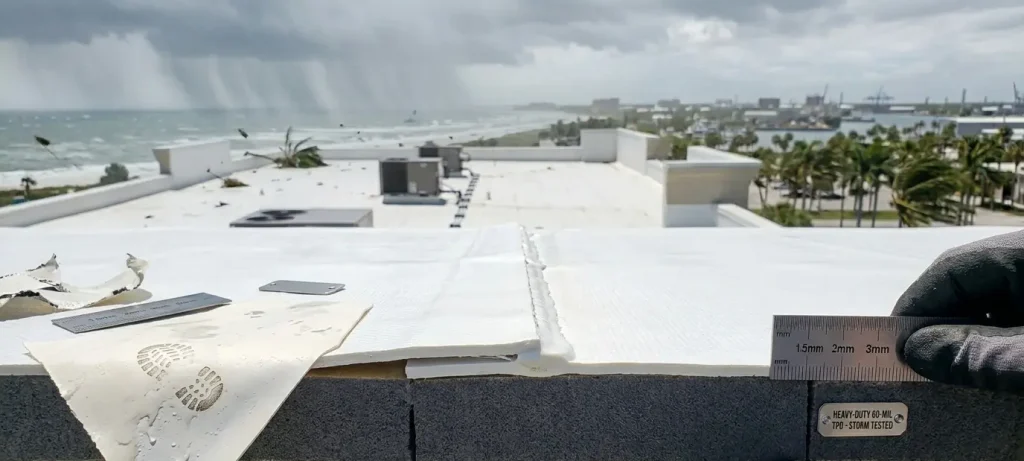
Here is what commercial roofs in Houston, Beaumont, Corpus Christi, New Orleans, Mobile, and Pensacola deal with regularly:
Tropical storms and hurricane-force wind uplift
When sustained winds exceed 100 mph, seam integrity becomes the single most critical performance factor on a commercial roof. Heat-welded TPO seams are 3 to 4 times stronger than glued seams, and when a Gulf Coast hurricane hits a building with 100-plus mph winds, seam strength is not a technicality. It is the difference between a roof that holds and one that fails. A thicker 60-mil membrane gives those heat-welded seams more material to bond through, resulting in a stronger, more wind-resistant connection.
Prolonged UV and heat exposure
In hot, sunny climates or regions with dramatic seasonal changes, the 60-mil membrane generally offers greater long-term performance than thinner alternatives due to improved resistance to UV degradation, which is a key factor in TPO aging.
Heavy rainfall and ponding water
Gulf Coast storms can dump several inches of rain in a matter of hours. Roofs that drain slowly or have low spots develop ponding conditions that accelerate membrane deterioration. A 60-mil system provides a meaningful buffer of extra thickness to resist the constant hydrostatic pressure these conditions create.
Flying debris and rooftop foot traffic
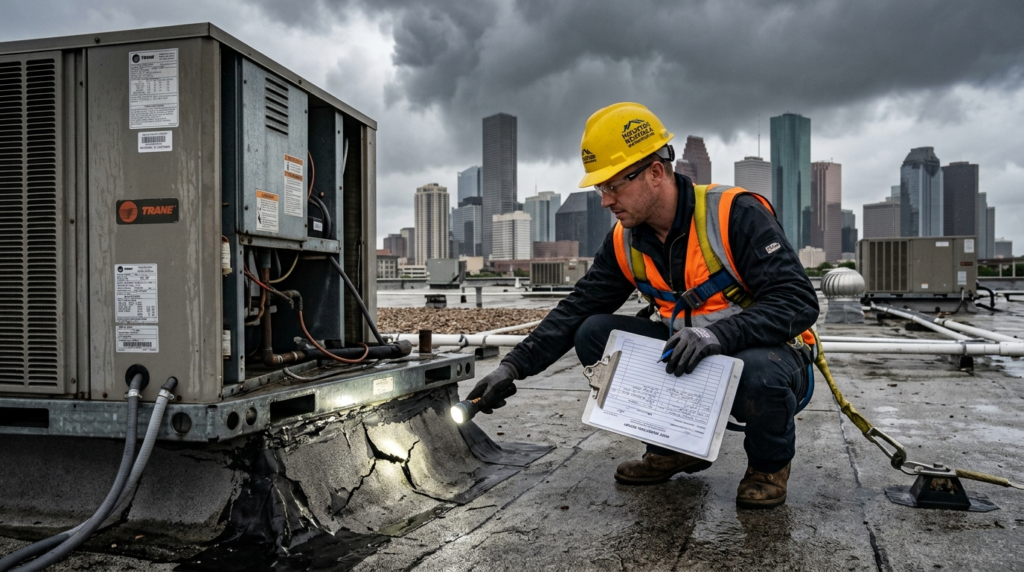
HVAC units, exhaust fans, and rooftop equipment are standard on commercial buildings. Service personnel access these systems regularly. 60-mil membranes are frequently recommended for roofs with foot traffic, maintenance access, or higher hail exposure, as the added thickness improves durability without a dramatic increase in weight or stiffness.
60-Mil TPO vs. 45-Mil TPO: A Practical Comparison for Gulf Coast Properties
Many building owners ask whether the cost difference between a 45-mil and 60-mil system is actually justified. On the Gulf Coast, the answer is straightforward.
Most manufacturers rate 45-mil systems with warranties of 10 to 15 years, while 60-mil membranes often come with warranties of 20 years or more, depending on installation quality and environmental factors. When you factor in the cost of a premature commercial roof replacement, disruption to your business operations, and potential interior water damage, the upfront investment in a 60-mil system pays for itself multiple times over.
A reflective 60-mil TPO system can also cut cooling bills by 10 to 20 percent. On a 20,000-square-foot building with $30,000 in annual air conditioning costs, that translates to $3,000 to $6,000 in savings each year, or $60,000 to $120,000 over 20 years. For Gulf Coast building owners running facilities year-round in extreme heat, that energy savings figure alone often justifies the upgrade from 45-mil to 60-mil.
How 60-Mil TPO Performs Against Other Single-Ply Roofing Systems
When building owners in coastal markets compare roofing membranes, the conversation usually comes down to TPO, EPDM, and PVC. If you want a deeper breakdown of how these systems stack up across multiple performance categories, our guide on TPO vs. EPDM vs. PVC for Houston commercial buildings walks through the full comparison.
60-Mil TPO vs. EPDM
EPDM is a synthetic rubber membrane that has served commercial buildings well for decades. However, its predominantly black surface absorbs solar heat rather than reflecting it. In Gulf Coast climates where rooftop temperatures regularly exceed 150 to 160°F, a black membrane increases the heat load on the building envelope significantly. White 60-mil TPO roofing reflects that solar energy away from the building, reducing mechanical cooling demand throughout the long summer season.
EPDM also relies on adhesive or tape at seam connections, while TPO uses heat welding. Heat-welded seams resist wind uplift significantly better than EPDM’s glued seams, an advantage that has been documented across hundreds of post-hurricane inspections in Gulf Coast markets.
60-Mil TPO vs. PVC
PVC is TPO’s closest competitor in the single-ply market and offers similarly strong heat-welded seams. The main difference is cost. TPO offers reflective performance comparable to PVC at a significantly lower price point, which is why it now leads the single-ply commercial roofing market. For Gulf Coast building owners looking for hurricane resistance, UV reflectivity, and long-term value, 60-mil TPO roofing delivers PVC-level performance without the premium price tag.
Energy Efficiency: The Hidden Advantage of White 60-Mil TPO on the Gulf Coast
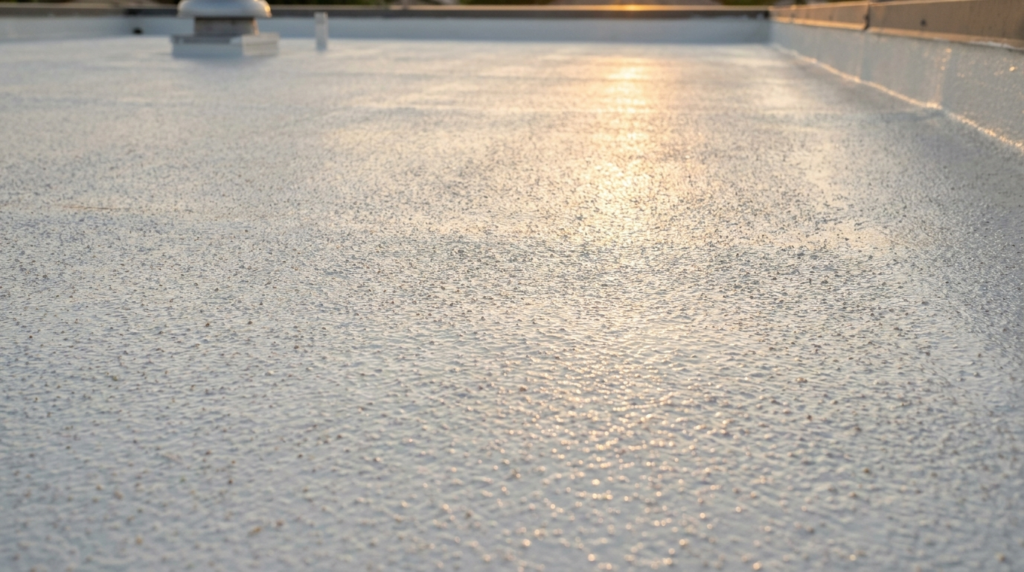
Due to the unique nature of TPO roofs being available in white, the most popular color choice, they are highly resistant to heat and UV rays compared to traditional black roofs, which reduces the energy required to keep the building cool.
White TPO membranes achieve some of the highest solar reflective index ratings available in the commercial roofing industry. This directly reduces the urban heat island effect that intensifies summer temperatures in densely developed Gulf Coast cities. For building owners pursuing LEED certification or complying with local energy codes, a white 60-mil TPO system is one of the most straightforward paths to meeting those requirements.
White TPO meets general industry radiative performance standards for LEED certification and can be used to comply with energy performance codes in applicable jurisdictions.
It is also worth noting that combining 60-mil TPO with a high-performance commercial roof coating system can extend the membrane’s reflective life and add a weatherproofing layer, particularly useful in coastal environments with salt-air exposure.
Installation Methods That Maximize 60-Mil TPO Performance in Coastal Conditions
The membrane itself is only part of the equation. How a 60-mil TPO system is installed determines whether it reaches its full performance potential during a storm event. Proper commercial roof installation by a certified crew makes the difference between a roof that performs for 25 years and one that develops seam failures within five.
- Fully Adhered System:
The membrane is bonded to the insulation board across the entire roof surface using bonding adhesive. This method eliminates the air channels that form under mechanically attached systems, which can create wind-driven pressure differentials during hurricanes. For Gulf Coast roofs in high-wind zones, a fully adhered 60-mil TPO assembly is the gold standard.
- Mechanically Attached System:
Fasteners secure the membrane in rows, with overlapping seams heat-welded on top. This method is cost-effective and widely used but requires careful engineering to meet local wind uplift codes in hurricane-prone markets.
- Fleece-Backed TPO:
Some 60-mil membranes are manufactured with a polyester fleece backing that improves adhesion performance and dimensional stability. This variation performs particularly well in high-heat environments where standard adhesives can soften.
Regardless of attachment method, seam quality is non-negotiable. All seams must be hot-air welded using calibrated automated welding equipment, with seam width meeting manufacturer specifications. A failed seam in a 100-mph storm does not care how thick the membrane is.
What to Look for in a 60-Mil TPO Roofing System: A Buyer’s Checklist
Before signing a contract for a commercial TPO roof replacement on the Gulf Coast, verify the following with your roofing contractor:
- The specification calls for a minimum 60-mil membrane, not 45-mil.
- The membrane meets ASTM D6878, the industry standard for TPO roofing performance.
- The over-scrim thickness, meaning the material above the reinforcement fabric, is clearly stated in the product spec sheet.
- The system includes proper polyisocyanurate or coverboard insulation underneath the membrane.
- Wind uplift ratings meet or exceed local building code requirements for your specific wind zone.
- The warranty covers both materials and labor for at least 20 years.
- The contractor is certified by the membrane manufacturer and trained in automated seam welding.
- We serve commercial properties across the Houston metro and surrounding Gulf Coast markets. Visit our service areas page to confirm coverage for your location and get a project-specific recommendation.
How 60-Mil TPO Compares to Modified Bitumen on Older Gulf Coast Buildings
Many older commercial buildings in Houston and along the Gulf Coast were originally built with modified bitumen roofing systems, which use asphalt-based membranes applied in multiple layers. If your building currently has a modified bitumen roof approaching the end of its service life, understanding how it compares to a modern 60-mil TPO system will help you make a more informed replacement decision. Our blog post on modified bitumen roofing and whether it is right for Houston businesses covers this comparison in full detail.
The short version is that while modified bitumen offers proven durability in multi-layer assemblies, it lacks the energy-reflecting performance of white TPO and generally requires more intensive maintenance over time in high-UV coastal environments. For most Gulf Coast commercial building owners replacing an aging mod-bit system today, a properly specified 60-mil TPO assembly is the stronger long-term investment.
Long-Term Maintenance for 60-Mil TPO Roofs in the Gulf Coast Region
A properly installed 60-mil TPO roofing system is designed for long-term durability, but no commercial roof is maintenance-free. TPO roofs last an average of 15 to 20 years and upwards of 30 years when installed and maintained properly.
After any major storm event, schedule a professional commercial roof repair inspection to check seams, flashings, and field membranes for impact damage or uplift. Clear all drains and scuppers before hurricane season to prevent the ponding that accelerates membrane wear. Install walkway pads in high-traffic zones near HVAC equipment to protect the membrane from repeated foot traffic damage. Keep a photographic maintenance log that documents the roof condition over time, as this protects your warranty and gives you documentation in the event of an insurance claim following a storm.
FAQs.
Is 60-Mil TPO Roofing Required by Code on the Gulf Coast?
No single code mandates 60-mil TPO by name, but Gulf Coast wind uplift requirements under FM Global and ASCE 7 standards effectively make it the minimum viable thickness for coastal commercial roofs. Most licensed contractors will not spec anything thinner than 60-mil in high-wind zones across Texas, Louisiana, and Florida.
How Long Does a 60-Mil TPO Roof Last in Gulf Coast Conditions?
A properly installed 60-mil TPO roof lasts 20 to 30 years on the Gulf Coast with routine maintenance and annual inspections. Without maintenance, that lifespan drops to 12 to 15 years regardless of membrane thickness.
What Is the Cost Difference Between 45-Mil and 60-Mil TPO Roofing?
Upgrading from 45-mil to 60-mil TPO typically adds $0.50 to $1.50 per square foot to material costs. On a 10,000-square-foot roof, that is roughly $5,000 to $15,000 more upfront, but most Gulf Coast building owners recover that difference within three to five years through energy savings and avoided storm repair costs.
Can 60-Mil TPO Withstand Gulf Coast Hurricane Winds?
Yes. A fully adhered 60-mil TPO system with heat-welded seams and proper edge metal detailing can meet the wind uplift ratings required in Gulf Coast high-wind zones. Heat-welded TPO seams are 3 to 4 times stronger than the glued seams used in competing membrane systems like EPDM.
Does 60-Mil TPO Roofing Qualify for Energy Star or LEED Credits?
Yes. White 60-mil TPO membranes meet Energy Star cool roof requirements and qualify for LEED credits due to their high solar reflective index rating. The reflective white surface reduces cooling loads on the building, which is the core requirement for both certifications.
Conclusion
Gulf Coast commercial roofs operate in one of the most weather-intensive environments in North America. Between hurricane season, relentless UV exposure, high humidity, and heavy seasonal rainfall, the roofing system protecting your building needs to be engineered for those exact conditions. For coastal properties, a 60-mil minimum is the right call.
If your commercial building currently has an aging 45-mil system or a roof membrane approaching the end of its rated service life, now is the time to act before the next storm season arrives. Contact our Houston commercial roofing team for a Gulf Coast roof inspection and a detailed specification tailored to your building’s exact needs.