A small puncture in a commercial roof membrane may not look serious at first. However, even a tiny opening can allow rainwater to enter the roofing system. Over time, moisture can damage insulation, weaken roof components, and create leaks inside your building.
Roof membrane punctures are a common concern for commercial buildings with flat and low-slope roofing systems. They can result from dropped tools, foot traffic, storm debris, maintenance work, or damage from rooftop equipment.
For Houston property owners, identifying these problems early is especially important. Heavy rainfall and severe storms can expose small membrane defects and turn them into expensive roofing problems. This guide explains how to spot roof membrane punctures, what causes them, how professionals repair them, and how to prevent future damage.
What Is a Roof Membrane Puncture?
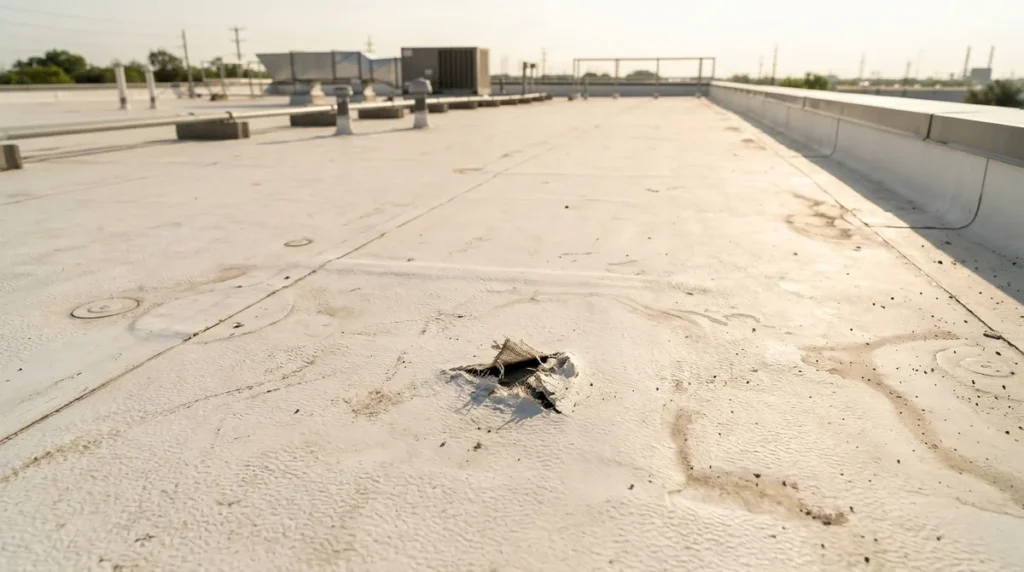
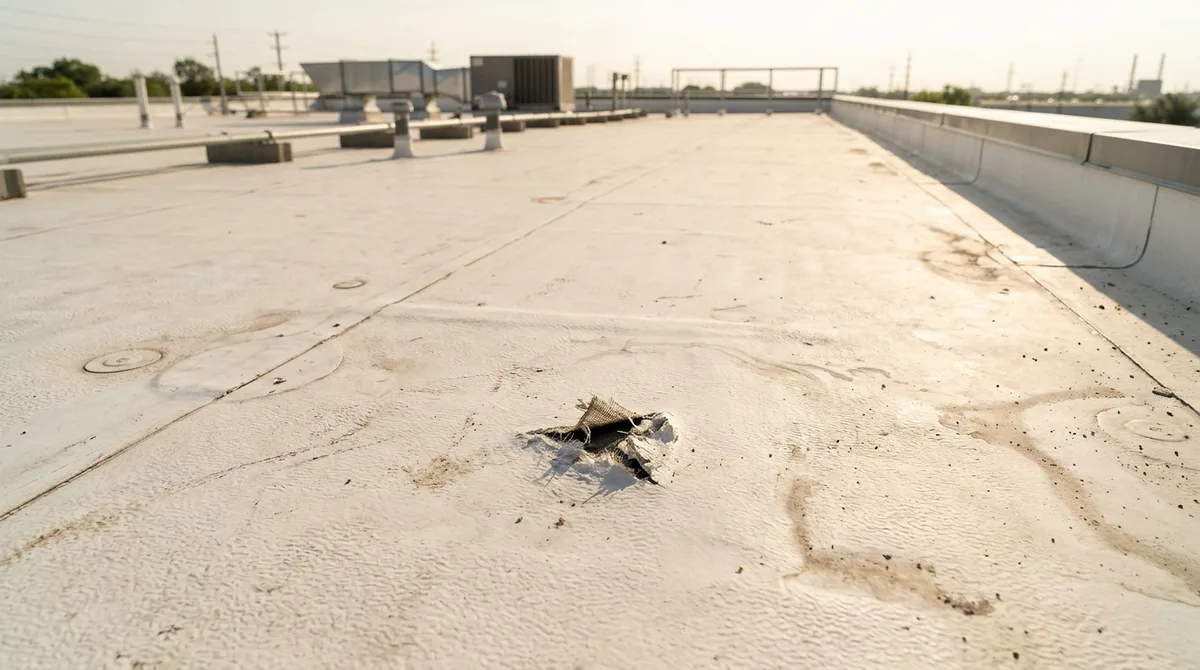
A roof membrane puncture is a hole or penetration in the waterproof surface of a commercial roofing system. It occurs when an object or external force breaks through the membrane and compromises its ability to keep water out.
Commercial roofing membranes are designed to protect the building from rain, moisture, and environmental exposure. However, they can still suffer physical damage during installation, maintenance, inspections, or everyday building operations.
Some punctures are easy to see. Others may be small enough to go unnoticed during a quick roof inspection.
Even when a puncture does not cause an immediate interior leak, water can enter the roof assembly and spread beneath the membrane. This makes early identification and proper repair important.
What Causes Roof Membrane Punctures?
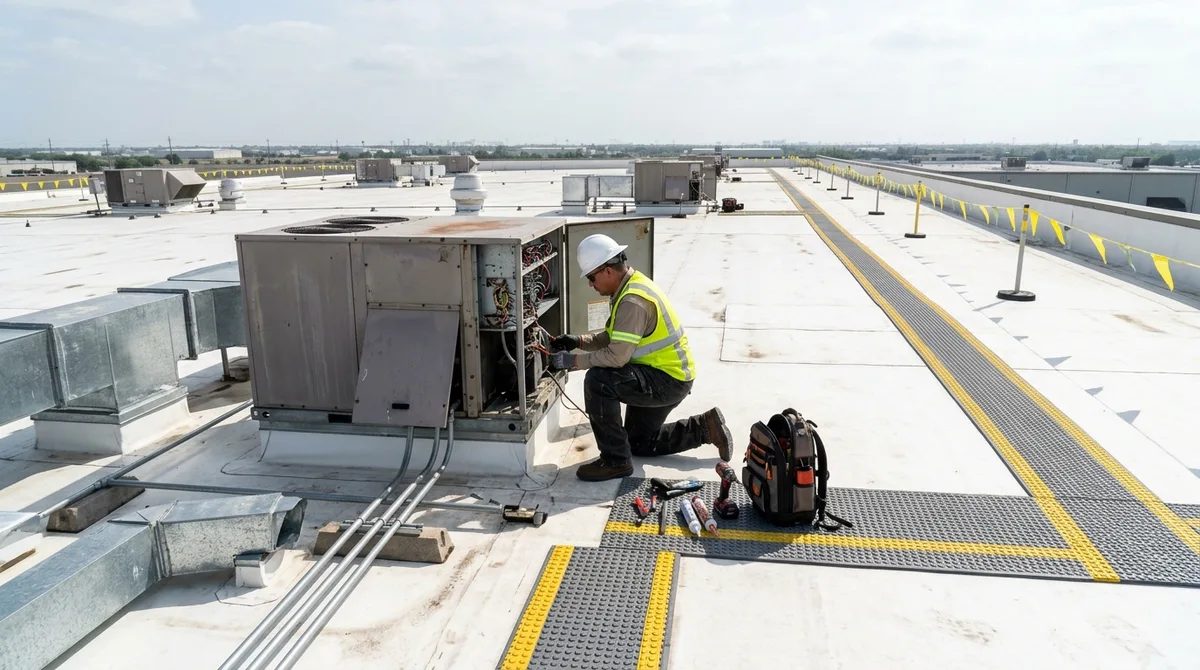
Several factors can damage commercial roofing membranes. Understanding the common causes can help building owners reduce unnecessary roof damage.
1. Foot Traffic on Commercial Roofs
Commercial roofs often provide access to HVAC equipment, ventilation systems, electrical components, and other rooftop installations. Maintenance workers and contractors may need to walk across the roof regularly.
Repeated foot traffic can damage membrane surfaces, especially around equipment and access routes. Sharp objects on footwear or debris beneath someone’s shoes can also cause punctures.
Areas with frequent maintenance activity deserve particular attention during roof inspections.
2. Dropped Tools and Equipment
Maintenance work is another common source of membrane damage. Tools, screws, metal parts, and equipment can fall onto the roof surface and create holes or cuts.
Even a small screw or sharp metal object can penetrate a roofing membrane under the right conditions. Damage may occur during HVAC servicing, electrical work, plumbing repairs, or other rooftop activities.
Contractors should use suitable protective measures when working around commercial roofing systems.
3. Storm Debris and Hail
Houston experiences thunderstorms, heavy rainfall, and occasional severe weather. During storms, branches, loose building materials, and other airborne debris can strike commercial roofs.
Hail can also damage some roofing materials, depending on its size, impact force, and the condition of the existing roof system.
After significant storms, property owners should check for visible membrane damage, displaced materials, and signs of water intrusion.
4. Rooftop Equipment and HVAC Maintenance
HVAC units, pipes, conduits, and other rooftop equipment create areas where maintenance activity is concentrated.
Moving equipment, dragging materials, or placing heavy objects directly on the membrane can cause cuts, punctures, or abrasion. Poorly supported equipment can also create pressure points that damage the roof surface.
Protective walkways and suitable equipment supports can help reduce this risk.
5. Improper Installation or Previous Repairs
Poor workmanship can leave a commercial membrane vulnerable to premature damage. Inadequate detailing, incompatible materials, and improperly completed repairs may create weak areas.
A previous repair can also fail if the surface was not properly prepared or the patch was not compatible with the existing membrane.
When a puncture appears near an older repair, a contractor should inspect the surrounding area rather than simply covering the visible opening.
6. Aging and Deteriorating Roofing Materials
Roof membranes experience ongoing exposure to sunlight, heat, moisture, and temperature changes. Over time, some materials may lose flexibility or develop surface deterioration.
An older or weakened membrane may become more vulnerable to physical damage. A small impact that would not affect a newer system may create a tear or opening in a deteriorated one.
If punctures continue appearing in different areas, the roof may need a broader condition assessment.
How to Spot a Puncture in a Commercial Roof Membrane
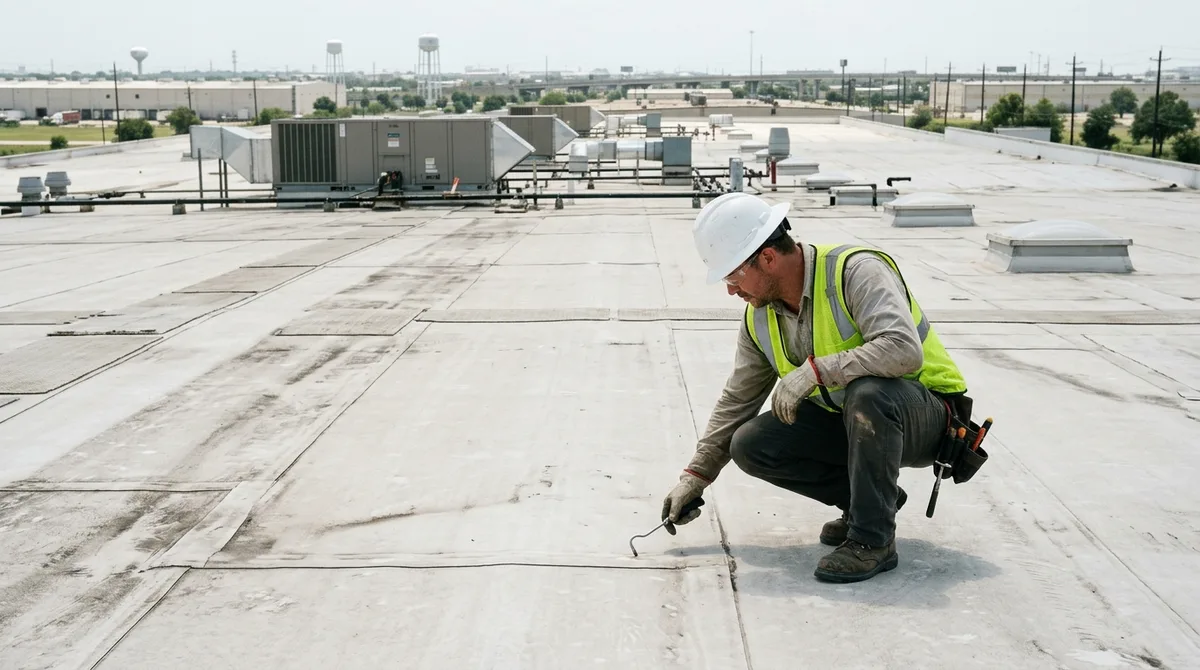
Not every membrane puncture is immediately visible from inside the building. Some defects are small, while others allow water to travel beneath the roof surface before appearing indoors.
Regular inspections can help identify damage before it develops into a larger problem.
1. Look for Visible Holes and Cuts
Start by examining the membrane for small holes, tears, cuts, and damaged sections. Pay particular attention to areas around rooftop equipment, access points, walkways, and maintenance routes.
A puncture may appear as a small opening, a cut in the membrane, or a damaged area where the underlying material is exposed.
Do not assume that a small opening is harmless. Its location and depth can affect the performance of the entire roofing assembly.
2. Check for Water Stains Inside the Building
Water stains on ceilings, walls, and interior surfaces may indicate a roof leak. Look for discoloration, peeling paint, damp insulation, and recurring moisture around the upper parts of the building.
However, the interior water stain may not be directly below the puncture. Water can travel laterally through insulation or along other roof components before entering the building.
A professional roof inspection can help trace the source of the moisture.
3. Inspect Areas Around Rooftop Equipment
Roof penetrations and equipment locations deserve special attention. HVAC units, pipes, vents, and electrical conduits create transitions where membrane damage may go unnoticed.
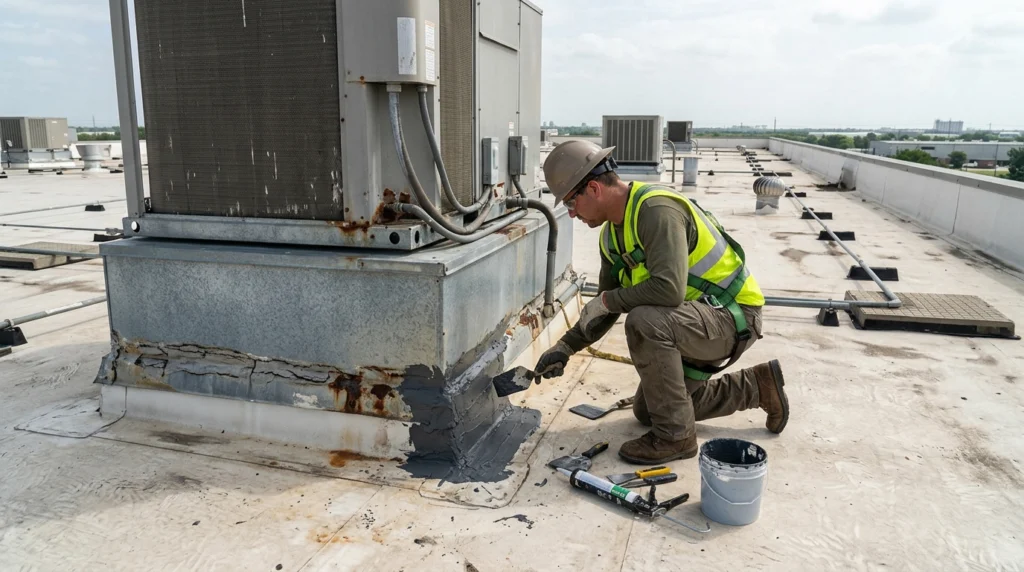
Check for cuts, loose flashing, deteriorated sealants, and damage around equipment supports. These areas can develop several types of roofing defects, not just punctures.
4. Look for Damaged or Displaced Membrane Sections
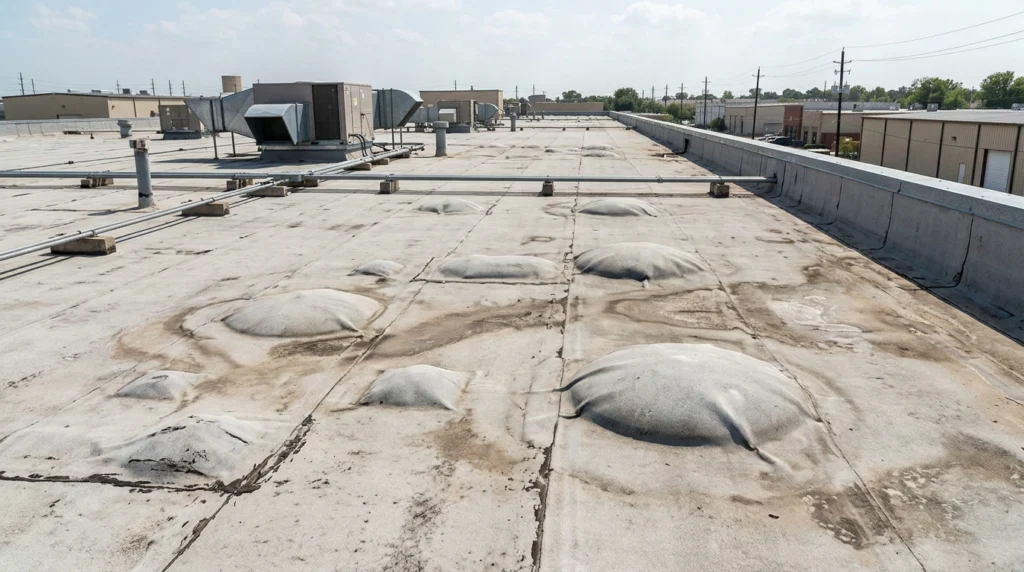
A puncture may occur alongside other forms of membrane damage. Look for raised edges, separated patches, exposed insulation, loose sections, and visible tears.
Damage around an existing repair may indicate that the original problem was not fully addressed.
5. Arrange a Professional Roof Inspection
Some punctures are difficult to locate without closer examination. A professional contractor can inspect the membrane, check surrounding seams, and evaluate whether moisture has entered the roof assembly.
Depending on the roofing system and suspected damage, additional testing may be needed to locate hidden moisture or confirm the extent of the problem.
Why Small Roof Membrane Punctures Can Become Major Leaks
A puncture may look minor from the surface, but its consequences can extend beyond the damaged membrane.
Once water enters the roofing system, it may affect several components before reaching the building interior.
Water Can Spread Beneath the Membrane
Water does not always travel straight down through a roof puncture. It can move horizontally through insulation layers or along the roof deck.
This means the visible leak inside the building may appear some distance away from the actual opening.
If a contractor repairs only the interior stain location without finding the source, the roof may continue leaking.
Insulation Can Become Wet
Many commercial roofing systems include insulation beneath the waterproof membrane. When water reaches this layer, it can reduce insulation performance and contribute to further deterioration.
Wet insulation may need to be removed and replaced before the roof can be properly restored.
Interior Materials Can Become Damaged
Persistent water intrusion can damage ceiling tiles, drywall, paint, electrical components, and stored materials.
For commercial properties, this may also interrupt daily operations or create additional maintenance expenses.
Repeated Water Exposure Can Increase Repair Requirements
A puncture that remains open can allow repeated water entry during rainfall. Over time, the affected area may become larger and require more extensive repairs.
Addressing the defect early can help limit the amount of material that needs to be replaced.
How Professionals Repair Roof Membrane Punctures
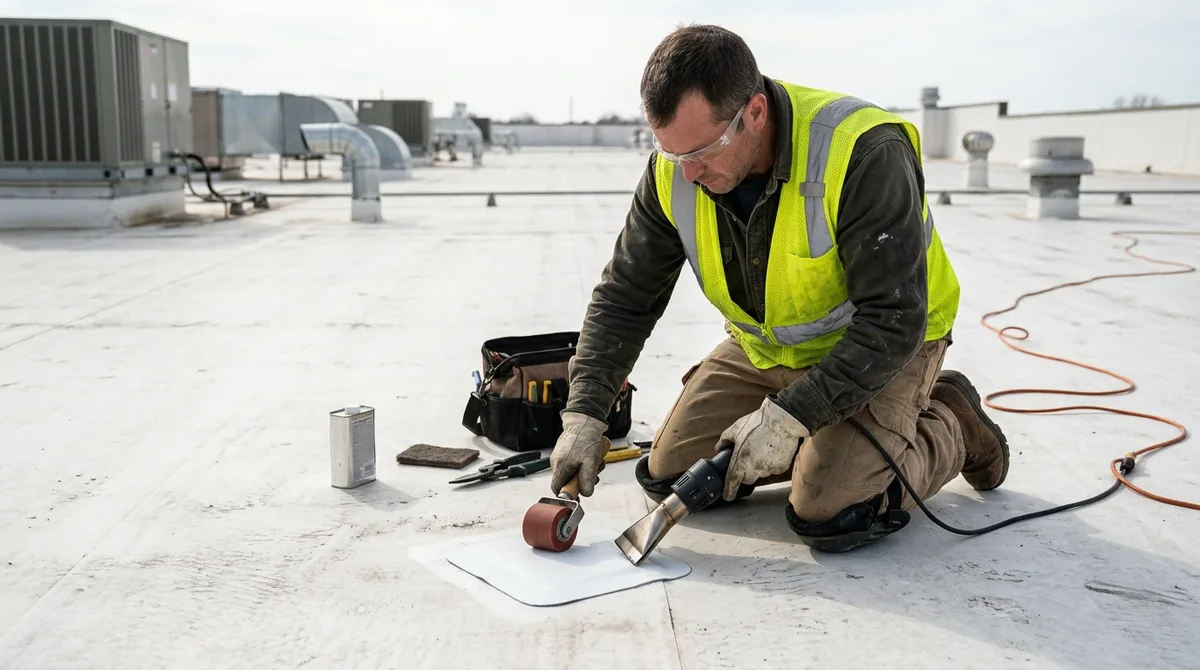
The correct repair method depends on the roofing membrane, the size of the puncture, and the condition of the surrounding materials.
A professional contractor should identify the damaged area, check for moisture, prepare the surface, and use compatible repair materials.
Step 1: Locate the Puncture and Inspect the Surrounding Area
The first step is to identify the actual opening. A contractor examines the visible damage and checks nearby seams, flashing, penetrations, and previous repairs.
The inspection should also determine whether water has entered the insulation or affected the roof deck.
Repairing only the visible hole may not solve the problem if moisture has spread underneath the membrane.
Step 2: Clean and Prepare the Repair Area
The damaged area must be prepared before a permanent patch is installed.
Depending on the membrane, preparation may involve removing dirt, debris, moisture, deteriorated material, and contaminants. The surface must be suitable for the selected repair method.
Proper preparation is important because a patch applied over a dirty or unsuitable surface may not bond correctly.
Step 3: Remove Damaged Materials When Necessary
If the puncture has allowed water to reach the insulation, the affected materials may need to be removed.
A contractor should determine whether the insulation is dry and serviceable or whether replacement is necessary.
The damaged section must be restored before the waterproof membrane is repaired.
Step 4: Install a Compatible Membrane Patch
The patch material and installation method must match the existing roofing system.
Common repair approaches include:
- TPO: Compatible TPO patches are generally heat-welded to a properly prepared membrane surface.
- PVC: PVC membrane patches are typically heat-welded using compatible materials and equipment.
- EPDM: EPDM repairs commonly use compatible primer, patch materials, and approved seam or repair accessories.
- Modified bitumen: Repairs may involve compatible membrane patches and manufacturer-approved installation methods.
- Built-up roofing: Repair methods may involve restoring damaged roofing layers with suitable compatible materials.
The contractor should follow the roofing manufacturer’s repair instructions. Materials designed for one membrane should not automatically be used on another.
Step 5: Check the Completed Repair
After the patch is installed, the contractor should inspect the repair area and check the patch edges or welded seams as appropriate for the membrane system.
The surrounding roof should also be examined for other possible damage.
A completed repair should restore the waterproofing function of the affected area and leave the roof ready for normal service under the manufacturer’s requirements.
For additional technical guidance, the National Roofing Contractors Association’s repair manual information explains the industry’s low-slope membrane repair resources and procedures.
Can You Repair a Roof Membrane Puncture Yourself?
A small puncture may look simple to fix, but commercial roofing systems require compatible materials and correct repair techniques.
Temporary protection may help limit water entry during an emergency. However, it should not replace a permanent repair.
There are several reasons to avoid unapproved DIY repairs:
- Material incompatibility: A sealant or patch designed for another roofing system may not bond properly.
- Poor surface preparation: Dirt, moisture, and oxidation can affect patch adhesion or welding.
- Hidden moisture: Water may already be present beneath the membrane.
- Warranty concerns: Unauthorized repair materials or procedures may affect roofing system warranty coverage.
- Safety risks: Commercial roofs can contain fragile areas, exposed edges, rooftop equipment, and other hazards.
For these reasons, permanent repairs should be handled by a qualified commercial roofing contractor familiar with the existing membrane system.
How to Prevent Future Roof Membrane Punctures
Preventive maintenance can reduce the risk of accidental damage and help commercial roofing systems remain in serviceable condition.
Install Protective Walkways
If maintenance workers regularly access the roof, designated walkways can help protect the membrane from repeated foot traffic.
Walkway materials should be compatible with the roofing system and installed according to manufacturer requirements.
Control Rooftop Maintenance Activities
HVAC technicians, electricians, plumbers, and other contractors should understand that the roof membrane is a waterproofing component.
Tools, equipment, and materials should be handled carefully. Avoid dragging heavy objects or placing sharp materials directly on the membrane.
Inspect the Roof After Severe Weather
After significant storms, inspect the roof for debris, displaced components, visible cuts, and other signs of damage.
Pay attention to areas near roof edges, rooftop equipment, and drainage points.
Maintain Rooftop Equipment and Supports
Check equipment supports, pipe stands, and other rooftop installations for movement, deterioration, or direct contact with the membrane.
Properly designed supports can help reduce pressure and abrasion against the roofing surface.
Schedule Routine Roof Inspections
Professional inspections can identify punctures, seam problems, flashing deterioration, and drainage concerns before they cause larger issues.
Keep records of inspection findings, repairs, photographs, and maintenance activities. These records can help identify recurring problems and support better roof management.
Roof Membrane Punctures and Houston’s Weather
Houston’s climate makes roof maintenance especially important for commercial property owners. Heavy rainfall, high humidity, intense sunlight, and severe storms can place ongoing demands on low-slope roofing systems.
A puncture that remains unnoticed during dry weather may become an active leak during the next period of heavy rainfall.
Storm debris can also create new openings, while prolonged exposure to heat and UV radiation may contribute to the deterioration of older roofing materials.
Building owners should pay particular attention to:
- Membrane damage after thunderstorms and severe weather.
- Punctures near HVAC equipment and maintenance access routes.
- Openings around roof penetrations and flashing.
- Water stains that appear after periods of heavy rain.
- Repeated leaks in areas with previous repairs.
If your commercial building has an active leak or visible membrane damage, arrange an inspection before further rainfall affects the damaged area.
When Does a Roof Membrane Puncture Require More Than a Patch?
Not every puncture requires extensive roofing work. A small, isolated opening in an otherwise healthy membrane may only need a localized repair.
However, a simple patch may not be enough when the surrounding roof system has more serious problems.
Consider a broader repair assessment when:
- Multiple punctures appear across the roof.
- The membrane has become brittle or deteriorated.
- Water has reached the underlying insulation.
- Several previous patches have failed.
- The roof has recurring leaks in different locations.
- The roof deck or other structural components show signs of damage.
In these situations, a contractor may recommend larger-area repairs, restoration, or replacement.
If damage is widespread, compare the repair plan with the cost and expected service life of a commercial roof replacement.
For roofs that remain structurally suitable, a compatible commercial roof coating system may also be worth evaluating. Coatings should not be used to cover unresolved punctures or moisture-damaged roofing materials.
Commercial Roof Membrane Repair Across Houston Service Areas
Commercial buildings across Greater Houston need reliable roof maintenance to protect their interiors, equipment, and daily operations.
Whether your property has a warehouse, retail building, office facility, or industrial space, identifying membrane damage early can help prevent more extensive water intrusion.
We provide information about commercial roofing needs in several surrounding communities:
- Katy, TX: Learn about commercial roofing services in Katy.
- Sugar Land, TX: Explore commercial roofing in Sugar Land.
- Cypress, TX: Read about commercial roofing in Cypress.
For properties in other nearby communities, visit our commercial roofing service areas page.
Frequently Asked Questions About Roof Membrane Punctures
What causes punctures in commercial roof membranes?
Common causes include foot traffic, dropped tools, sharp debris, storm damage, rooftop equipment maintenance, and improper installation. Aging materials may also become more vulnerable to physical damage.
Can a small roof membrane puncture cause a major leak?
Yes. Even a small opening can allow water into the roofing assembly. Moisture may spread beneath the membrane and damage insulation before appearing inside the building.
How do I know if my commercial roof has a puncture?
Look for visible holes, cuts, damaged membrane sections, interior water stains, and moisture around rooftop equipment. Some punctures are difficult to locate, so a professional inspection may be necessary.
Can TPO and EPDM roof punctures be repaired?
Yes. TPO and EPDM membranes can often be repaired using compatible patch materials and manufacturer-approved procedures. TPO repairs generally involve heat welding, while EPDM repairs commonly use compatible primers and patching products.
Does a roof membrane puncture always require replacing the entire roof?
No. An isolated puncture in a healthy roofing system can often be repaired without replacing the entire roof. Replacement may be considered when damage is widespread or the existing system has deteriorated significantly.
How soon should a commercial roof puncture be repaired?
As soon as practical after the damage is identified. If water is entering the building, arrange temporary protection and professional assessment promptly. Permanent repairs should follow once conditions allow suitable installation.
Can roof membrane punctures be prevented?
They cannot always be avoided, but protective walkways, careful rooftop maintenance, routine inspections, and prompt storm assessments can reduce the risk.
Does commercial roof insurance cover membrane punctures?
Coverage depends on the insurance policy and the cause of the damage. Sudden accidental or storm-related damage may be treated differently from deterioration caused by normal wear or neglected maintenance. Review your policy and document the damage before proceeding with major work.
Protect Your Commercial Roof Before a Small Puncture Becomes a Leak
A roof membrane puncture may begin as a small opening, but it can create larger problems when water reaches the insulation or other roofing components. Early detection and a compatible repair can help protect your commercial property and reduce the risk of further damage.
If you have noticed a roof puncture, recurring leak, damaged membrane, or storm-related roofing problem, arrange a professional assessment.
Explore our commercial roof repair services or visit our contact page to discuss your building’s roofing needs.
Address membrane damage early to help keep your commercial roof watertight and your business protected.