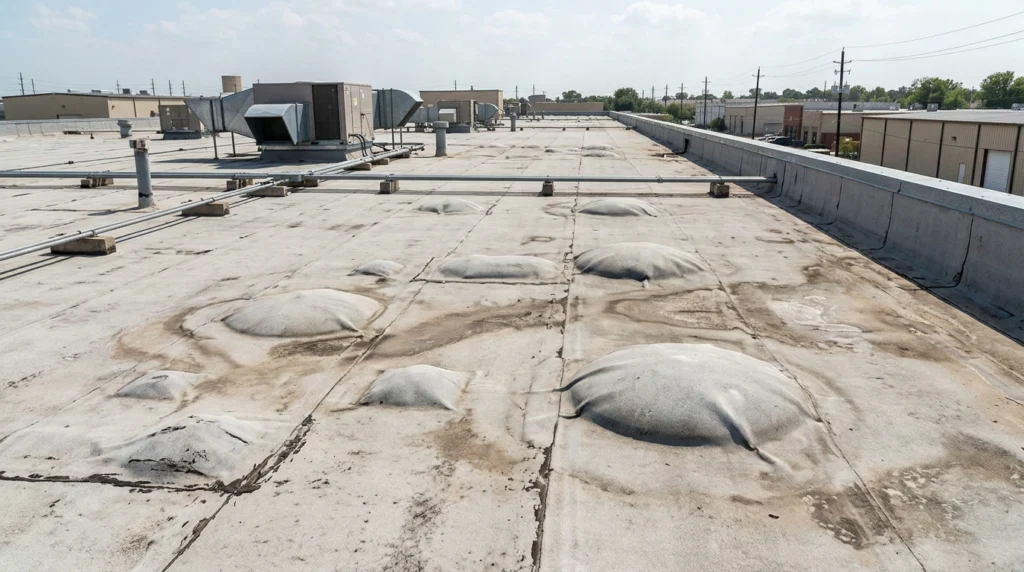
Ponding water on flat roofs can develop when Houston rain cannot drain properly. Our team provides commercial roofing in Houston for businesses dealing with drainage issues, roof leaks, membrane damage, and recurring standing water. We inspect the roof, identify the cause, and recommend a practical solution for your commercial property.
Houston commercial roofs face heavy rainfall, high humidity, intense sunlight, and seasonal storms. These conditions place constant demands on flat and low slope roofing systems. When water repeatedly collects in the same areas, the roof needs a closer evaluation.
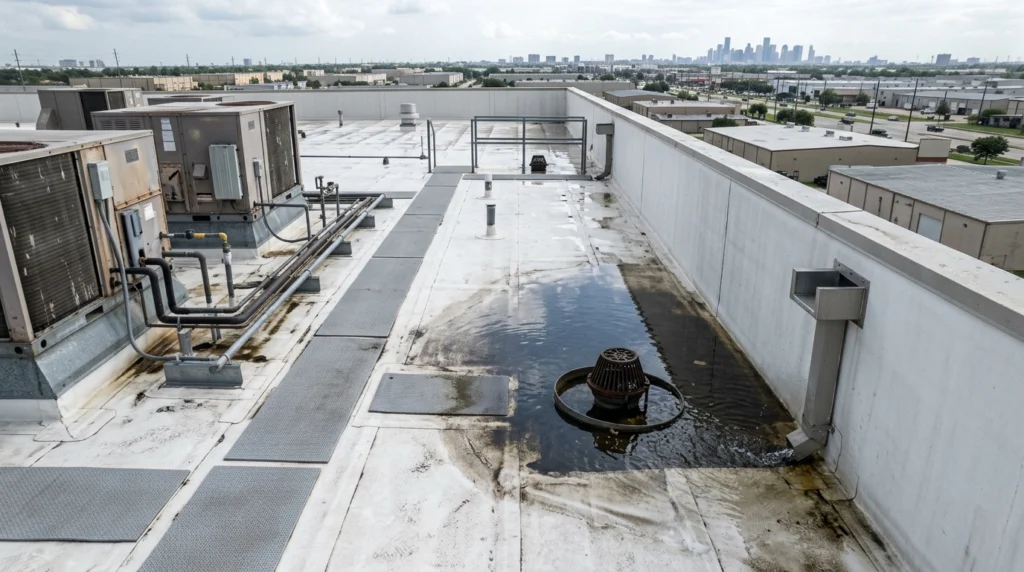
A small amount of water immediately after rainfall can occur while drains process runoff. The concern increases when water remains for an extended period or repeatedly collects in the same location. The National Roofing Contractors Association defines ponding as excessive water accumulation that remains more than 48 hours after precipitation under conditions conducive to drying. NRCA Roofing Guidelines
What Is Ponding Water on a Flat Roof?
Ponding water is standing water that remains on a flat or low slope commercial roof. It usually collects in areas where water cannot reach a roof drain, scupper, gutter, or other drainage outlet.
Commercial flat roofs are not completely level. They use designed drainage paths to move rainwater toward specific outlets. Proper positive drainage helps direct water away from the roof surface after rainfall.
When that drainage path becomes restricted, water begins collecting in low areas. The cause may involve blocked drains, inadequate slope, compressed insulation, structural movement, damaged drainage components, or changes around rooftop equipment.
Recurring ponding should receive professional attention because the visible water may only be a symptom of a larger drainage condition.
Is Standing Water on a Flat Roof Normal?
Temporary water after a Houston storm does not always indicate a roofing problem. Heavy rainfall can leave shallow water while drains process large volumes of runoff.
The important factors include duration, location, depth, and frequency. Water that repeatedly remains in the same area provides useful information about the roof drainage system.
If the same section remains wet beyond normal drying time, inspect it carefully. Recurring ponding can indicate a low area or drainage condition that needs correction.
NRCA guidance defines ponding around the 48 hour period under conditions suitable for drying. It also describes positive drainage as roof design that allows drainage within that period.
What Causes Ponding Water on Flat Roofs?
Several conditions can create ponding water on commercial flat roofs. Some involve routine maintenance, while others require roofing or drainage improvements.
Understanding the cause is important because removing visible water does not correct the underlying condition.
Clogged Roof Drains
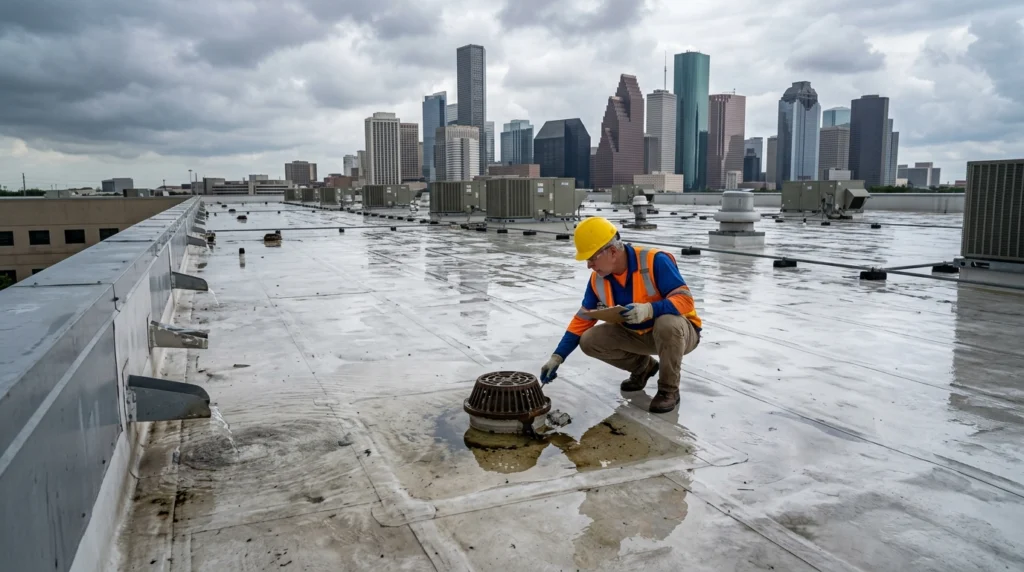
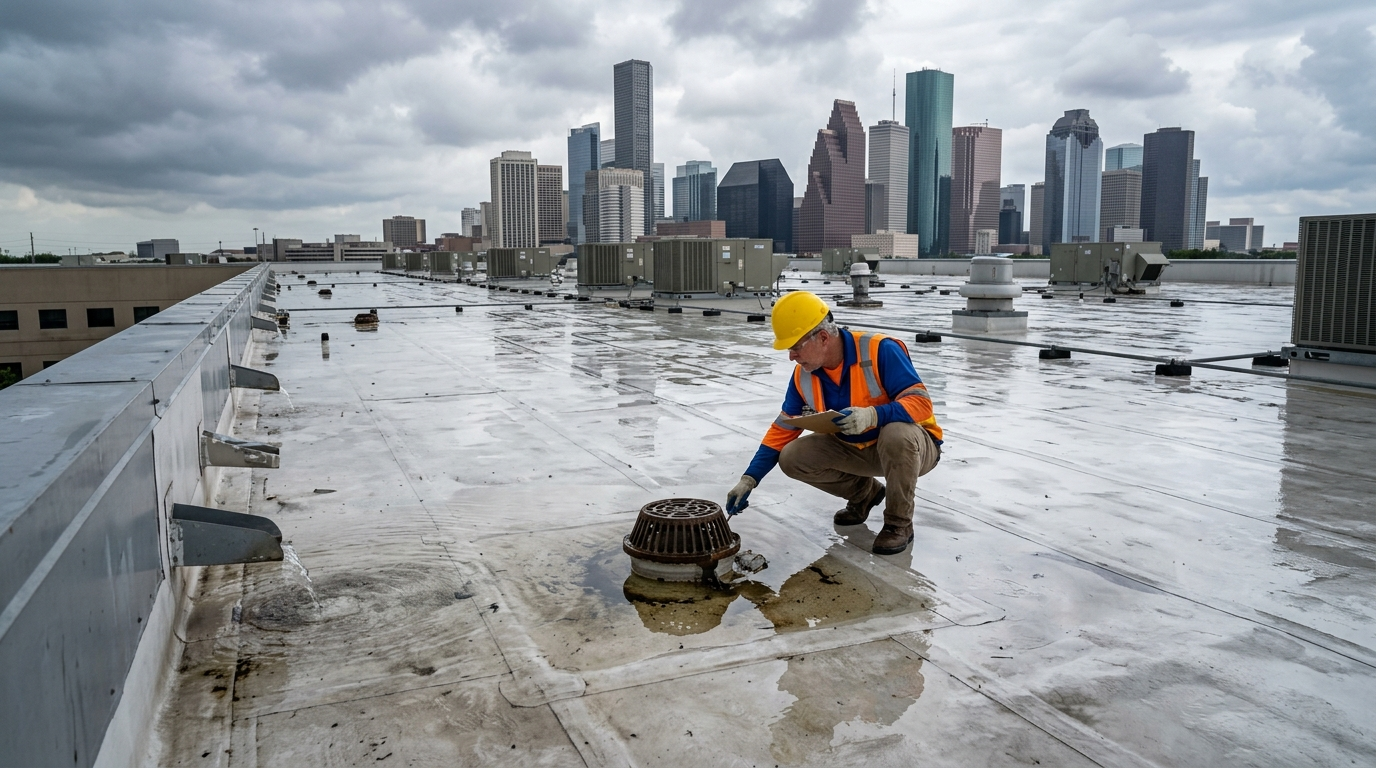
Roof drains collect large amounts of rainwater during Houston storms. Leaves, dirt, branches, roofing debris, and other materials can collect around drain strainers.
A restricted drain slows water movement across the roof. Water then begins collecting around the drainage point.
Regular drain cleaning helps maintain the intended drainage path. Property managers should include drains and surrounding membrane areas in routine maintenance.
Blocked or Restricted Scuppers
Scuppers allow water to exit through a parapet wall or roof edge. Debris can restrict the opening and reduce drainage capacity.
Water may then remain on the roof longer than expected. Recurring ponding near a scupper deserves professional evaluation.
The scupper itself may also require inspection. Flashing, edge details, and surrounding membrane areas should remain properly sealed.
Inadequate Roof Slope
A flat roof still needs a functional drainage path. Low slope systems depend on carefully planned slope and drainage.
Some older commercial buildings develop low areas over time. Previous repairs can also change the surface elevation.
The result can be a section where water naturally collects instead of flowing toward a drain.
Compressed Roof Insulation
Roof insulation supports both energy performance and roof elevation. Certain insulation materials can compress under loads or moisture conditions.
When insulation changes shape, the roof surface can develop low areas. Those low areas may then collect rainwater after storms.
A professional inspection can evaluate the roof assembly and identify areas that need further investigation.
Structural Deflection
The roof deck supports the complete roofing assembly. Structural movement or deflection can change the drainage pattern.
Large commercial roofs can contain extensive spans between structural supports. Changes in the deck can create low points where water collects.
NRCA guidance specifically addresses roof deck deflection when considering positive drainage design. Proper roof design should account for expected loading and drainage requirements.
Rooftop Equipment
Houston commercial buildings often have HVAC units, exhaust systems, vents, pipes, and other rooftop equipment.
These components can influence how water moves across the roof. Equipment curbs can also create areas where water movement becomes restricted.
Drainage paths should account for these rooftop features during design and replacement projects.
Debris Accumulation
Storm debris can collect across large commercial roofs. Leaves, branches, dirt, packaging materials, and loose roofing materials can restrict drainage.
Debris can also create small dams around drains and rooftop equipment.
Routine roof cleaning helps keep drainage paths open throughout the year.
Why Is Ponding Water a Problem for Commercial Roofs?
Ponding water deserves attention because prolonged moisture affects multiple roofing components. It can also add weight to the roof assembly and keep membrane areas wet for extended periods.
Water can reach seams, flashing, penetrations, and existing repair areas. These details require careful inspection whenever recurring ponding appears.
NRCA research also notes that manufacturers commonly specify a 48 hour ponding duration for polymer modified bitumen systems, although acceptable durations can vary by specific roofing system and manufacturer.
Membrane Stress
Commercial roof membranes protect the building from water intrusion. Recurring ponding keeps parts of the membrane exposed to prolonged moisture.
Different roofing materials respond differently to standing water. The existing membrane type should therefore be considered during a roof assessment.
TPO, PVC, EPDM, modified bitumen, and built up roofing systems each have specific installation and maintenance requirements.
For businesses with modified bitumen systems, our guide on modified bitumen roofing and APP vs SBS explains how different modified bitumen polymers perform under Houston heat. The article covers APP heat resistance, SBS flexibility, membrane construction, and installation methods.
Seam and Flashing Exposure
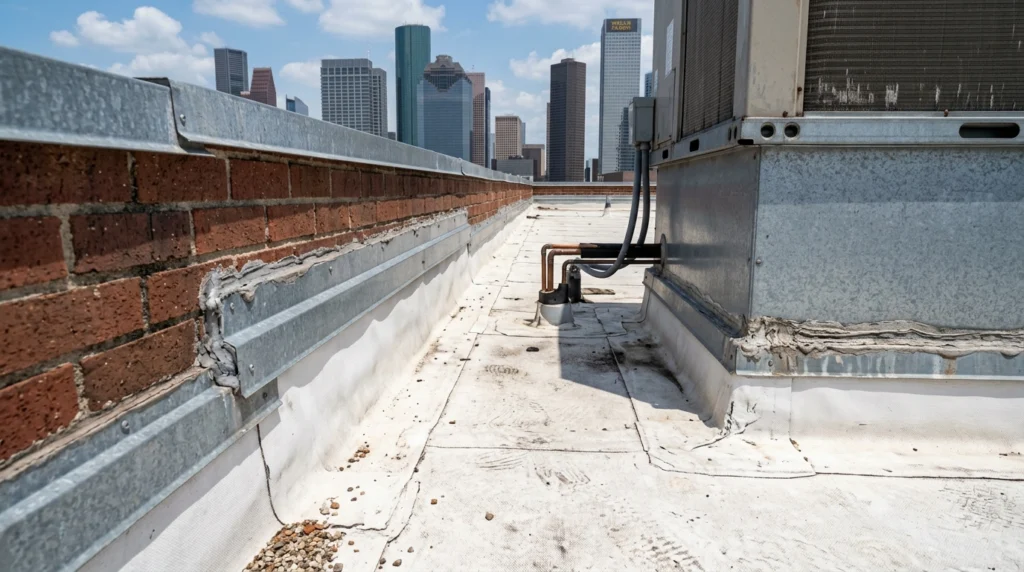
Seams connect membrane sections across the roof surface. Flashing protects transitions around walls, curbs, drains, and penetrations.
Ponding areas deserve close inspection around these details. Water can remain around seams and flashing longer than on surrounding surfaces.
A professional roof inspection can identify whether these details remain properly sealed.
Added Roof Load
Water has weight. A large ponding area can therefore add substantial load to a commercial roof.
The impact depends on water depth, pond size, roof construction, and structural design.
For this reason, recurring deep ponding should receive professional attention rather than being treated as an ordinary puddle.
Interior Water Intrusion
Ponding water becomes especially important when leaks appear inside the building.
Ceiling stains, wet insulation, damp areas, and active leaks can indicate water movement through the roofing assembly.
The visible interior location does not always match the exact roof entry point. Water can travel through insulation, deck areas, seams, and other roof components before reaching the interior.
How Houston Weather Contributes to Roof Ponding
Houston has a demanding commercial roofing environment. Heavy rain can deliver large volumes of water across broad flat roof surfaces.
High humidity can also extend drying periods compared with drier climates. Summer heat creates repeated expansion and contraction across roofing materials.
Storm debris can further restrict roof drains and scuppers. These factors make drainage maintenance especially important for Houston commercial buildings.
Our service area includes Houston and nearby commercial markets such as Katy, Sugar Land, Missouri City, The Woodlands, Spring, Rosenberg, Pasadena, Cypress, and Pearland.
For properties in Sugar Land, our commercial roofing in Sugar Land service covers inspections, repairs, replacement, and flat roof systems. The local page specifically addresses ponding water as a common concern for commercial flat roofs in the area.
Businesses in Cypress can also use our commercial roofing in Cypress service for flat and low slope roofing, drainage concerns, repairs, and replacement projects.
How to Fix Ponding Water on a Flat Roof
The right ponding water solution depends on the cause. A professional inspection should identify the drainage condition before major roofing work begins.
Clean and Restore Roof Drains
If debris is restricting a drain, cleaning may restore normal water movement.
The surrounding drain area should also be inspected. Damaged strainers, flashing, membrane connections, or drainage components may require additional work.
Clear and Repair Scuppers
Scuppers should provide a clear path for roof runoff. Removing debris can improve drainage where blockage causes the ponding.
If the scupper or surrounding flashing has damage, targeted repair may restore proper performance.
Improve Roof Slope
Some recurring ponding areas require slope correction. Tapered insulation can create a designed drainage path toward roof drains.
The correct design depends on the roof layout, existing insulation, membrane system, and structural conditions.
Positive drainage should be considered as part of the overall roof design rather than as an afterthought. NRCA guidance specifically connects positive drainage with roof slope and deck deflection.
Add or Relocate Drainage
Some buildings need additional drainage capacity. A new roof drain or properly designed drainage outlet can help move water from persistent low areas.
The existing building drainage system must be evaluated before adding new drains.
Drain placement should consider roof size, slope, structural conditions, and the available stormwater connection.
Install Roof Crickets
Roof crickets can redirect water around raised rooftop features. They are useful around curbs, equipment, walls, and other areas that interrupt drainage paths.
A properly designed cricket creates a more effective path toward the nearest drainage point.
Repair Damaged Roofing Areas
Ponding can exist alongside membrane damage. Seams, flashing, penetrations, and surface areas may need targeted repair.
When the problem involves a localized roofing defect, our commercial roof repair service can address the affected area. Our Houston repair service covers membrane seams, flashing, leaks, drainage related conditions, and other commercial roof issues.
The repair should address the actual source of the water problem rather than only treating the visible symptom.
Replace the Roofing System When Needed
Some roofs have widespread drainage or material conditions that make replacement more practical.
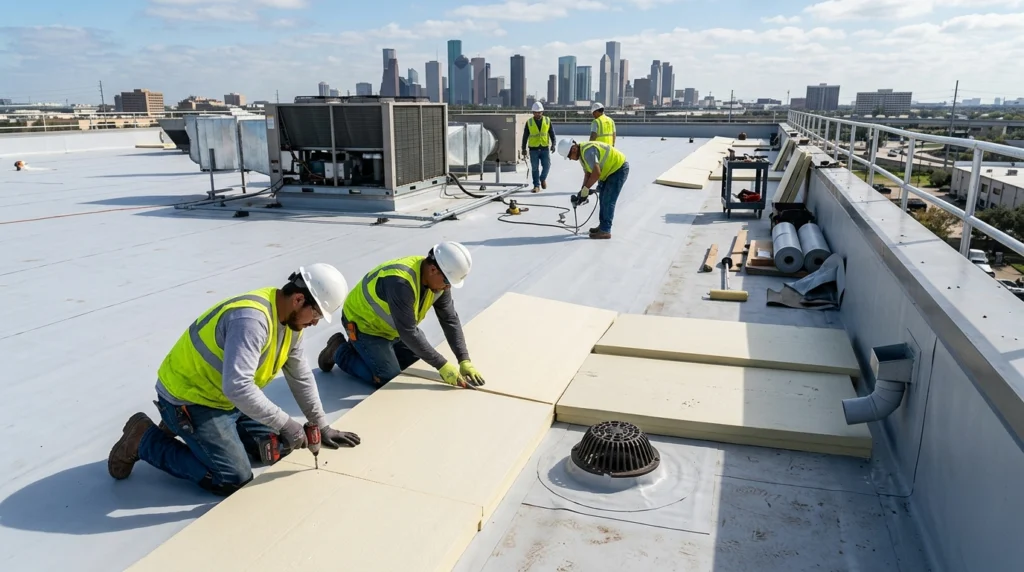
Replacement may include new insulation, improved slope, updated drainage, and a new membrane system.
Our commercial roof replacement service includes roof condition assessment, photo documentation, membrane evaluation, insulation review, and replacement planning.
A roof replacement project also provides an opportunity to improve drainage before the new roofing system is installed.
Can Roof Coatings Fix Ponding Water?
Roof coatings can provide useful protection for suitable commercial roofs. However, a coating does not automatically correct a drainage problem.
The existing roof should first have suitable conditions for coating. Surface preparation, membrane condition, drainage, and moisture levels all matter.
Our commercial roof coatings service provides restoration options for suitable existing roofs. The live service page specifically identifies flat roof coatings as an option for roofs that experience ponding water and heat buildup.
A coating can create a seamless protective layer and support waterproofing. However, recurring ponding should still be evaluated before coating application.
If the roof has a major slope or structural drainage issue, correcting the drainage condition should remain part of the solution.
How to Prevent Ponding Water on a Commercial Roof
Preventive maintenance can help commercial property owners identify drainage problems earlier.
Keep Drains Clear
Inspect drains regularly and remove accumulated debris. Houston storms can move substantial material across commercial rooftops.
Inspect Scuppers
Check scuppers before and after periods of heavy rainfall. Keep discharge paths clear from debris and obstructions.
Monitor Low Areas
Photograph recurring water locations after major storms. Comparing photographs over time can reveal changes in ponding patterns.
Check Rooftop Equipment Areas
HVAC equipment receives regular service traffic. Inspect nearby membrane, flashing, curbs, and drainage paths during maintenance visits.
Schedule Professional Roof Inspections
Professional inspections provide a closer review of membrane condition, drainage, flashing, insulation, and rooftop details.
Our Houston commercial roofing team recommends routine inspections and additional checks after major storms. The site’s homepage also recommends inspections twice a year and after major storms.
When Should You Call a Houston Commercial Roofing Contractor?
Call a professional when ponding repeatedly appears in the same area.
You should also arrange an inspection when water remains beyond normal drying time. Interior stains or active leaks provide another reason for prompt evaluation.
Other useful inspection triggers include:
Recurring Standing Water
Repeated ponding often points to an underlying drainage condition.
Blocked Drains
A blocked drain may be simple to address, but surrounding roofing details should also be checked.
Sagging Roof Areas
Visible roof movement can affect drainage and deserves professional evaluation.
Interior Ceiling Stains
Interior stains can indicate water movement through the roofing assembly.
Ponding After Every Major Storm
A repeating pattern suggests the roof needs a closer drainage assessment.
Ponding Water Solutions for Houston Commercial Buildings
The correct solution should address the cause rather than only the visible water.
A drain cleaning may solve a localized blockage. A slope correction may solve a recurring low area. A drainage upgrade may improve water movement across a large roof.
A membrane repair may address damage around a ponding location. A full replacement may be appropriate when the roofing assembly needs broader renewal.
The right choice depends on the roof’s current condition, drainage design, membrane type, insulation, structural condition, and maintenance history.
Houston commercial buildings can have very different roof assemblies. A warehouse may need a different drainage strategy than a retail center or medical building.
That is why an on site inspection should come before selecting a major roofing solution.
Frequently Asked Questions
What causes ponding water on flat roofs?
Ponding water can result from blocked drains, restricted scuppers, inadequate slope, low roof areas, compressed insulation, structural deflection, debris, and drainage design conditions.
How long can water stay on a flat roof?
The NRCA defines ponding as excessive water accumulation that remains more than 48 hours after precipitation under conditions conducive to drying.
Is ponding water normal on a commercial flat roof?
Temporary water after heavy rainfall can occur while drainage systems process runoff. Water that repeatedly remains beyond normal drying time deserves professional evaluation.
Can a clogged drain cause ponding water?
Yes. Debris around drain strainers can restrict water movement and create localized ponding. Cleaning the drain can restore flow when blockage is the main cause.
Can tapered insulation fix ponding water?
Tapered insulation can create a planned slope toward drains. It can be useful when low areas or insufficient drainage paths cause recurring ponding.
Does ponding water mean I need a new commercial roof?
Not always. Some ponding conditions respond to drain cleaning, drainage correction, slope improvements, or targeted repairs. Replacement depends on the condition of the complete roofing assembly.
Can roof coatings help with ponding water?
Roof coatings can protect suitable existing roof systems, but the roof should first be evaluated for drainage and overall condition. A coating should not replace correction of an underlying drainage problem.
How often should commercial flat roofs be inspected in Houston?
Many commercial properties benefit from inspections twice each year and additional inspections after major storms. Drainage areas should also receive regular maintenance throughout the year.
What is positive drainage on a flat roof?
Positive drainage means the roof is designed with enough slope and drainage planning to move water from the roof area within the expected drainage period. NRCA specifically connects positive drainage with roof slope and expected deck deflection.
Final Thoughts
Ponding water on flat roofs can indicate a drainage condition that deserves attention. Houston’s heavy rainfall, humidity, heat, and storm activity make effective commercial roof drainage especially important.
The first step is identifying why the water remains. The cause may involve a blocked drain, low roof area, inadequate slope, compressed insulation, structural movement, or another drainage condition.
Our Houston commercial roofing team provides inspections, commercial roof repair, roof replacement, roof coatings, installation, and drainage focused solutions.
If recurring ponding water is appearing on your commercial roof, contact our Houston commercial roofing team for a professional inspection, photo report, and practical recommendations.