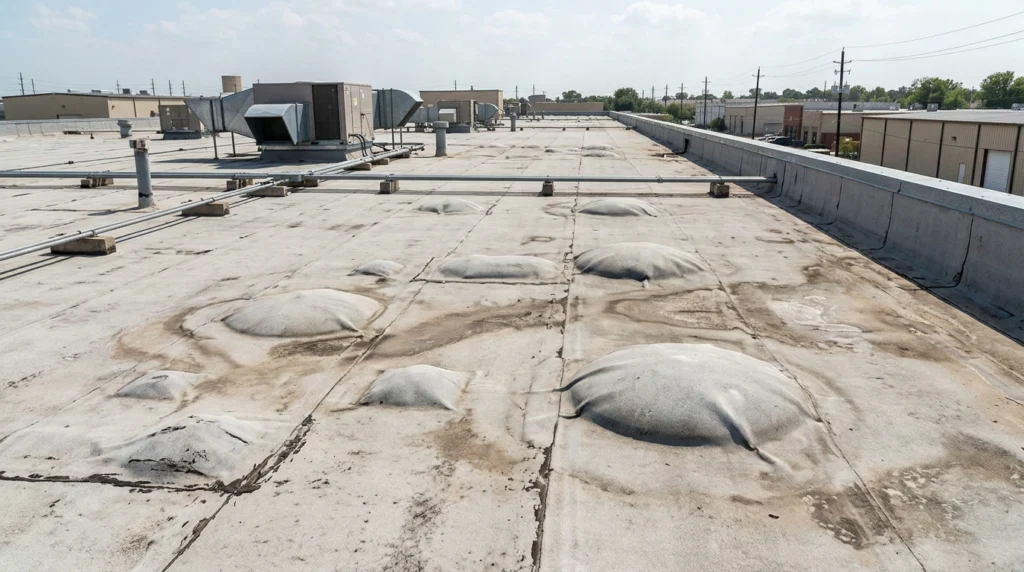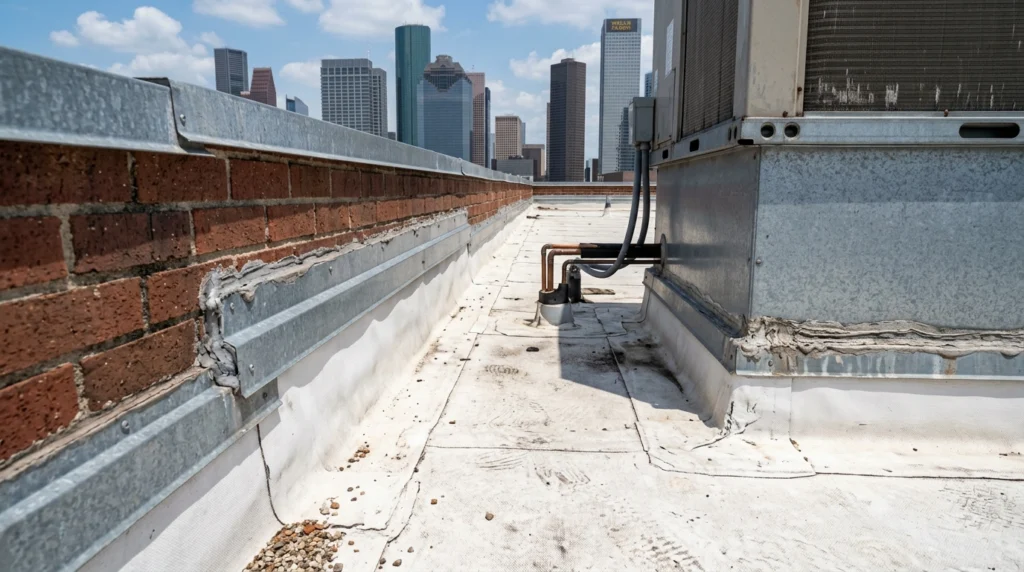
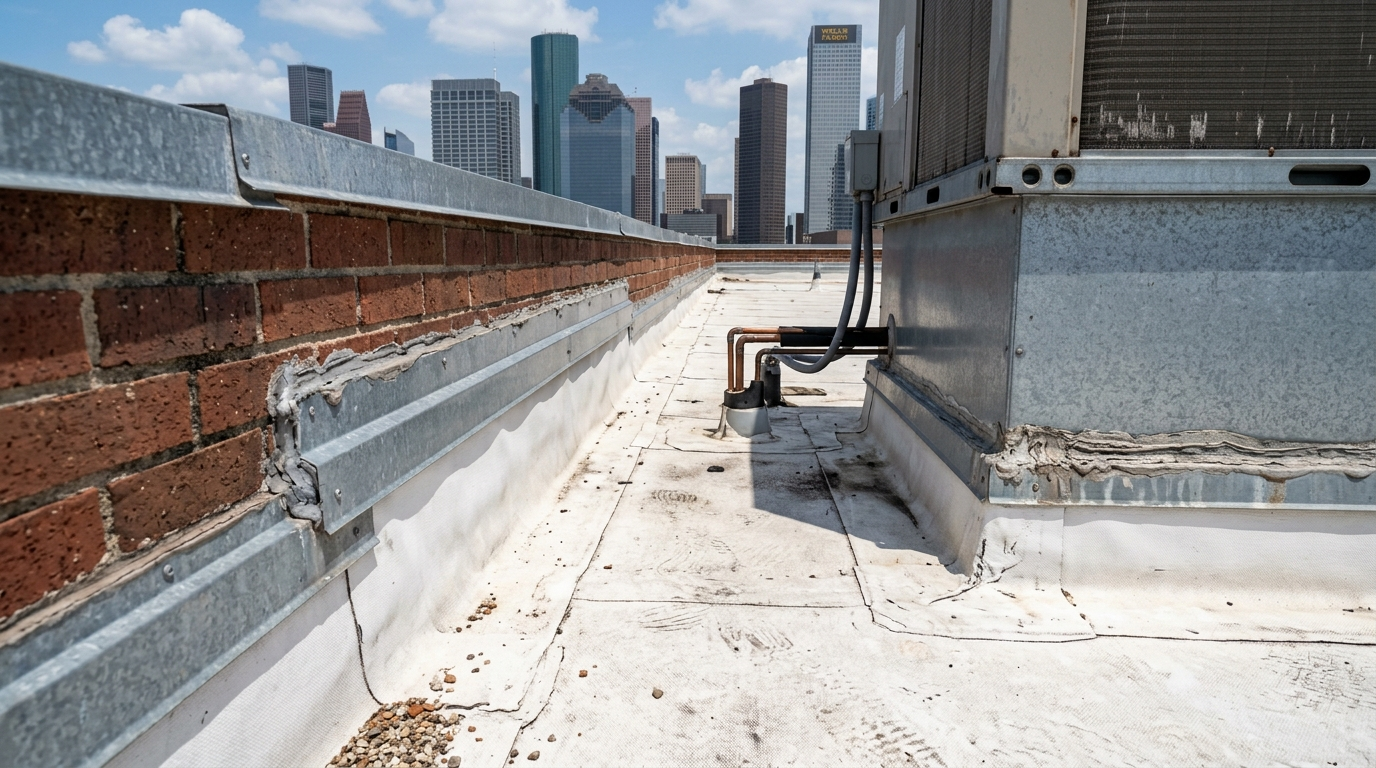
Commercial roof flashing failures often cause leaks around parapet walls, HVAC curbs, roof edges, drains, and penetrations. Flashing protects these transition points by directing water away from vulnerable roof details. When flashing separates, cracks, corrodes, or loses its seal, water can enter the roofing system.
Houston commercial roofs face intense heat, heavy rainfall, humidity, and seasonal storms. These conditions place repeated stress on flashing materials and connections. Proper inspection helps identify early warning signs before a small flashing defect affects insulation, decking, or interior spaces.
What Is Commercial Roof Flashing?
Commercial roof flashing is a protective component installed where the roofing membrane meets another surface or changes direction. These areas include parapet walls, equipment curbs, pipes, vents, drains, expansion joints, roof edges, and wall transitions.
Flashing creates a controlled path for water. Instead of allowing water to enter a joint, the flashing directs it back toward the roof drainage system.
The National Roofing Contractors Association identifies faulty flashing as a major source of leaks on flat and low slope roofs. Their guidance notes that flashing details around parapets, expansion joints, pipes, ducts, and other penetrations require careful design and installation.
This makes flashing an important part of any commercial roofing in Houston system.
Why Commercial Roof Flashing Fails
Commercial roof flashing failures rarely happen for one single reason. Installation quality, weather exposure, building movement, maintenance, material condition, and rooftop activity can all affect flashing performance.
Houston adds another challenge. Roofing materials expand during extreme heat and contract as temperatures change. Heavy rainfall then puts additional pressure on flashing transitions.
Common causes include poor installation, failed sealants, loose fasteners, membrane movement, corrosion, damaged metal, improper drainage, and physical impact.
Poor Flashing Installation
Installation quality has a major effect on flashing performance. Flashing needs to connect properly with the roof membrane and surrounding building components.
If flashing is installed too low, poorly secured, incorrectly overlapped, or improperly sealed, water can find a path behind the assembly.
A small installation defect may not create an immediate leak. Repeated rainfall and temperature changes can gradually expose the weak connection.
Failed Sealants
Sealants protect many flashing joints from water entry. Over time, UV exposure, heat, moisture, and movement can cause sealants to crack, shrink, separate, or lose adhesion.
A sealant line should not be treated as the only protection at an important roof transition. Proper flashing design should direct water away from the joint while sealants provide additional protection.
Thermal Movement
Houston roofs experience substantial temperature changes throughout the year. Roofing materials expand and contract as temperatures change.
Flashing connections must accommodate this movement. Rigid or poorly detailed connections can develop stress around fasteners, seams, corners, and membrane attachments.
The NRCA has documented cases where differential structural movement contributed to wrinkling and tearing at parapet flashing. This shows why building movement should be considered when investigating recurring flashing failures.
Corrosion and Metal Deterioration
Metal flashing can corrode when exposed to moisture, pollutants, incompatible materials, or damaged protective finishes.
Rust around fasteners, seams, corners, and exposed metal surfaces deserves attention. Corrosion can weaken the flashing and create openings that allow water behind the roof assembly.
Membrane Shrinkage
Some roofing membranes can experience movement as they age. When the membrane pulls away from a flashing detail, tension can develop around the connection.
This can cause flashing to pull, wrinkle, separate, or lose its intended position.
NRCA research has documented flashing conditions associated with membrane contraction and notes that repairing or replacing damaged flashing can extend roof service life in suitable situations.
Rooftop Equipment Movement
HVAC units, vents, pipes, and other rooftop equipment create multiple flashing points.
Equipment can also experience movement from vibration, maintenance activity, temperature changes, or installation work.
The flashing around HVAC curbs should remain properly connected to the roofing system. Any separation around these areas deserves a professional inspection.
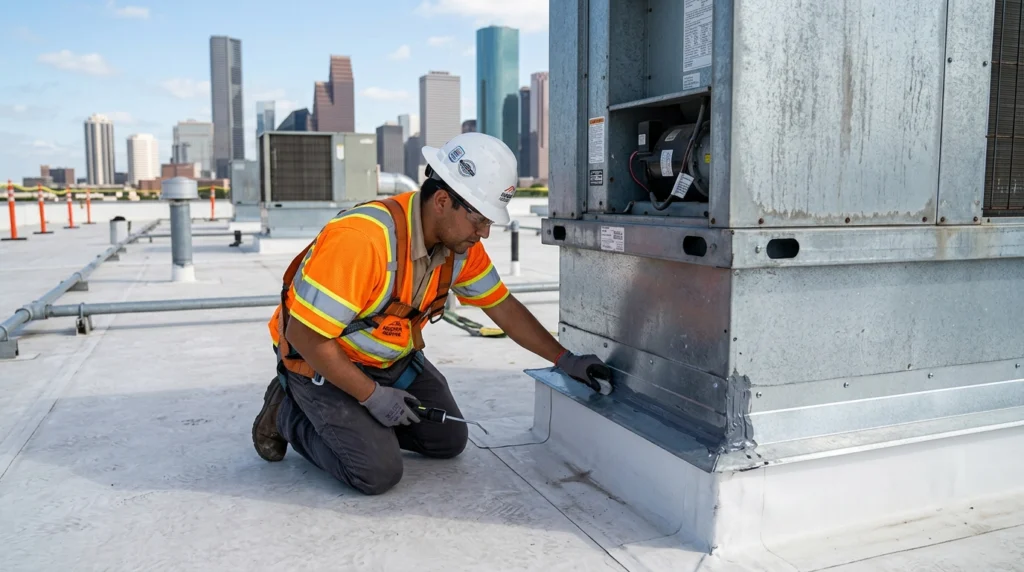
Foot Traffic and Maintenance Activity
Commercial roofs often receive regular maintenance traffic. HVAC technicians, electricians, plumbers, and other workers may access rooftop equipment.
Repeated foot traffic can affect flashing, membrane surfaces, seams, and protective components.
Service pathways can help reduce unnecessary traffic around sensitive flashing areas.
Where Do Commercial Roof Flashing Failures Usually Occur?
Flashing can appear in many parts of a commercial roofing system. Some locations receive more attention because they involve multiple transitions.
Parapet Walls
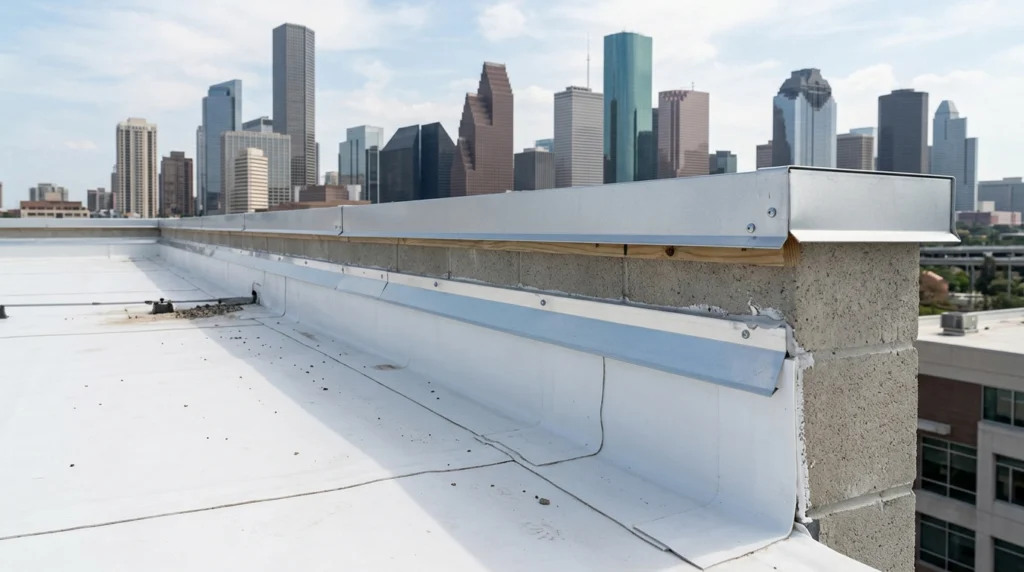
Parapet walls create one of the most important roof to wall transitions.
The roofing membrane must turn upward and connect with the vertical wall assembly. Counterflashing or another appropriate termination then helps protect the upper edge.
Corners deserve special attention because they require careful detailing. A poorly formed corner can create a pathway for water.
HVAC Curbs
Commercial buildings often have several rooftop HVAC units. Each unit creates a penetration through the roofing system.
Flashing around the curb needs to connect correctly with the roof membrane and surrounding metal components.
Loose flashing, cracked sealant, open seams, and membrane separation around HVAC curbs can all contribute to leaks.
Pipes and Roof Penetrations
Pipes, vents, conduits, and other penetrations interrupt the continuous roof surface.
Each penetration needs a properly designed flashing detail. A small opening around a pipe can allow water to enter the roofing assembly.
These areas should receive close attention during routine commercial roof inspections.
Roof Drains and Scuppers
Drainage components also require proper flashing. The roof membrane must connect securely around the drain assembly.
A blocked drain can create standing water around the flashing detail. This is especially relevant to Houston flat roofs during heavy rainfall.
Our previous article on ponding water on flat roofs in Houston explains how blocked drains, inadequate slope, rooftop equipment, and other conditions can contribute to recurring ponding.
That connection makes drainage and flashing inspection important parts of the same commercial roof maintenance strategy.
Roof Edges
Roof edges face direct exposure to wind, rain, sunlight, and temperature changes.
Loose edge metal, separated seams, damaged fasteners, and deteriorated sealants can affect the perimeter of the roofing system.
Edge details should receive additional attention after major Houston storms.
Warning Signs of Commercial Roof Flashing Failures
Commercial roof flashing failures do not always produce an immediate interior leak. Some warning signs appear on the roof first.
Watch for:
Flashing Pulling Away From Walls
If flashing separates from a parapet or vertical surface, water can move behind the assembly.
The separation may begin as a small gap. Regular inspection can identify it before the opening becomes larger.
Cracked or Missing Sealant
Inspect sealant around flashing joints, penetrations, curbs, and coping connections.
Cracking, gaps, shrinkage, or missing sections can indicate that the joint needs professional attention.
Rust or Corrosion
Rust around flashing edges and fasteners can indicate prolonged moisture exposure.
Surface corrosion may require treatment, while heavily deteriorated metal may require replacement.
Open Corners
Corners require precise fabrication and installation. Small openings around inside or outside corners can allow water behind the flashing.
Water Stains Inside the Building
Interior stains can indicate water entry through a flashing detail.
However, the ceiling stain may not appear directly beneath the actual entry point. Water can travel through insulation and other roof layers before reaching the interior.
Recurring Leaks After Rain
A leak that appears after every major storm deserves a detailed inspection.
Recurring leaks can indicate an unresolved flashing, membrane, drainage, or penetration condition.
How to Fix Commercial Roof Flashing Failures
The correct repair depends on the flashing material, roof system, location, and extent of deterioration.
A professional inspection should identify the source before applying a patch.
Repair Localized Sealant Failures
Small sealant defects may require removal of failed material and installation of compatible replacement sealant.
The surrounding flashing should also be checked. Applying new sealant over deteriorated material rarely provides a durable solution.
Reattach Loose Flashing
Loose flashing may require new fasteners, termination components, membrane attachment, or replacement of the affected section.
The repair method should match the existing roofing system and manufacturer requirements.
Repair Flashing Around HVAC Curbs
HVAC curb flashing can develop gaps around corners, seams, and membrane connections.
The contractor should inspect the entire curb detail rather than repairing only the visible leak location.
Our commercial roof repair service handles damaged flashing, roof leaks, ponding water, cracked seams, storm damage, and other commercial roofing conditions in Houston.
Replace Severely Deteriorated Metal
Corroded or damaged flashing may require replacement instead of surface repair.
The replacement material should be compatible with the existing roofing system. Proper fastening and water shedding should also be maintained.
Rebuild Damaged Parapet Flashing
Parapet flashing sometimes requires more than a small patch. If the base flashing, counterflashing, or surrounding wall detail has deteriorated, rebuilding the affected section may provide a better long term solution.
The contractor should inspect corners, wall transitions, coping, and adjacent membrane areas during the repair.
Correct Drainage Around Flashing
Flashing can perform poorly when water repeatedly collects around the detail.
Drainage improvements may include clearing drains, correcting low areas, improving slope, or modifying drainage components.
Our previous ponding water on flat roofs article provides a related guide to drainage problems and solutions. Linking these two topics creates a useful topical connection between roof drainage and flashing performance.
When Does Flashing Need Repair or Replacement?
Not every flashing defect requires complete replacement.
A localized sealant gap, loose fastener, or small isolated separation may be repairable.
Replacement becomes more appropriate when flashing has widespread corrosion, repeated separation, extensive membrane movement, damaged substrate connections, or multiple recurring leaks.
The condition of the surrounding roof also matters.
If the membrane, insulation, drainage, and flashing remain in good condition, targeted repair may extend the useful service life of the system.
If multiple roofing components have reached the end of their service life, replacement may provide a more suitable long term solution.
Our commercial roof replacement service evaluates the complete roofing system before recommending replacement.
How Ponding Water Can Affect Roof Flashing
Ponding water and flashing failures can occur together.
When water repeatedly collects near parapet walls, drains, curbs, or other roof transitions, those flashing details remain exposed to moisture for longer periods.
This is why drainage should be considered when investigating a recurring flashing leak.
A roof with recurring ponding may need both flashing repairs and drainage improvements.
For a deeper look at this connection, read our guide to ponding water on flat roofs in Houston.
How Houston Weather Affects Commercial Roof Flashing
Houston commercial roofs experience intense sunlight, heavy rainfall, high humidity, and seasonal storms.
These conditions can place repeated stress on flashing connections.
Heavy rain tests roof to wall transitions and penetration details. Strong winds can affect loose edge components and exposed metal. Heat can accelerate sealant aging and material movement.
The best approach combines proper installation with routine inspections.
Commercial properties in Sugar Land, Cypress, and Missouri City face similar weather exposure across the Houston metro area.
Businesses needing commercial roofing in Sugar Land can receive repair, replacement, installation, inspection, and maintenance services.
For properties farther northwest, commercial roofing in Cypress covers commercial roof repair, replacement, installation, metal roofing, coatings, and storm related services.
Our commercial roofing in Missouri City service also addresses flashing failures, ponding water, membrane concerns, and other commercial roof conditions.
Flashing Maintenance for Commercial Roofs
Regular maintenance helps identify flashing deterioration before it becomes an active leak.
Property managers should inspect roof transitions during scheduled roof inspections.
Pay particular attention to:
- Parapet wall flashing
- HVAC curb flashing
- Pipe and vent penetrations
- Roof drain flashing
- Scuppers
- Roof edge metal
- Counterflashing
- Coping joints
- Sealant joints
- Flashing corners
After major storms, inspect the roof again.
Storm debris can strike flashing or restrict nearby drainage. Wind can also expose loose components that previously appeared secure.
Can Roof Coatings Fix Flashing Failures?
Roof coatings can protect suitable roofing surfaces, but they should not automatically be used to cover defective flashing.
The flashing detail should first be inspected and repaired where necessary.
A coating can then become part of a broader roof restoration strategy when the existing roof is suitable.
Our commercial roof coatings service includes options for flat commercial roofs and metal roofing systems.
The existing membrane, flashing, drainage, and substrate should all be evaluated before coating work begins.
Flashing and Different Commercial Roofing Systems
Flashing requirements vary between roofing systems.
TPO and PVC roofs commonly use compatible membrane flashing that connects through heat welded seams.
EPDM systems use compatible membrane components and adhesives according to the system design.
Modified bitumen systems use bituminous flashing methods that work with the specific roof assembly.
Metal roofing uses formed metal components around penetrations, transitions, curbs, and edges.
Our related guide on TPO, EPDM, and PVC commercial roofing membranes explains how these membrane systems differ.
For modified bitumen roofs, our guide to APP and SBS modified bitumen roofing explains how the two systems respond to Houston heat and changing conditions.
The flashing method should always match the roofing system and manufacturer requirements.
When to Call a Commercial Roofing Contractor
Call a professional when flashing is visibly loose, separated, corroded, cracked, or damaged.
An inspection is also appropriate when interior stains appear after rainfall.
You should arrange an inspection when:
- Leaks repeatedly appear after storms
- Flashing pulls away from parapet walls
- HVAC curb flashing shows gaps
- Roof edges appear loose
- Sealant has cracked or separated
- Rust appears around flashing
- Water collects around roof transitions
- Previous flashing repairs keep failing
- Ponding water remains near flashing details
A professional inspection can determine whether the issue requires localized repair, flashing replacement, drainage work, roof restoration, or full roof replacement.
Frequently Asked Questions
What causes commercial roof flashing failures?
Common causes include poor installation, thermal movement, failed sealants, corrosion, membrane movement, physical damage, building movement, and inadequate maintenance.
Where does commercial roof flashing usually fail?
Common locations include parapet walls, HVAC curbs, roof penetrations, drains, scuppers, roof edges, corners, expansion joints, and wall transitions.
Can flashing failure cause a roof leak?
Yes. Failed flashing can allow water to enter around roof transitions and penetrations. Water can then travel through insulation or other roofing layers before appearing inside the building.
Can flashing be repaired without replacing the roof?
Yes. Localized flashing defects can often be repaired when the surrounding roofing system remains in suitable condition.
When should commercial roof flashing be replaced?
Replacement may be appropriate when flashing has extensive corrosion, repeated separation, widespread deterioration, or recurring failures across multiple locations.
Does ponding water affect flashing?
Yes. Recurring ponding can keep flashing details exposed to moisture for extended periods. Drainage should therefore be evaluated alongside flashing when water repeatedly collects near roof transitions.
How often should commercial roof flashing be inspected?
Commercial roofs should receive routine professional inspections, with additional checks after major storms. Flashing should also be inspected whenever a recurring leak appears.
Can roof coating repair flashing?
A roof coating can protect suitable roof surfaces, but it should not replace proper flashing repair. Defective flashing should be evaluated and corrected before restoration coating is applied.
Final Thoughts
Commercial roof flashing failures often begin at small transition points. A loose connection, failed sealant joint, corroded metal section, or separated membrane detail can eventually allow water into the roofing system.
Houston’s heat, rainfall, humidity, and storm activity make regular flashing inspections especially valuable for commercial properties.
The best repair starts by identifying the actual entry point. From there, the solution may involve sealant replacement, flashing repair, component replacement, drainage correction, or broader roof restoration.
If your commercial roof has recurring leaks around parapets, HVAC curbs, drains, or roof edges, schedule a professional inspection before the condition spreads.
Contact our Houston commercial roofing team to discuss your roof condition and arrange an inspection.