Commercial roof repair in Houston can cost a few hundred dollars for a small, localized issue or several thousand dollars for more extensive repairs. The final price depends on the type of roof, the extent of the damage, labor requirements, roof access, and whether water has damaged the insulation or roof deck beneath the surface.
For Houston building owners, addressing roof problems early can help control repair costs and reduce the risk of interior water damage, disrupted operations, and expensive emergency work. This guide explains typical commercial roof repair costs, the factors that affect pricing, and how to decide whether repairing your roof makes more financial sense than replacing it.
How Much Does Commercial Roof Repair Cost in Houston?
Commercial roof repair costs in Houston vary according to the work required. A simple membrane patch usually costs less than replacing water-damaged insulation, repairing a drainage system, or correcting several leaking roof penetrations.
The following figures are general budgeting estimates for common commercial roofing repairs. Actual prices vary by contractor, project conditions, and the materials needed.
| Type of commercial roof repair | Estimated cost |
|---|---|
| Minor leak or localized patch | $300–$1,000 |
| Membrane seam repair | $350–$900 |
| Flashing or roof penetration repair | $450–$1,400 |
| Metal roof fastener or localized panel repair | $400–$1,800 |
| Drainage or drain repair | $500–$2,600 |
| Wet insulation removal and membrane patch | $1,200–$3,000+ |
| Emergency leak protection or temporary dry-in | $800–$3,500 |
| Extensive repairs involving multiple damaged areas | $3,000–$15,000+ |
These are indicative planning ranges, not guaranteed Houston contractor prices. Some figures describe individual repair items, while others cover a larger repair scope. A contractor should confirm the complete cost in a written estimate.
A small repair may have a relatively high price per square foot because the contractor still needs to inspect the roof, transport equipment, provide labor, and prepare the repair area. For larger projects, the total cost can increase substantially even when the price per square foot decreases.
Commercial Roof Repair Cost Per Square Foot
Some commercial roofing projects are priced by the square foot, particularly when repairs involve removing damaged membrane, replacing insulation, or restoring a larger section of the roof.
However, commercial roof repairs are not always priced this way. Fixing one leaking HVAC curb or one failed seam may require a similar amount of labor regardless of whether the building has a 5,000-square-foot roof or a 50,000-square-foot roof.
For budgeting purposes, consider the following illustrative examples:
| Repair scope | Example budget |
|---|---|
| Localized repair covering 50 sq. ft. at $10/sq. ft. | $500 |
| Damaged section covering 200 sq. ft. at $15/sq. ft. | $3,000 |
| Wet insulation replacement covering 500 sq. ft. at $20/sq. ft. | $10,000 |
These examples demonstrate how repair area and scope affect the budget. They are not fixed market rates, and the actual quote may include minimum service charges, inspection, access equipment, disposal, and other work.
If your building needs extensive membrane restoration or a complete roofing system, compare the estimate with the cost of commercial roof replacement before deciding how to proceed.
What Factors Affect Commercial Roof Repair Costs in Houston?
Several factors determine how much a commercial roof repair will cost. Understanding these variables helps building owners evaluate estimates and identify expenses that may not be obvious during an initial inspection.
1. Type of Roofing Material
Different commercial roofing systems require different repair methods, tools, and materials. A repair that works for one membrane may not be suitable for another.
- TPO roofing: Repairs may involve heat-welding compatible membrane patches or correcting failed seams. The repair method depends on membrane condition and the manufacturer’s requirements.
- EPDM roofing: Repairs commonly use compatible patches, adhesives, or seam products designed for rubber roofing systems.
- Modified bitumen roofing: Damaged areas may require patching, seam repairs, or replacement of affected membrane layers.
- Built-up roofing (BUR): Repairs may involve addressing damaged layers, surface deterioration, or moisture beneath the roofing assembly.
- Metal roofing: Loose fasteners, deteriorated sealants, damaged panels, and failed flashing can require different repair approaches.
The material itself is only one part of the cost. Roof age, previous repairs, membrane condition, and compatibility with existing products also influence the final price.
Learn more about TPO, EPDM, and PVC commercial roofing membranes to understand how these systems differ.
2. Extent of the Roof Damage
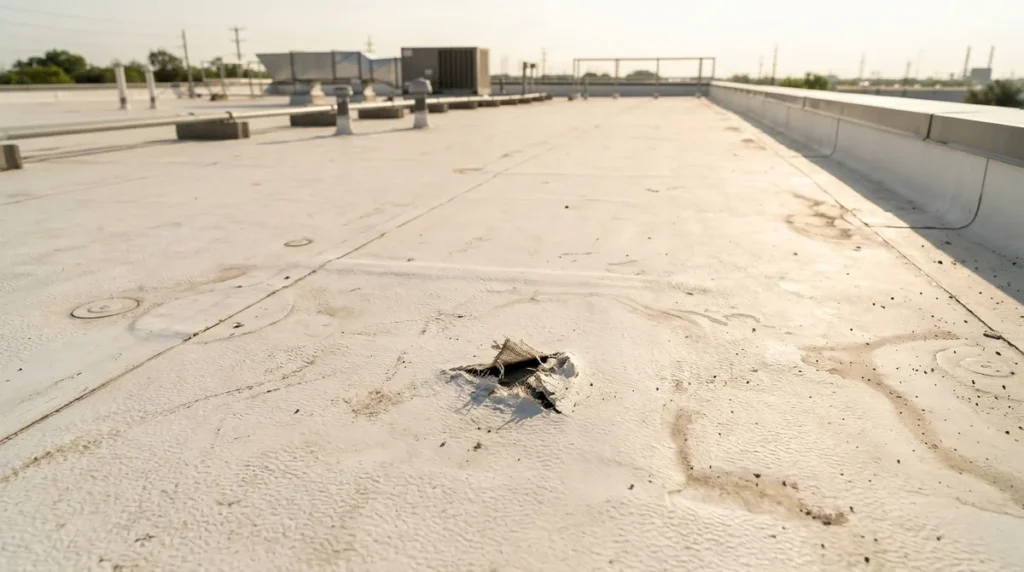
A small puncture or isolated seam failure is usually easier to repair than widespread membrane deterioration. When water travels beneath the roofing surface, the visible leak may be far from the original point of entry.
A contractor may need to remove the damaged membrane, inspect the underlying insulation, replace wet materials, and restore the roof assembly. These additional steps increase labor and material costs but may be necessary to address the actual problem.
Repeatedly sealing the visible leak without investigating the underlying cause can lead to further repairs and continued water intrusion.
3. Water-Damaged Insulation or Roof Deck
Water that enters a commercial roofing system can affect insulation, cover boards, and structural components. Damaged materials may need to be removed and replaced before a durable repair can be completed.
The final cost depends on the size of the affected area, the depth of the damage, disposal requirements, and whether the roof deck needs attention.
Ask your contractor to explain whether the estimate includes removing damaged materials, replacing insulation, restoring the membrane, and disposing of debris. These details help you compare quotes accurately.
4. Roof Access and Building Height
Commercial buildings often contain rooftop HVAC equipment, solar installations, parapet walls, and other obstacles. These features can make repairs more difficult and increase the time needed to reach the damaged area.
A warehouse with clear roof access may require less setup than a multistory commercial building with restricted access. Some projects may also need specialized lifting equipment or additional fall-protection arrangements.
The estimate should identify any significant access or equipment charges so you understand how they affect the total.
5. Emergency Repairs and Weather Conditions
Houston’s heavy rainfall, humidity, intense summer heat, and severe storms can create challenging conditions for commercial roofs. When an active leak threatens inventory, electrical equipment, tenants, or business operations, temporary protection may be needed before permanent repairs can begin.
Emergency work may cost more because of after-hours labor, urgent mobilization, temporary materials, and difficult working conditions. Rain or unsuitable surface conditions can also delay permanent repairs.
If water is actively entering your building, arrange an assessment promptly. The priority is to protect people, equipment, and the building while planning a suitable permanent repair.
For urgent leaks, see our emergency commercial roof services page.
Common Commercial Roof Repairs and What They Involve
Knowing what a repair includes can help you understand why two estimates for the same building may differ.
Commercial Roof Leak Repair
A roof leak can originate from a damaged membrane, failed seam, deteriorated flashing, roof penetration, or drainage problem. The contractor should trace the source rather than simply seal the area where water appears indoors.
The cost depends on the cause, the number of failure points, and whether moisture has spread beneath the surface. A localized repair may be straightforward, while multiple leaks or saturated insulation require more extensive work.
Explore our commercial roof repair services for more information.
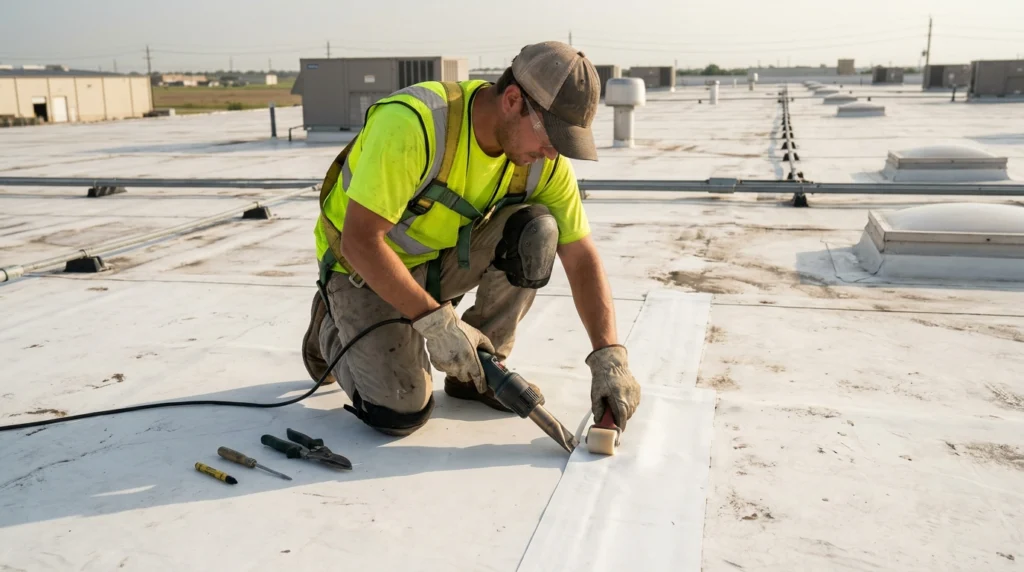
Flashing and Roof Penetration Repair
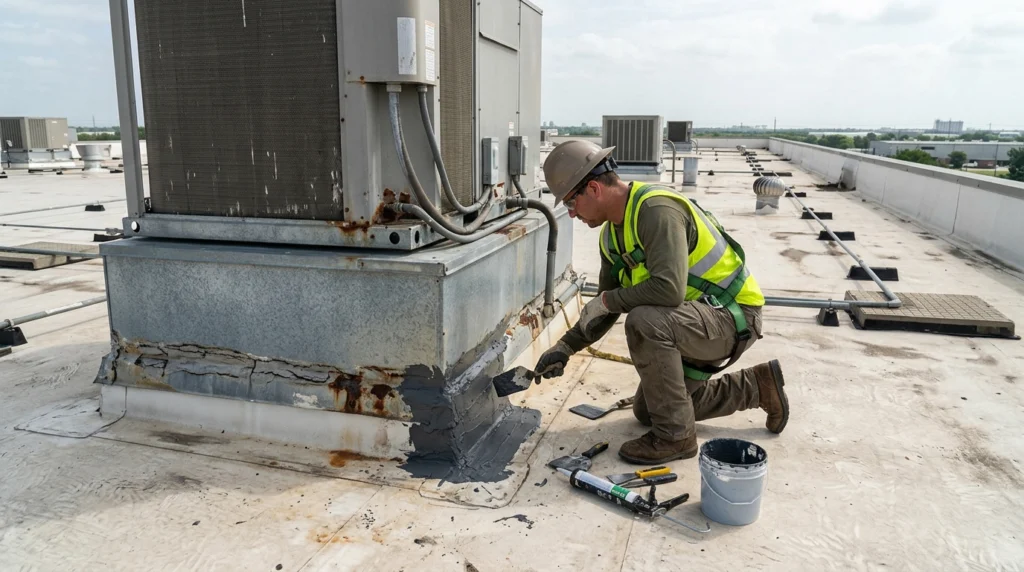
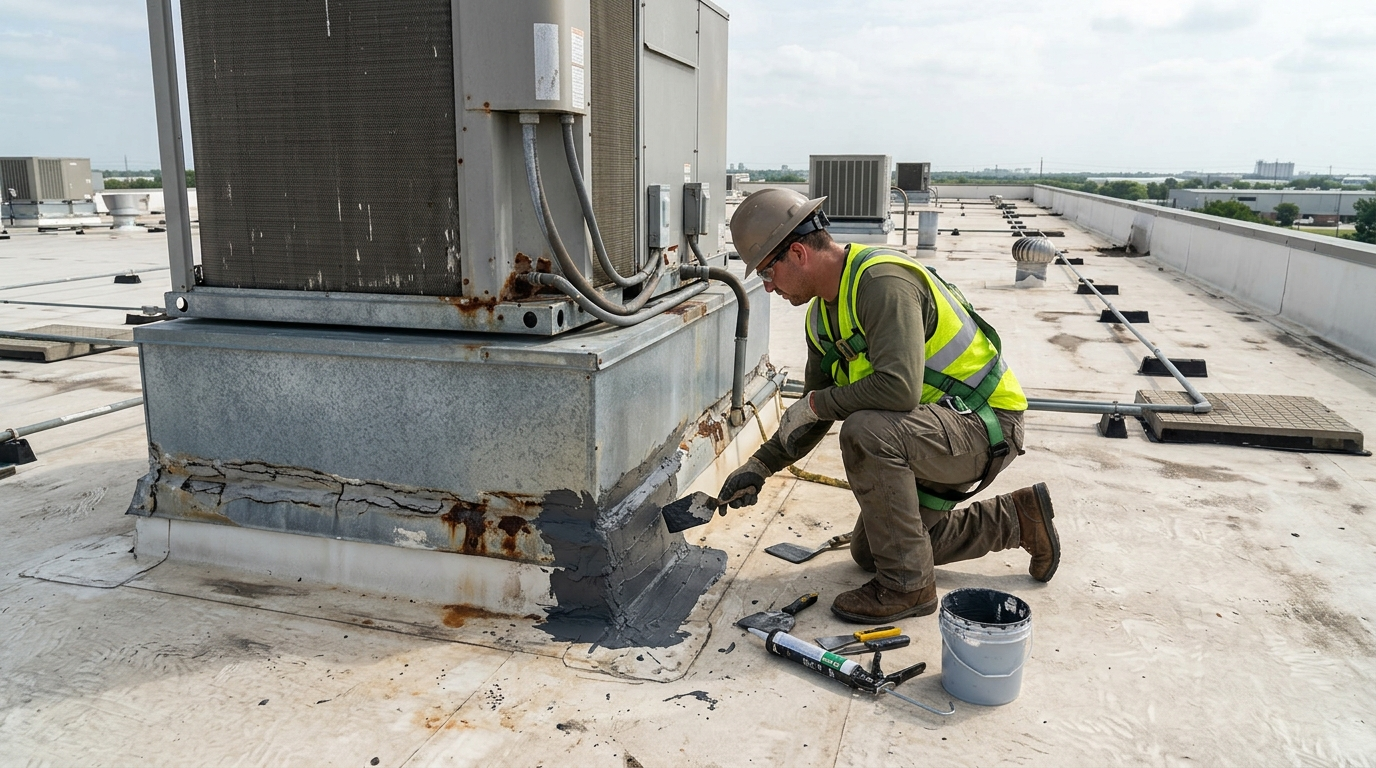
Flashing protects vulnerable areas around HVAC curbs, pipes, vents, skylights, parapet walls, and other roof transitions. When flashing separates, cracks, or loses its seal, water can enter the building even if the main roof membrane remains in good condition.
Repairing flashing may involve removing deteriorated materials, preparing the surface, installing compatible replacement materials, and restoring the waterproof connection.
The size of the penetration, accessibility, and condition of the surrounding roof system affect the final cost.
Flat Roof Membrane Repair
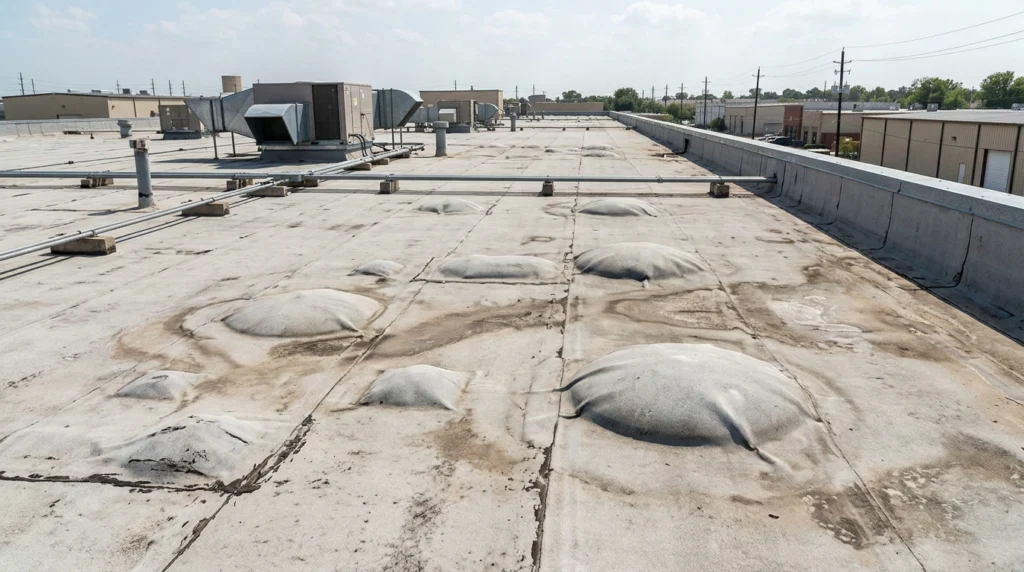
Flat and low-slope commercial roofs can develop punctures, open seams, blisters, splits, and areas of deteriorated membrane. Repair methods depend on the roofing system and the cause of the damage.
Before patching the surface, a contractor should check whether the membrane is firmly attached and whether water has affected the underlying materials. A patch over wet or deteriorated components may not address the full problem.
Drainage and Ponding Water Repair
Blocked drains, damaged scuppers, and drainage deficiencies can allow water to accumulate on a commercial roof. Standing water adds weight and can expose weaknesses in seams, flashing, and other roof details.
Repairs may involve clearing drains, correcting local drainage problems, replacing damaged components, or making more extensive changes to roof slope. The cost depends on whether the problem is limited to a single drain or affects a larger roof area.
If water remains on your roof long after rainfall, investigate the cause rather than treating the standing water as an isolated issue.
How Houston’s Climate Can Affect Commercial Roof Repair Costs
Houston’s climate creates several challenges for commercial roofing systems. Strong sunlight and prolonged heat can accelerate the aging of some roofing materials, while humidity and rainfall can expose weak seams, deteriorated flashing, and drainage problems.
Severe storms can also damage metal panels, loosen roof components, puncture membranes with debris, or expose existing weaknesses. After a storm, a roof may need an inspection even when the damage is not immediately visible from inside the building.
Building owners should consider the following local factors when budgeting for roof maintenance:
- Heavy rainfall: Small openings can allow water to enter and damage interior finishes or equipment.
- High humidity: Moisture trapped within a roofing assembly can complicate repairs and material drying.
- Intense sunlight: Prolonged UV exposure can contribute to the deterioration of some roof materials and sealants.
- Storm-related demand: Contractors may have limited availability after major weather events, affecting scheduling.
- Drainage performance: Roof drains and scuppers need to function properly to move rainwater away from the building.
Regular inspections and prompt repairs can help identify developing problems before they require more extensive work.
Is It Better to Repair or Replace a Commercial Roof?
Repairing a commercial roof is often the practical choice when the damage is localized and the surrounding roofing system remains in serviceable condition. Replacement becomes worth considering when deterioration is widespread, moisture affects large areas of insulation, or repairs no longer provide reliable results.
Use these general guidelines when evaluating your options:
| Consideration | Repair may be suitable | Replacement may be worth considering |
|---|---|---|
| Damage | One or a few isolated defects | Widespread deterioration |
| Insulation | Mostly dry and serviceable | Extensive moisture damage |
| Membrane | Generally sound | Brittle, split, or failing across large areas |
| Repair history | Occasional maintenance | Frequent recurring leaks |
| Long-term plans | Extending the roof’s useful life | Planning for a new roofing system |
A roof’s age alone does not determine whether it needs replacement. Its overall condition, repair history, moisture levels, and expected remaining service life all matter.
If the existing roof is in suitable condition, commercial roof coatings may be another option to evaluate. Coatings are not appropriate for every roof, and they should not be used to conceal widespread moisture damage or unresolved leaks.
A professional assessment can help determine whether a targeted repair, restoration system, or full replacement is the most appropriate investment.
How to Keep Commercial Roof Repair Costs Under Control
Commercial roof maintenance does not eliminate every repair, but a planned approach can help reduce avoidable expenses and unexpected disruptions.
Schedule Regular Roof Inspections
Arrange professional roof inspections at appropriate intervals and after significant storms. The inspection should cover seams, flashing, penetrations, roof edges, drains, and other vulnerable details.
The National Roofing Contractors Association (NRCA) discusses the importance of roof inspections and maintenance, including the risks of overlooking damage beyond the visible leak.
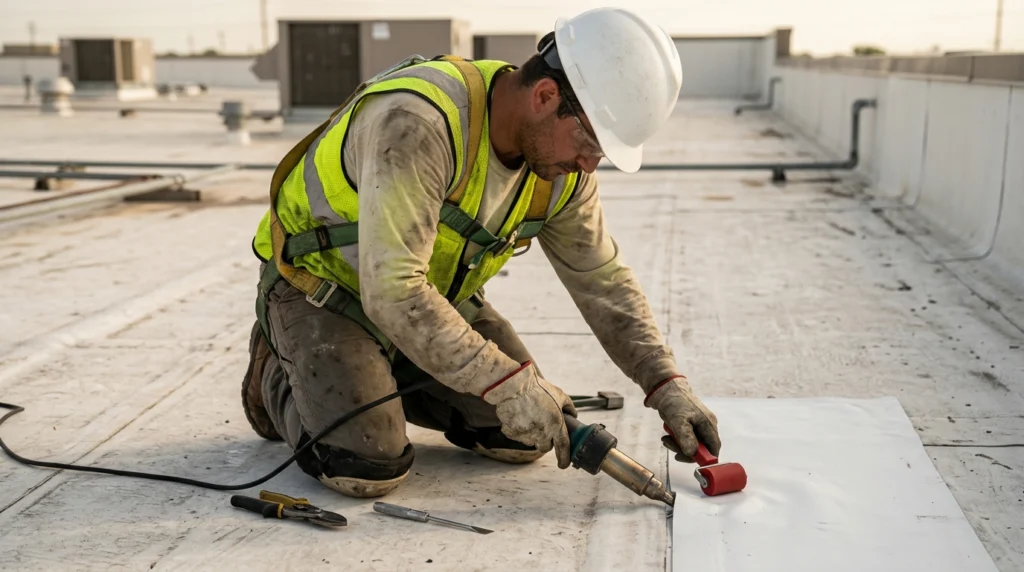
Address Small Problems Early
A loose flashing detail or minor membrane defect may be easier to correct before water reaches the insulation or interior. Do not assume that a small ceiling stain means the roof damage is equally small.
Keep Roof Drains Clear
Remove debris from drains and scuppers through appropriate maintenance procedures. Drainage problems should be investigated promptly, particularly when water continues to accumulate after rainfall.
Compare Written Estimates
When comparing contractors, look beyond the total price. Check whether each estimate identifies the repair area, materials, labor, removal of damaged components, cleanup, warranty terms, and any exclusions.
A low initial quote may not be the best value if it omits necessary work or leaves the underlying cause unresolved.
Keep Records of Roof Repairs
Maintain records of inspections, photographs, repair invoices, and warranty documents. These records help identify recurring issues and support better maintenance and budgeting decisions.
Commercial Roof Repair Costs: Example Budget Scenarios
The following examples show how different repair situations may affect a commercial building’s budget. They are illustrative scenarios, not quotes for a particular Houston property.
Scenario 1: A small warehouse leak
A contractor finds one damaged membrane section with no significant underlying moisture. The work involves preparing the surface, installing a compatible patch, and checking nearby seams.
Budget consideration: This may fall within a minor localized repair budget, depending on service charges and access.
Scenario 2: A leaking HVAC curb
Water is entering near rooftop equipment because the flashing has deteriorated. The contractor must remove failed materials, prepare the curb, and restore the waterproof detail.
Budget consideration: The cost depends on the size of the curb, the repair method, access, and the condition of surrounding materials.
Scenario 3: A storm-damaged roof with wet insulation
A storm damages a section of the membrane and allows water to reach the insulation below. The contractor must remove wet materials, replace the affected layers, and restore the roof surface.
Budget consideration: The repair can cost several thousand dollars or more, depending on the area affected and whether the roof deck is damaged.
These examples illustrate why an inspection and a written scope of work are more useful than a single price-per-square-foot figure.
Commercial Roof Repair in Houston and Surrounding Areas
Commercial buildings throughout Greater Houston face roof maintenance challenges related to rainfall, heat, and severe weather. The right repair approach depends on the building’s roof system, condition, and immediate needs.
Our service-area pages provide more information about commercial roofing in specific communities:
- Commercial Roofing in Katy, TX
- Commercial Roofing in Sugar Land, TX
- Commercial Roofing in Cypress, TX
If your building is in another part of Greater Houston, visit our commercial roofing service areas page.
Frequently Asked Questions About Commercial Roof Repair Costs
How much does commercial roof repair cost in Houston?
Costs vary by damage and scope. A small localized repair may cost a few hundred dollars, while repairs involving drainage, wet insulation, multiple failure points, or emergency work can cost several thousand dollars or more. A written estimate provides the most useful figure for your building.
What is the average cost per square foot for commercial roof repair?
There is no single rate that applies to every commercial roof repair. Contractors may price larger damaged sections by square footage, but individual leaks, seams, flashing, and penetrations are often priced by the repair task.
Does commercial roof insurance cover repair costs?
Coverage depends on your policy, the cause of the damage, applicable exclusions, and the terms of your coverage. Sudden storm damage may be treated differently from deterioration caused by age, wear, or neglected maintenance. Review your policy and document damage before authorizing major work when possible.
Is emergency commercial roof repair more expensive?
It can be. Urgent mobilization, after-hours labor, temporary protection, equipment needs, and hazardous weather conditions may increase the cost. Emergency protection may also be separate from the permanent repair.
Can a commercial roof be repaired without replacing the entire system?
Yes, when damage is localized and the remaining roof assembly is in suitable condition. A contractor should assess the membrane, insulation, drainage, and roof deck before recommending a repair.
How can I get an accurate commercial roof repair estimate?
Arrange an inspection and request a written scope that identifies the cause of the problem, proposed repair method, materials, labor, access requirements, and any exclusions. Photographs and a clear explanation of the work make it easier to compare estimates.
Get a Commercial Roof Repair Estimate in Houston
A roof leak can disrupt business operations, damage equipment and inventory, and lead to more extensive repairs if the underlying problem remains unresolved. Understanding the likely cost is a useful first step, but the right solution starts with identifying the source and extent of the damage.
If your commercial property has a leak, damaged flashing, membrane deterioration, or drainage problems, arrange an assessment to determine the work required. Visit our commercial roof repair page or contact our team to discuss your roofing needs.
Request an estimate before a small problem develops into a larger repair project.