TPO is the best roofing membrane for most Houston commercial buildings. Its white reflective surface handles Houston’s intense heat and UV exposure better than black EPDM, and it costs significantly less than PVC. However, restaurants and facilities with chemical or grease exposure should use PVC, while large warehouses or buildings on a tighter budget may benefit from EPDM with a white coating. The right answer always depends on your building type, usage, and budget.
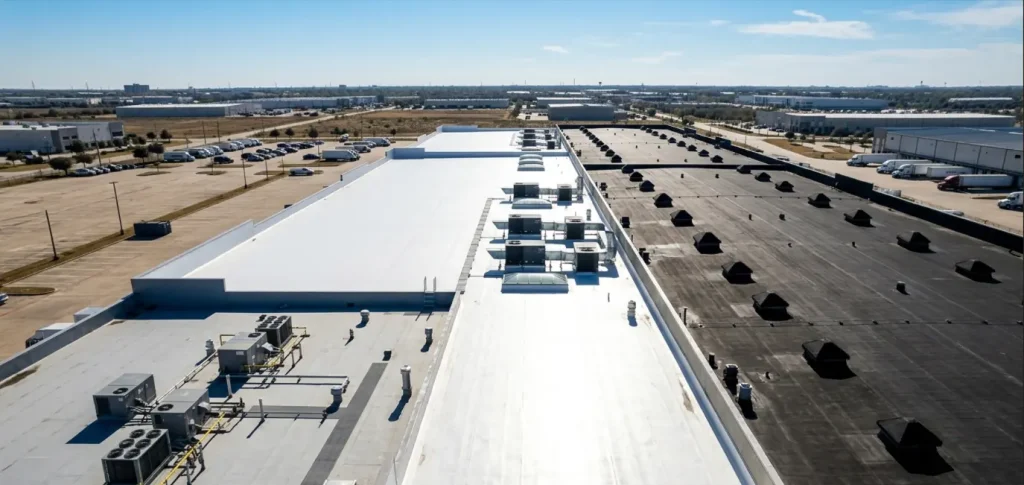
If you manage or own a commercial building in Houston, commercial roofing in Houston conditions means your roof is fighting a battle that most property managers outside of Texas never have to think about. You are dealing with a Gulf Coast climate that combines relentless summer heat, 49 inches of annual rainfall, high year-round humidity, and a hurricane season that runs from June through November. That combination puts enormous stress on any roofing system, and it makes your choice of membrane more consequential than it would be in a milder market.
The three dominant single-ply membrane systems in commercial roofing today are TPO (Thermoplastic Polyolefin), EPDM (Ethylene Propylene Diene Monomer), and PVC (Polyvinyl Chloride). All three are widely used across the United States and are regularly installed on Houston commercial buildings. But they are not equally suited to every situation, and choosing the wrong one for your building can cost you significantly more money over the life of the roof.
What Are Single-Ply Roofing Membranes and Why Do Commercial Roofs Use Them?
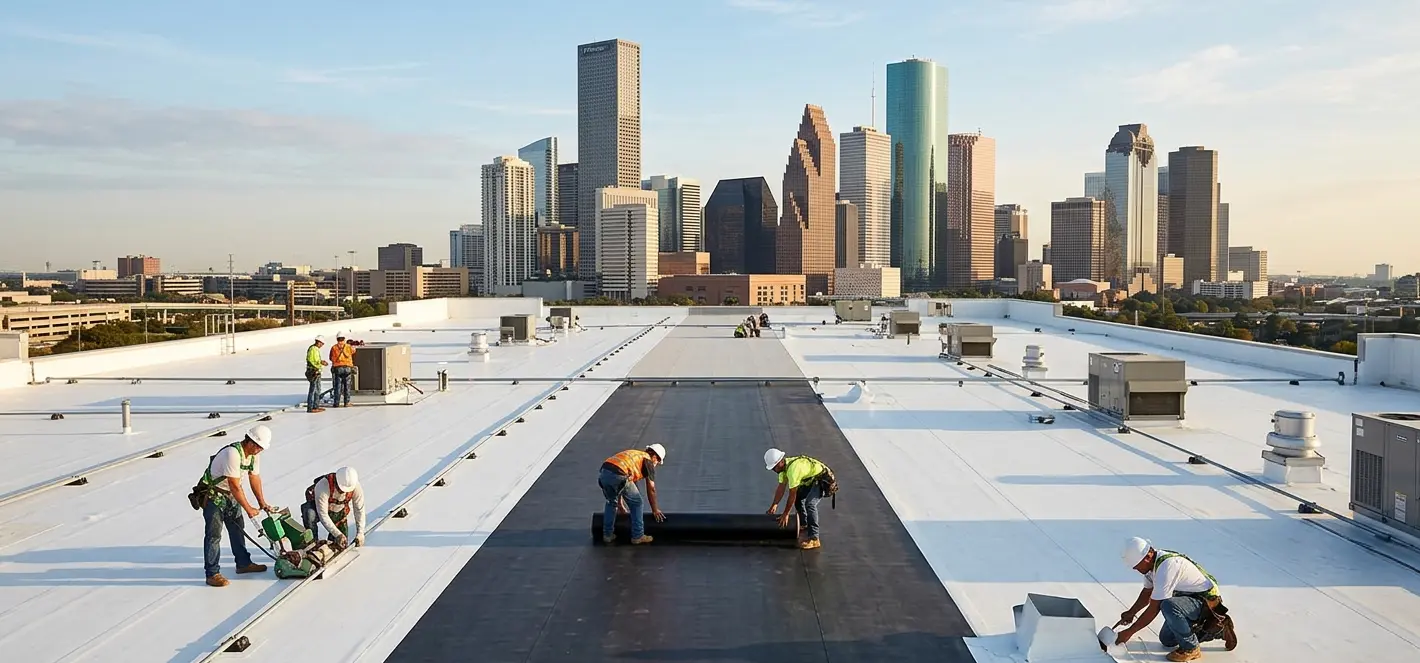
Most commercial buildings in Houston have flat or low-slope roofs. These structures cannot use traditional asphalt shingles because shingles rely on gravity and steep pitch to drain water quickly. Flat roofs need a fully waterproof surface, and single-ply membrane systems are designed exactly for that purpose. They come in large rolls and are installed in a single layer over rigid insulation boards, covering the entire roof deck with a continuous, flexible, waterproof barrier.
The roofing industry broadly uses three types of commercial membrane systems: thermoset membranes (such as EPDM, which cure permanently and cannot be re-welded); thermoplastic membranes (such as TPO and PVC, which can be heat-welded and re-formed); and modified bitumen systems (multilayer asphalt-based membranes often used in higher-slope applications).
TPO Roofing: The Most Popular Commercial Membrane in Houston
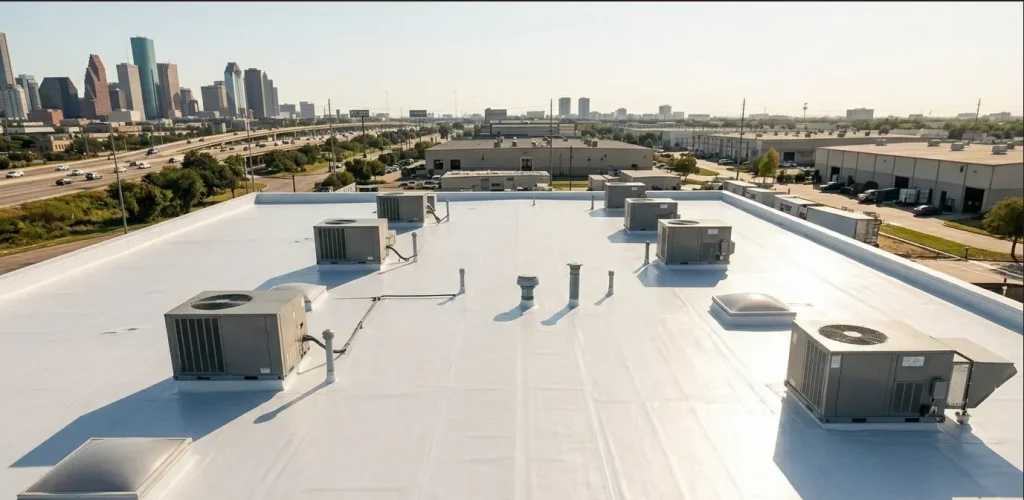
Thermoplastic polyolefin is a single-ply synthetic membrane made from a blend of polypropylene and ethylene-propylene rubber compounds. A reinforcing polyester scrim adds strength and improves tear resistance. This durability makes TPO a popular choice for commercial roof installation projects. TPO is available in thicknesses of 45 mil, 60 mil, and 80 mil, and it comes primarily in white or light gray.
Why TPO Performs Well in Houston
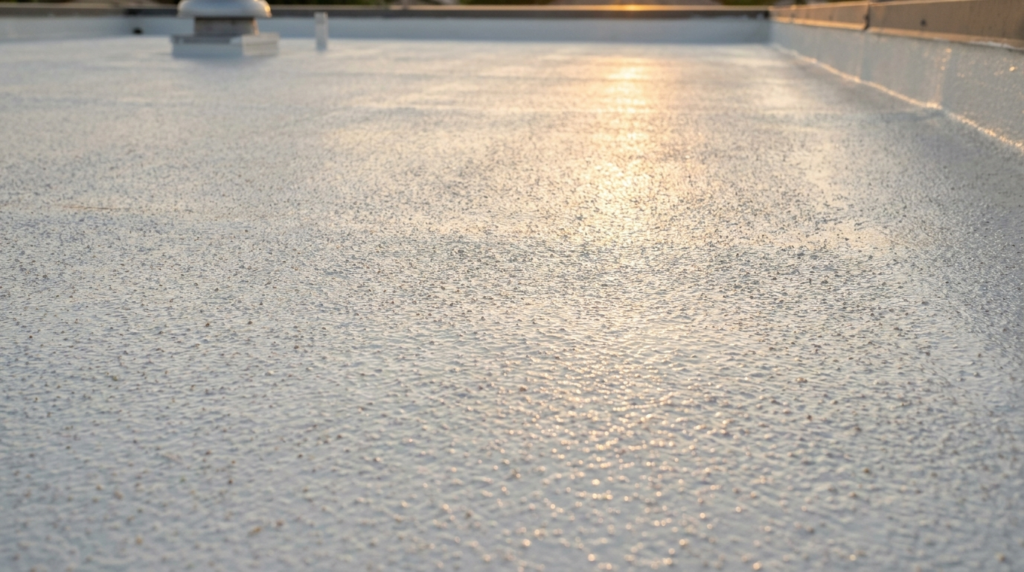
The most important performance characteristic of TPO in a Houston context is its white reflective surface. Rooftop temperatures on dark surfaces in Houston regularly exceed 150 degrees Fahrenheit during the summer months. A white TPO membrane reflects solar radiation rather than absorbing it, which means rooftop surface temperatures stay significantly lower. The Department of Energy has documented that cool roof membranes can reduce rooftop surface temperatures by 50 to 60 degrees Fahrenheit compared to dark surfaces. In practical terms, for a Houston building owner, that translates directly into reduced cooling loads and lower electricity bills every summer for the life of the roof.
The second major advantage of TPO in this market is its heat-welded seam technology. Seams are created by fusing the membrane sheets together with hot air from a specialized welding machine, producing a seam that is actually stronger than the surrounding membrane material itself. In a city where rainfall can arrive in sudden, intense bursts and where hurricane-force winds test every edge and seam on a roof, this seam strength matters enormously. Adhesive-bonded seams on EPDM roofs are more vulnerable to wind uplift and to degradation from repeated standing water exposure, both of which are Houston-specific concerns.
TPO is also resistant to bacterial growth, dirt accumulation, and puncture damage, making it relatively low-maintenance compared to older roofing technologies. Manufacturers like GAF, Carlisle SynTec, Firestone Building Products, and Johns Manville produce TPO systems with strong warranty options when installed by certified contractors. These advantages make TPO a popular choice for commercial roofing services in Houston. It performs well in hot climates and helps protect buildings from long-term weather exposure.
TPO Limitations to Know
TPO’s main weakness is formulation variability. Unlike EPDM, which has a well-standardized chemistry going back more than 60 years, TPO formulations differ significantly between manufacturers. Lower-quality TPO membranes have shown premature cracking and weathering in high-UV environments. This is why specifying a reputable manufacturer and working with a certified installer matters considerably more with TPO than with EPDM.
For Houston applications, a minimum 60-mil thickness is strongly recommended. Buildings with heavy foot traffic around rooftop HVAC equipment or other penetrations benefit from the additional puncture resistance of 80-mil membranes. The cost premium over 60 mil is relatively modest, and the added durability in a high-activity roof environment is worth it.
TPO-installed pricing in the Houston market generally runs between $5 and $10 per square foot, depending on membrane thickness, insulation requirements, number of penetrations, and roof access conditions.
EPDM Roofing: The Proven Long-Distance Runner
Ethylene Propylene Diene Monomer is a synthetic rubber roofing membrane that has been installed on commercial buildings for more than 60 years. It is the oldest and most time-tested single-ply system on the market, and its long track record is one of its most compelling selling points. EPDM is a thermoset material, meaning once it cures, it cannot be remelted or reformed. Seams are created with adhesive tape or contact cement rather than heat welding.
EPDM is predominantly manufactured in black, though white versions are available at a higher price. It comes in larger sheet widths than TPO, which means fewer seams on large roof areas. Thicknesses range from 45 mil to 90 mil. EPDM is cost-effective for commercial roof replacement due to its durability and fewer seams.
How EPDM Holds Up in Houston
EPDM’s strongest performance characteristics are its flexibility and longevity. The rubber compound retains its elasticity across a wide temperature range, which means it handles thermal expansion and contraction without cracking. A well-maintained EPDM roof can realistically last 25 to 30 years, and some installations have exceeded that range.
For large, simple roof footprints like warehouse buildings, distribution centers, or manufacturing facilities where roof access is controlled and foot traffic is minimal, EPDM can be an excellent choice. The fewer seams you have on an EPDM roof, the better it performs, because the adhesive seam technology is the system’s primary vulnerability.
EPDM is also one of the most cost-effective membranes in terms of installed cost, generally running $4 to $8 per square foot in the Houston market. For owners of large commercial properties where the roofed area is substantial, the cost difference between EPDM and TPO can add up to a meaningful number.
The Houston-Specific Challenges for EPDM
Here is where the honest conversation about EPDM in Houston has to happen. Black EPDM absorbs heat rather than reflecting it. On a Houston rooftop in July, a black EPDM surface can reach temperatures above 170 degrees Fahrenheit. That heat transfer pushes your HVAC system harder, and it also stresses the membrane through thermal cycling, the repeated expansion and contraction that occurs as temperatures swing between a cool early morning and a blistering afternoon.
Adhesive seams on EPDM are also more vulnerable in the Houston climate than in drier markets. When standing water sits on a seam repeatedly after heavy rainfall events, which happen frequently in Houston, the adhesive bond degrades faster than in markets with lighter or more consistent rainfall patterns. Ponding water is one of the most common causes of EPDM seam failure in Gulf Coast climates.
If you choose EPDM for a Houston building, specify white EPDM or plan for a reflective coating application; use a minimum 60-mil membrane; and invest in a tapered insulation system that eliminates ponding water. Without those specifications, an EPDM roof in Houston will underperform relative to its potential.
PVC Roofing: The Premium Option for Specific Applications
Polyvinyl chloride roofing is a thermoplastic membrane that shares some characteristics with TPO, including heat-welded seams, but it has a distinct chemical composition that gives it superior resistance to specific environmental threats. PVC has been used in commercial roofing applications for more than 40 years and has a strong track record in specialized environments.
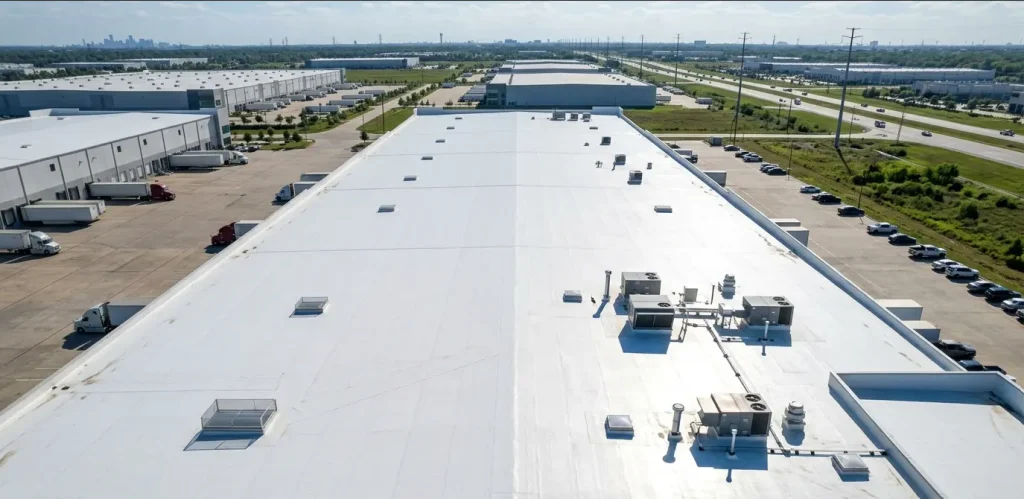
Like TPO, PVC is light in color and reflective. Its seams are heat-welded to create bonds that are among the strongest available in any single-ply system. PVC is available in various formulations, including KEE (Ketone Ethylene Ester) modified versions that offer enhanced chemical resistance.
Where PVC Excels in the Houston Market:
PVC has one standout advantage over both TPO and EPDM: chemical resistance. Grease, cooking oils, animal fats, petroleum products, and industrial chemicals that would degrade EPDM or even standard TPO will not break down a properly specified PVC membrane.
For Houston commercial properties, this makes PVC the correct choice for restaurants, commercial kitchens, food processing facilities, pharmaceutical manufacturing plants, and any building where rooftop exhaust vents, kitchen hood systems, or chemical storage expose the roof surface to oils or solvents. Using EPDM or standard TPO under a restaurant kitchen exhaust vent is a specification error that leads to premature membrane failure and costly repairs.
PVC also offers excellent fire resistance ratings, which is relevant for certain occupancy types under Harris County and City of Houston building codes.
PVC Cost Considerations
The primary reason PVC is not the default choice for most Houston commercial buildings is cost. Installed PVC roofing typically runs $7 to $12 per square foot in the Houston market, putting it at the higher end of the single-ply membrane category. For a building that genuinely needs chemical resistance, that premium is entirely justified because the alternative is premature membrane failure. For a standard office building or warehouse with no chemical exposure, the premium buys little additional benefit over a properly installed TPO system.
PVC membranes can also become brittle as plasticizers leach out of the material over time, though modern PVC formulations have significantly improved this issue, and KEE-modified versions perform better in high-temperature Gulf Coast conditions.
Comparison of Houston Commercial Roofs
| Feature | TPO | EPDM | PVC |
| Reflectivity | Excellent | Poor (black EPDM) | Excellent |
| Energy Efficiency | High | Moderate | High |
| Seam Strength | Excellent | Moderate | Excellent |
| Wind Resistance | Excellent | Moderate | Excellent |
| Ponding Water Resistance | Strong | Moderate | Strong |
| Chemical Resistance | Moderate | Poor | Excellent |
| Fire Resistance | Good | Moderate | Excellent |
| Average Lifespan | 15–25 Years | 25–30+ Years | 25–30 Years |
| Maintenance Needs | Low | Moderate | Low |
| Installation Cost | $$ | $ | $$$ |
| Best For | Offices & retail | Warehouses | Restaurants & chemical exposure |
Which Membrane Should You Choose for Your Houston Commercial Building?
The answer is not one-size-fits-all, but here is a practical decision framework based on building type.
For standard office buildings, retail spaces, medical offices, and similar commercial properties, TPO is the right specification for most situations. The energy savings from its reflective surface are real and ongoing, the heat-welded seams hold up in Houston’s weather pattern, and the cost is reasonable for the performance delivered.
For large warehouses, distribution centers, or manufacturing facilities where the roof is simple, foot traffic is controlled, and keeping first cost down matters, EPDM can be a strong choice if specified correctly with a white coating or white membrane and proper tapered insulation for drainage.
For restaurants, commercial kitchens, food processing plants, or any facility with rooftop chemical exposure, PVC is not an upgrade; it is the correct specification. Saving money by installing TPO or EPDM under active grease exhaust will cost far more in premature repairs and replacement.
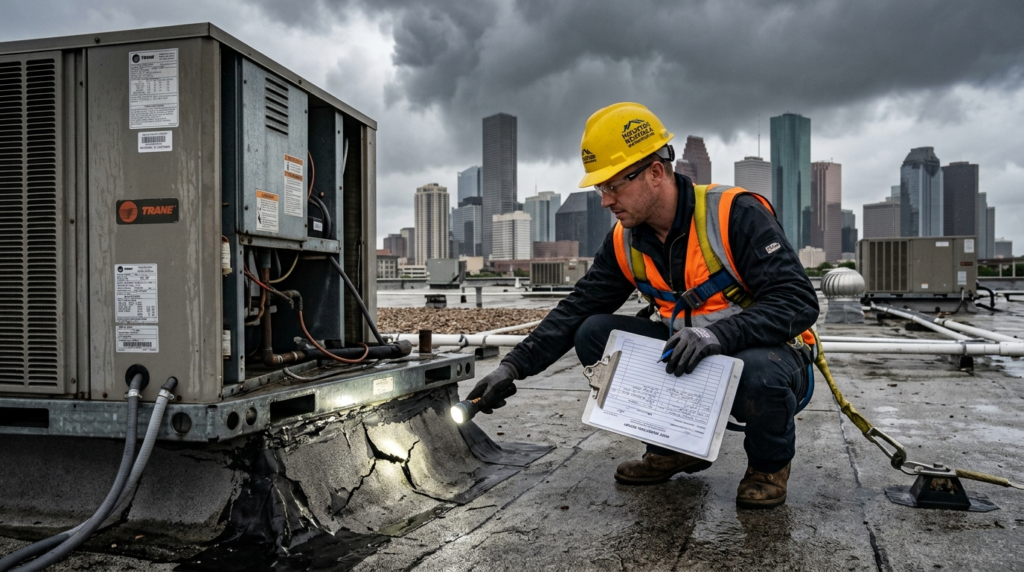
For large industrial campuses or healthcare facilities with complex rooftop equipment layouts, consider working with a licensed commercial roofing contractor to perform a full roof assessment before specifying a system. Building configuration, existing insulation conditions, drainage infrastructure, and local building code requirements all factor into the right decision.
Property owners seeking Glendale Roofing Services CA should also prioritize a detailed roof evaluation to ensure the selected roofing system aligns with the building’s operational and performance needs.
The Role of Installation Quality in Houston
One point every Houston property owner should understand is this:
“The membrane is only part of the equation.”
A properly installed EPDM roof can outlast a poorly installed TPO roof by a decade.
Likewise:
- Improper seam welding
- Weak edge detailing
- Incorrect drainage design
can cause even premium roofing systems to fail early.
FAQs
Can I put a roof coating over my existing EPDM roof?
Yes, and in many cases it makes excellent economic sense. A silicone or acrylic elastomeric coating over a sound EPDM membrane can extend its service life by 10 or more years while adding reflectivity, often for a fraction of replacement cost. A professional inspection is required first to confirm the existing membrane is structurally sound and free of trapped moisture.
Does Houston’s hurricane season require special roofing specifications?
Yes. Commercial roofing systems in Houston should be specified to meet ASCE 7 wind uplift requirements for this region, which are more demanding than specifications used in inland markets. Mechanical attachment patterns, edge metal selection, and membrane thickness all need to account for Gulf Coast wind exposure.
How often should a commercial roof be inspected in Houston?
Twice per year is the industry recommendation, typically in spring before the hurricane season and in fall after peak storm activity. Additionally, a professional inspection is advisable after any significant storm event. Harris County’s weather pattern makes proactive inspection schedules more important here than in most other major U.S. markets.
Is it worth replacing a failed EPDM roof with TPO in Houston?
Generally, yes, especially if cooling costs are a concern for your business. The reflective benefit of TPO over black EPDM translates into real utility savings that compound over the life of the roof. A licensed commercial roofing contractor can run a rough energy cost analysis for your building to quantify the projected savings.
Final Words
For the majority of commercial buildings in Houston, TPO is the strongest all-around specification among the three main single-ply membrane options.
If you are not sure which system is right for your Houston commercial building, the most productive first step is a professional roof assessment. A licensed commercial roofing contractor with Gulf Coast experience can evaluate your current roof condition, your building’s specific occupancy demands, and your long-term budget to give you a recommendation grounded in the actual conditions your roof will face.
If you are ready to move forward or simply want a second opinion on your current roof, contact us today to schedule a free commercial roof inspection, no obligation, no pressure, just an honest assessment from a contractor who knows Houston roofs.