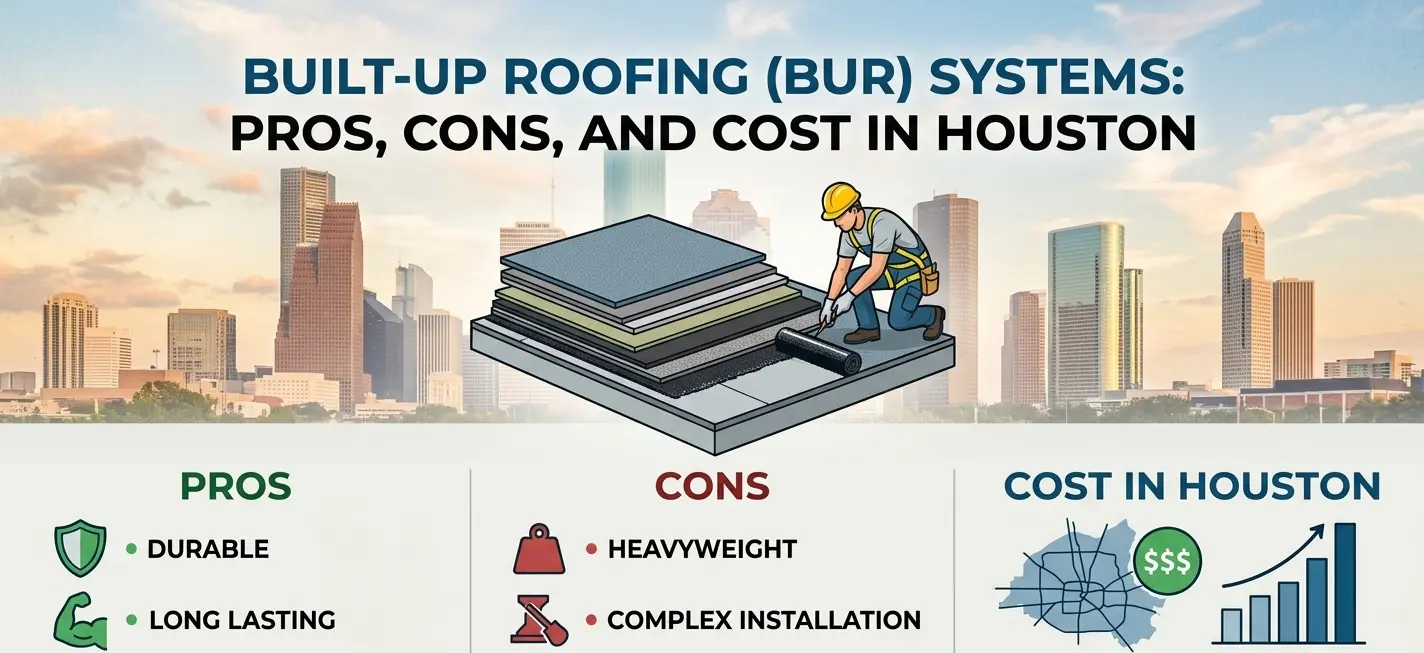
Built-Up Roofing (BUR) in Houston typically costs between $5.75 and $13.80 per square foot installed, making it one of the more affordable multi-layer systems used in commercial roofing Houston projects. For a standard 10,000-square-foot commercial building, that translates to a total investment ranging from $57,500 to $138,000, depending on the number of plies, insulation requirements, and Gulf Coast-specific wind uplift ratings.
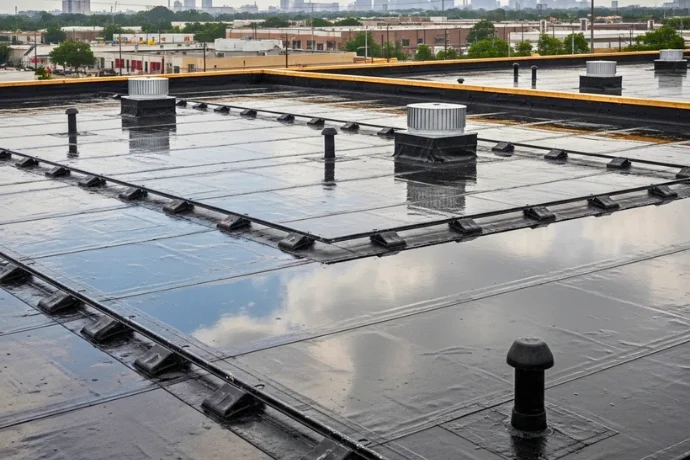
BUR is a strong fit for Houston commercial roofing properties with heavy rooftop equipment or high foot traffic, though property owners should weigh its performance against the city’s intense UV exposure, year-round humidity, and hurricane season demands before committing.
What Is Built-Up Roofing
Built-up roofing (BUR) is a multi-layer roofing system made of alternating plies of reinforcing material, such as fiberglass, polyester, or organic mats, and hot asphalt or tar. The layers are then covered with a protective surfacing, such as gravel or mineral granules, to protect against sunlight, fire, and physical wear.
BUR is one of the most established commercial roof systems in North America, and its long track record makes it a familiar choice for warehouses, retail centers, office buildings, and industrial facilities. It is also a trusted option for commercial roof replacement projects where long-term durability is a priority.
The Three Types of BUR Systems
The following are the three types of Bur systems:
- Hot-Applied BUR
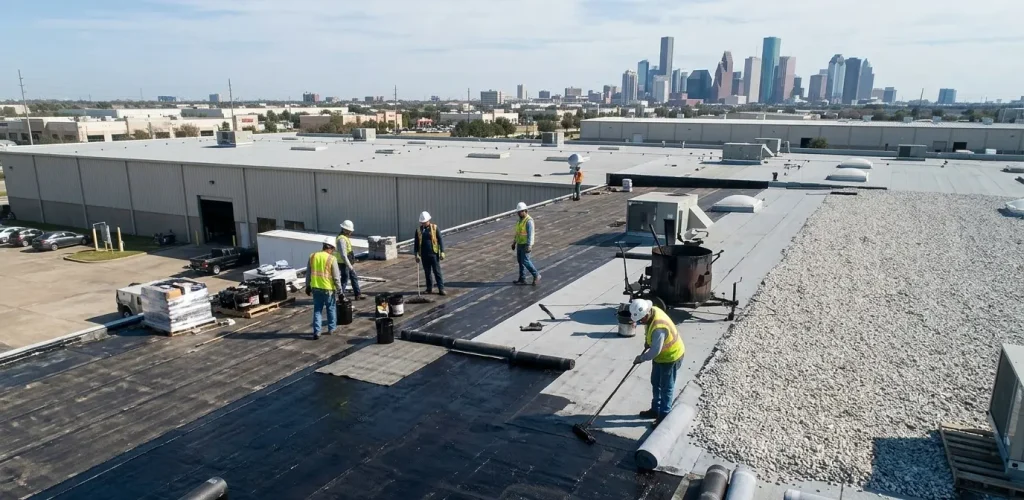
Hot-applied bur is the most common approach. Liquid asphalt is heated in a rooftop kettle until it becomes workable, and then it’s mopped or spread out between layers of reinforcing material. The heat fuses the layers into a continuous membrane. Hot-applied systems deliver excellent adhesion and are considered the benchmark for waterproofing performance, though the process produces fumes that require ventilation planning in occupied buildings.
- Cold-Applied BUR
Cold-applied BUR uses adhesive bonding agents instead of heated asphalt, which eliminates the kettle equipment and reduces fume exposure. The trade-off is that cold-applied systems are somewhat more weather-sensitive during installation and may cure more slowly in Houston’s high humidity. For occupied commercial buildings in dense areas of Houston, cold-applied is often preferred for logistical reasons.
- Ballasted BUR
Ballasted bur relies on a heavy layer of gravel or river stone placed on top of the membrane to hold it in place by weight rather than adhesion. Installation is straightforward, but the added load requires a careful structural assessment before installation, which is particularly important for older commercial buildings across Houston that were not originally designed for ballasted systems.
How a Built-Up Roof System Performs in Houston’s Climate
In a BUR system:
- The base layer adheres to the roof deck.
- Reinforcing plies add strength and tear resistance.
- Hot asphalt or bitumen bonds the layers together.
- A surfacing layer protects the assembly from UV exposure and weather.
This system creates redundancy; if one layer fails, the others remain intact and continue to provide waterproofing. That makes BUR highly resilient in climates like Houston’s, where temperatures swing, and storms can be severe.
Pros of Built-Up Roofing Systems
The following are the pros of built-up roofing systems:
- Durability and Longevity
One of the biggest advantages of a built-up roofing system is its long service life. When properly installed and maintained, a BUR can last 20 to 30 years or more, sometimes longer in moderate climates. The multiple plies add strength, helping the roof resist punctures, wind uplift, and foot traffic from HVAC servicing.
- Excellent Waterproofing
Because a BUR system has multiple layers bonded together, it provides strong protection against water intrusion. Water struggles to penetrate through multiple plies, making it one of the more reliable systems for flat commercial roofs.
- Proven Performance History
Built-up roofing has been used for decades across the United States, and many property owners and commercial roofing contractors, including those in Houston, trust it for industrial and large-span buildings because of its proven track record.
- Thermal Mass Benefits
The thick assembly offers extra thermal mass, which can help reduce indoor temperature swings and provide some insulation benefits. When combined with additional thermal insulation materials, BUR can contribute to energy efficiency.
- Fire Resistance
When properly surfaced with gravel or mineral caps, a built-up roofing system can offer enhanced resistance to fire exposure, an advantage in commercial settings where fire codes are stringent.
Cons of Built-Up Roofing Systems
The following are the cons of built-up roofing systems:
- Heavy System Weight
Because BUR has multiple layers of membrane and surfacing, it is heavier than single-ply systems such as TPO or PVC roofing membranes. Buildings with limited structural strength may need extra reinforcement before installation.
- Installation Complexity
Built-up roofing must be installed by experienced commercial roofers. Hot asphalt application requires safety precautions, proper equipment, and good weather conditions. Improper roof installation can lead to weak spots and premature failure.
- Lower Reflectivity
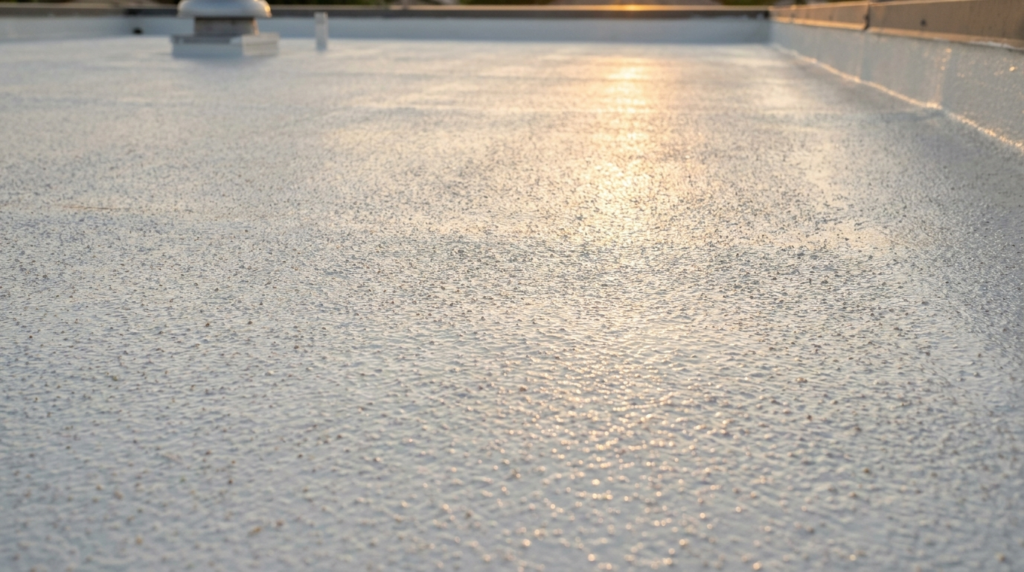
Most BUR systems are black and absorb heat. In a hot climate like Houston’s, this can increase cooling costs unless paired with reflective surfacing or coatings. Roof coatings with high reflectivity can help mitigate heat absorption if applied over BUR.
- Maintenance Requirements
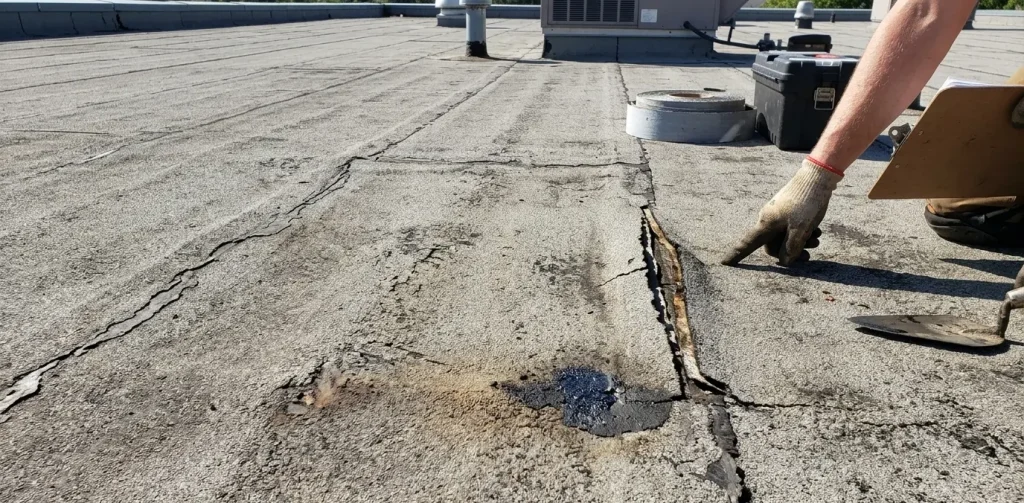
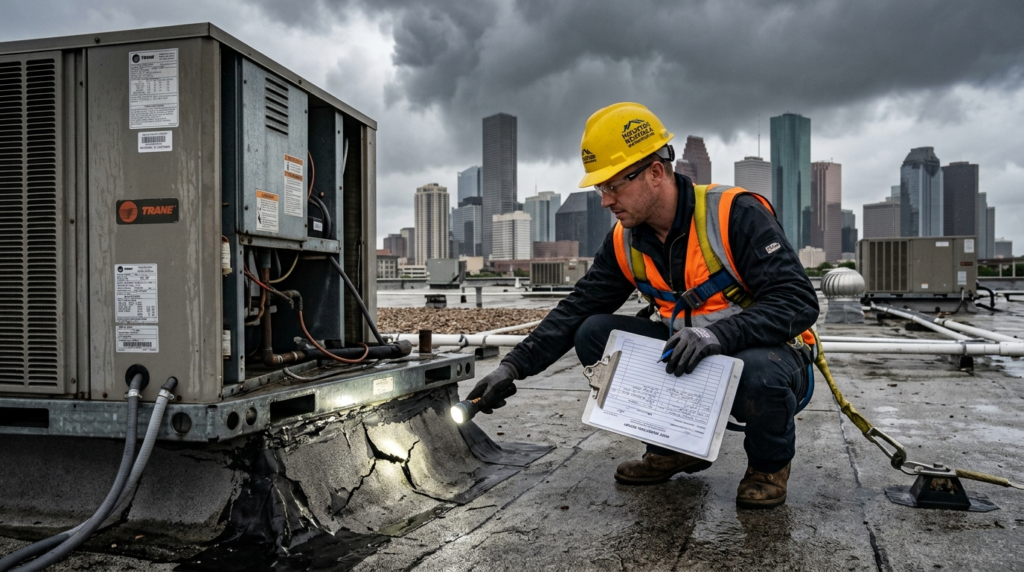
Although durable, BUR systems can develop issues like splits or membrane bleeds over time. When damage goes undetected, moisture can silently travel through layers, making professional roof leak detection an important part of any long-term maintenance plan.
Cost of Built-Up Roofing in Houston
The cost of commercial roofing varies based on the following factors:
- Roof size and slope
- Accessibility and existing roof condition
- Roof deck type
- Insulation requirements
- Material selection
- Local labor rates
Generally, built-up roofing falls into a mid-to-high cost range among commercial systems. In Houston, you can expect approximate installed costs like the following:
| Roofing System | Estimated Installed Cost per Square Foot |
| Built-Up Roofing (Standard) | $8.00 – $12.00 |
| Built-Up Roofing with Heavy Gravel Surfacing | $10.00 – $15.00 |
| Additional Insulation | $1.50 – $3.00 extra per sq ft |
Actual prices will vary based on the building specifics and contractor pricing. Always request multiple commercial roof estimates and detailed line-item proposals before committing.
BUR vs Other Commercial Roof Systems in Houston
| Feature | Built-Up Roofing | TPO Roofing | PVC Roofing | Metal Roofing |
| Water Resistance | Excellent | Very Good | Very Good | Good |
| Heat Reflectivity | Lower | High | High | Variable |
| Longevity | 20–30+ Years | 15–25 Years | 20–30 Years | 30+ Years |
| Installation Complexity | High | Moderate | Moderate | High |
| Repairability | Good | Good | Good | Moderate |
This comparison shows that BUR performs well in key areas like waterproofing and durability, but it may lag in energy reflectivity unless combined with reflective coatings.
Is Built-Up Roofing Right for Houston Businesses?
Yes, if your property has a flat or low-slope roof, seeks long-term durability, and can accommodate the weight of a BUR system, then a built-up roofing system can be an excellent choice.
Best candidates include:
- Large warehouses
- Retail centers
- School or university buildings
- Industrial facilities
- Office buildings with high rooftop traffic
We provide built-up roofing services across Houston and surrounding areas, including Katy, Sugar Land, and The Woodlands. View our service areas for complete coverage
If energy efficiency and heat reflection are priorities, you may also consider single-ply membranes like TPO or PVC, or top them with a cool roof coating for improved performance.
How Commercial Roofing Professionals Approach BUR in Houston
Experienced commercial roofing contractors begin with a thorough roof inspection, including substrate evaluation, drainage capabilities, and Houston climate factors. They assess:
- Structural load capacity
- Insulation requirements
- Drainage design and ponding risk
- Long-term maintenance plans
This process ensures you get a roofing solution that balances durability, cost, and performance for your specific building needs.
FAQs
1. What is a Built-Up Roofing (BUR) system?
A built-up roofing system is a flat- or low-slope roofing method consisting of multiple layers of bitumen and reinforcing fabrics, finished with a protective gravel or mineral surface. It creates a thick, waterproof membrane ideal for commercial buildings.
2. Is BUR roofing good for Houston weather?
Yes. BUR performs very well in Houston because the layered design resists heavy rain, standing water, humidity, and UV heat. The gravel surface also protects against sun damage and thermal expansion.
3. How long does a BUR roof last in Houston?
A properly installed BUR roof in Houston typically lasts between 20 and 30 years, depending on maintenance and material quality.
4. How much does BUR roofing cost in Houston?
The average cost of BUR roofing in Houston ranges from $5 to $9 per square foot, depending on the number of layers, insulation, and roof size.
5. What are the advantages of BUR roofing for commercial buildings?
BUR offers excellent waterproofing, durability, fire resistance, UV protection, and low maintenance, making it ideal for warehouses, retail plazas, and office buildings.
6. What are the disadvantages of BUR roofing?
BUR installation takes longer, adds weight to the structure, and can produce odors during installation due to the hot asphalt application.
7. Is BUR better than TPO or modified bitumen?
BUR is thicker and more durable than TPO and modified bitumen. It is better for long-term waterproofing and foot traffic, while TPO is lighter and more reflective.
Final Takeaway
Built-up roofing systems remain a solid, time-tested choice for many commercial buildings in Houston. Their multi-layer waterproofing, durability, and longstanding performance record make them attractive when installed and maintained correctly. While they may require more careful planning and a higher upfront cost than single-ply membranes, the long service life and waterproof resilience can justify the investment.
Contact our team today to schedule a commercial roof assessment and receive expert guidance tailored to your building, budget, and performance requirements.