PVC roofing is the single best flat roof membrane for restaurants and industrial facilities in Houston. Its natural resistance to grease, animal fats, cooking oils, and industrial chemicals makes it the only single-ply membrane that holds up reliably around commercial kitchen exhaust systems and factory emissions.
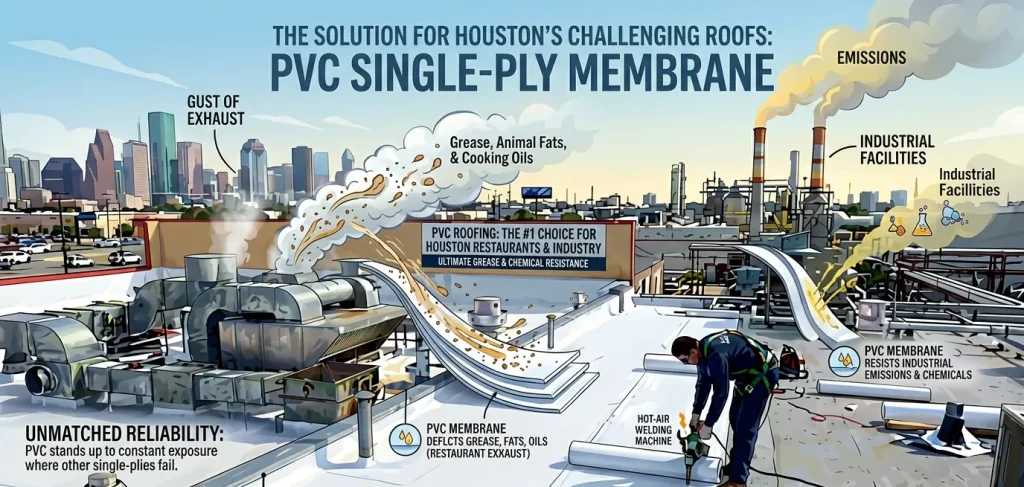
In a city like Houston, where summer heat is relentless, and Gulf Coast storms arrive without warning, a properly installed PVC membrane protects your building, keeps your energy bills in check, and lasts 20 to 30 years with minimal attention. If you run a restaurant, food processing plant, chemical facility, or manufacturing operation in the Greater Houston area, this guide covers everything you need to make a confident roofing decision.
What Is PVC Roofing and Why Does It Matter for Houston Buildings
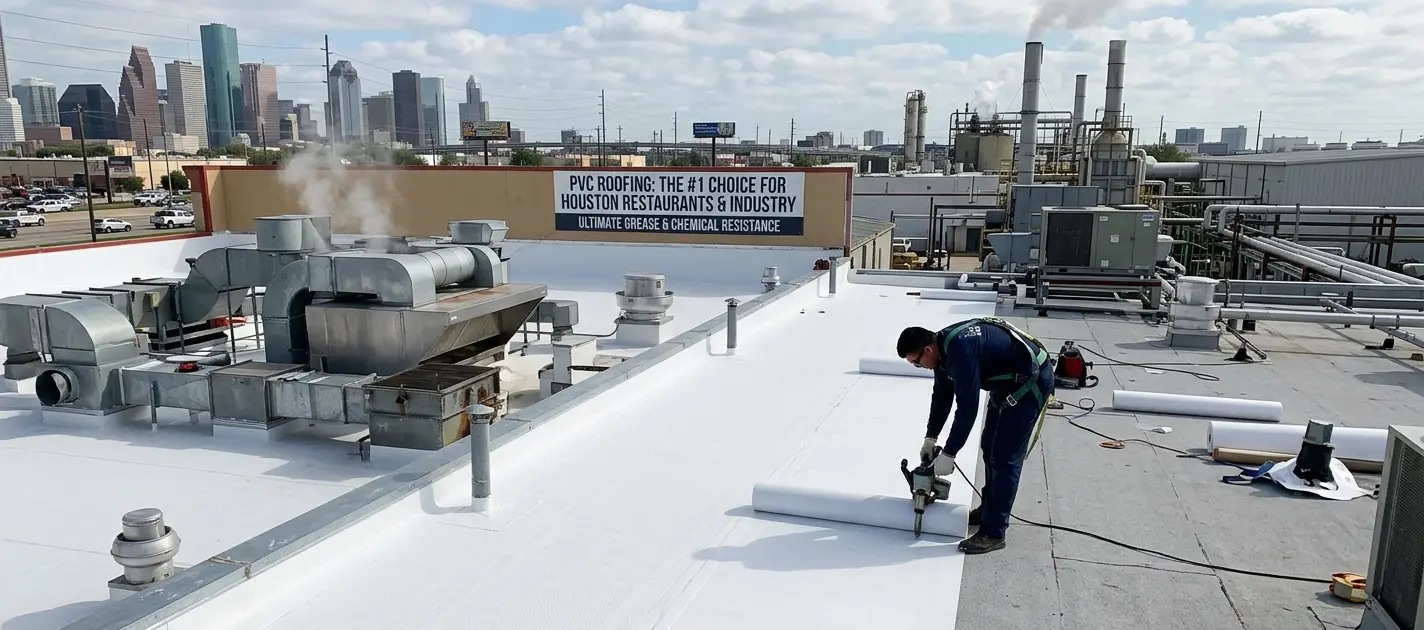
Polyvinyl chloride, or PVC, is a thermoplastic roofing membrane that is installed as a single-ply commercial roofing system. Unlike traditional built-up roofing or modified bitumen membranes, PVC roofing sheets are heat-welded at the seams to create a continuous, waterproof surface.
This system is widely used on flat roofs and low-slope commercial roofs, especially where exposure to heat, grease, chemical fumes, or storm conditions is frequent, all common factors for restaurants and industrial facilities in Commercial Roofing Houston.
Key performance benefits of PVC include:
- Excellent chemical resistance, making it suitable for restaurant exhaust and industrial emissions
- Strong weatherproofing for heavy rain and wind events
- It reflects solar heat, helping lower energy costs
- Seam strength that resists water intrusion
Benefits of PVC Roofing for Restaurants in Houston
The following are the benefits of PVC roofing for restaurants in Houston:
- Strong Resistance to Oil and Grease
PVC roofing membranes handle constant exposure to cooking exhaust, grease, and cleaning chemicals without deteriorating. This makes them preferable to systems that soften or absorb oils over time.
- Energy Efficiency and Heat Reflection
With Houston’s intense summer sun, a reflective PVC membrane helps reduce cooling loads inside the building. Less heat absorption means more efficient HVAC performance and lower operating costs.
- Durability Under Frequent Roof Traffic
Restaurant rooftops often house mechanical equipment. PVC’s durable membrane resists punctures and abrasion, protecting the underlying insulation layer and roof deck longer than some other membranes.
Why PVC Roofing Works Well for Industrial Facilities
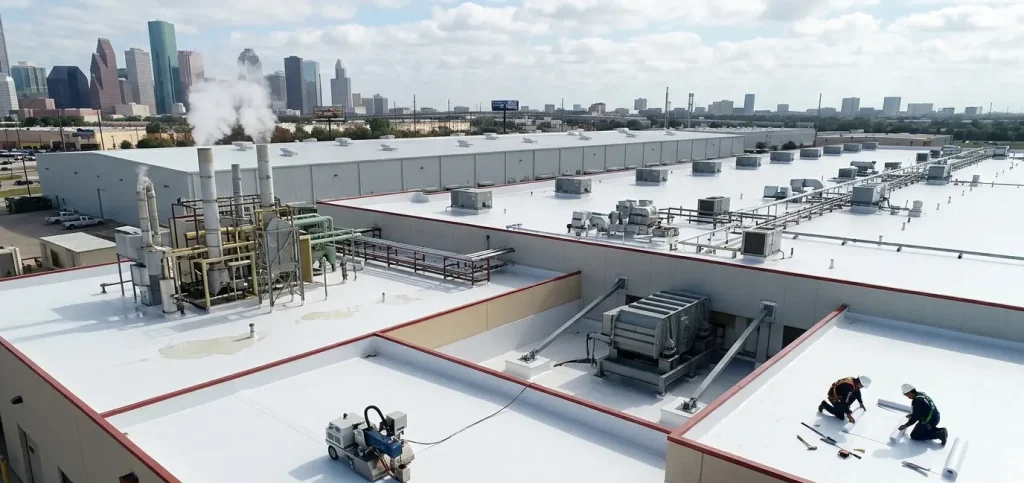
Industrial facilities, warehouses, and manufacturing buildings have their own set of challenges. Heavy machinery vibrations, chemical exposure, storage equipment, and large roof footprints demand a robust roofing solution.
Resistance to Chemical Exposure
Industrial sites often contend with acid vapors, lubrication fluids, and other chemical exposures that can quickly degrade inferior membranes. PVC’s chemistry provides excellent long-term resistance.
Weather Protection for Large Roof Areas
Because industrial roofs are often very large, leak prevention is a major priority. Heat-welded PVC seams significantly reduce water intrusion points compared to mechanically fastened systems.
Ease of Repair and Maintenance
PVC membranes are relatively straightforward to repair. Localized seam or membrane repair can be handled quickly without complete system replacement, minimizing downtime — a critical factor for industrial operations.
How PVC Roofing Performs Under Houston Weather Conditions
PVC roofing performs under Houston weather conditions as follows:
Heat and UV Exposure
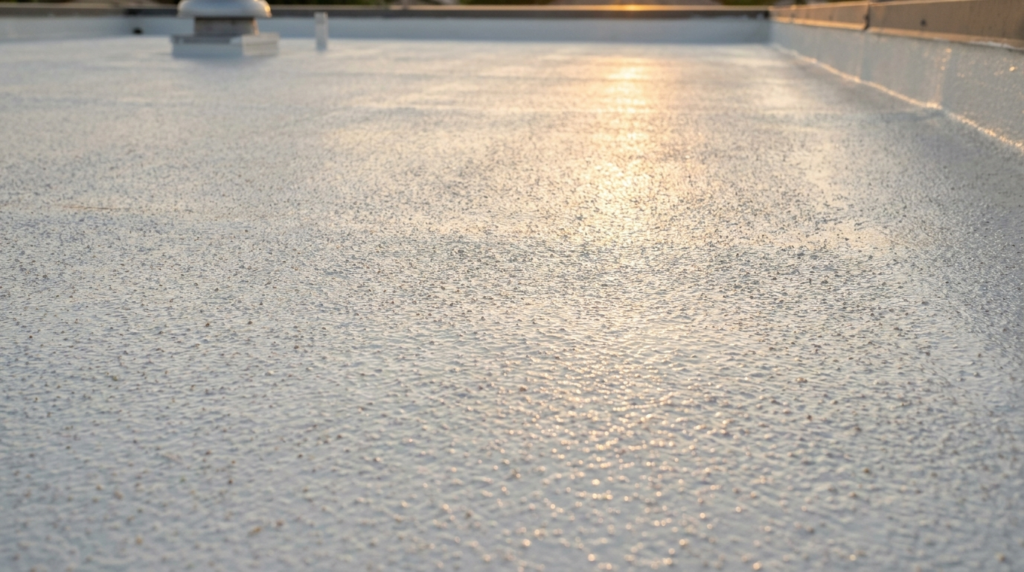
PVC roofing has good UV resistance, and the lighter color helps reflect sunlight. This can lead to real energy savings in the long summer months.
Rain, Humidity, and Storm Impact
Houston’s storm season subjects roofs to heavy rainfall, ponding water, and high winds. A properly installed PVC system drains well and resists standing water damage when paired with a well-designed drainage system.
Storm Resilience
PVC membranes are flexible and resilient, allowing them to withstand expansion and contraction from quick temperature swings, which are common in the Gulf Coast region.
PVC Roofing Compared to Other Commercial Roofing Systems
The following table shows how PVC measures up against some alternative membranes:
| Feature | PVC Roofing | TPO Roofing | EPDM Roofing | Modified Bitumen |
| Weather Resistance | Very high | High | Moderate | Good |
| Chemical Resistance | Very high | Moderate | Poor | Moderate |
| Heat Reflectivity | Excellent | Excellent | Poor | Average |
| Seam Waterproofing | Welded | Welded | Adhesive | Torch/Adhesive |
| Typical Lifespan | 20+ years | 15–20 years | 10–15 years | 15–25 years |
This comparison makes PVC especially strong in environments where chemical exposure or grease contact is regular, such as restaurant exhaust areas or industrial workspaces dealing with chemical processes.
Installation and Maintenance Considerations in Houston
Professional Installation Matters
PVC roofing must be installed by experienced commercial roof installation contractors to ensure the following:
- Correct heat welding of seams
- Proper insulation layer setup
- Effective roof drainage design
- Integration with HVAC and rooftop equipment
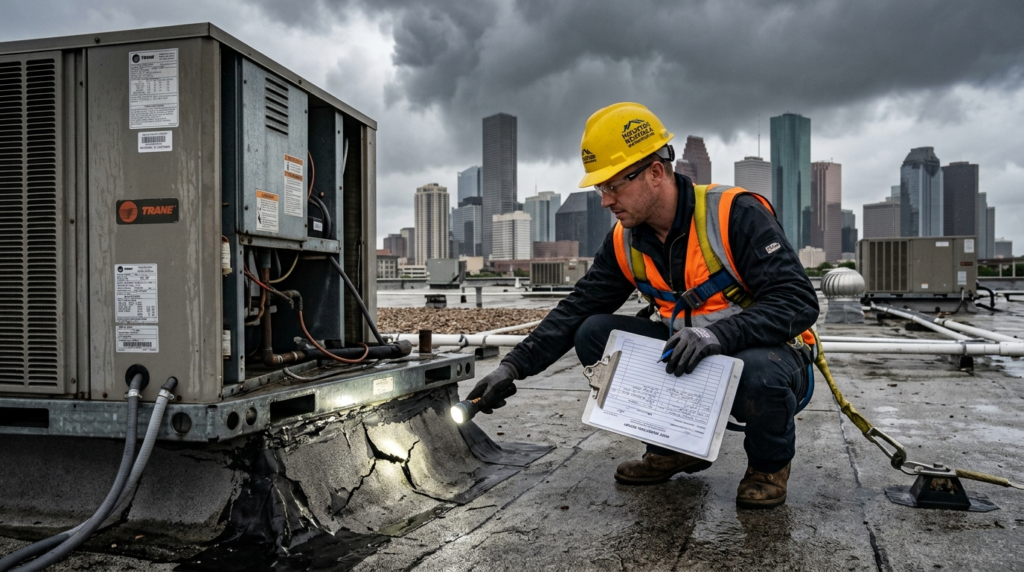
Inspection and Preventive Care
Regular inspections help catch early signs of membrane wear, seam separation, or punctures before they cause leaks. Inspection best practices include:
- Checking seams and welded joints
- Clearing debris from drains and scuppers
- Verifying flashing at transitions and penetrations
- Inspecting the rooftop equipment
Annual inspections and additional checks after severe weather can extend membrane life and protect your investment.
Cost and Value Proposition for Houston Business Owners
PVC roofing may have a slightly higher upfront cost compared to some basic roofing systems, yet its long life expectancy, energy savings, and robust performance often deliver a lower total cost of ownership over time.
Business owners benefit from:
- Lower utility bills due to heat reflection
- Fewer repairs due to high chemical resistance
- Fewer leaks and interior damage claims
- Better roof longevity in extreme climates
Is PVC Roofing Right for Your Houston Restaurant or Industrial Facility?
Yes. PVC roofing is especially effective when:
- The roof hosts heavy mechanical equipment
- The facility is exposed to grease, chemicals, or exhaust
- Heat reduction and energy efficiency are priorities
- You need a roofing membrane that lasts and is easy to maintain
A professional commercial roof inspection is the best way to confirm if PVC is suitable for your specific building. Roofing professionals can evaluate roof slope, existing materials, insulation needs, drainage design, and mechanical equipment placement.
FAQs
1. Why is PVC roofing recommended for Houston restaurants?
PVC roofing is highly resistant to grease, cooking oils, and restaurant exhaust fumes. Unlike many other roofing materials, it does not break down when exposed to fats and chemicals, making it ideal for commercial kitchens in Houston.
2. How long does a PVC roof last on a commercial building?
A professionally installed PVC roofing system typically lasts 20 to 30 years. Regular inspections and maintenance can help maximize its lifespan and protect your investment.
3. Is PVC roofing energy efficient in Houston’s climate?
Yes. PVC roofing reflects sunlight and reduces heat absorption, helping commercial buildings stay cooler. This can lower HVAC workload and reduce energy costs during Houston’s hot summers.
4. Can PVC roofing withstand Houston storms and heavy rain?
Yes. PVC roofing features heat-welded seams that create a strong waterproof barrier. When properly installed, it provides excellent protection against heavy rainfall, ponding water, high humidity, and strong winds.
5. Is PVC roofing a good choice for industrial facilities?
PVC roofing is an excellent option for industrial buildings because it resists chemical exposure, offers superior waterproofing, and performs well on large flat roofs commonly found in warehouses, manufacturing plants, and processing facilities.
Conclusion
PVC roofing stands out as a reliable, long-lasting roofing solution for restaurants and industrial facilities in Houston. With excellent resistance to heat, chemical exposure, rain, and wind, it provides energy efficiency, superior waterproofing, and lower long-term maintenance costs. When installed and maintained by experienced professionals, PVC can deliver decades of reliable protection and contribute to lower operating costs for your commercial property.
If you want to explore PVC roofing installation, repair options, or maintenance plans, speaking with certified commercial roofing experts who understand Houston’s climate and commercial building requirements is the best next step.
Ready to upgrade your commercial roof? Contact Commercial Roofing Houston today for a free roof inspection and same-day estimate. Our licensed contractors serve Houston, Katy, Sugar Land, The Woodlands, Pasadena, and Pearland, call us now at +1 (713) 275-8592.