Modified bitumen roofing is a durable, multi-layer flat roofing system made with asphalt and reinforced polymers. It is designed specifically for flat and low-slope commercial roofs. For businesses searching for dependable commercial roofing Houston solutions, modified bitumen remains a practical and cost-effective choice. Its layered waterproofing system helps protect buildings from leaks, heat, and long-term weather damage.
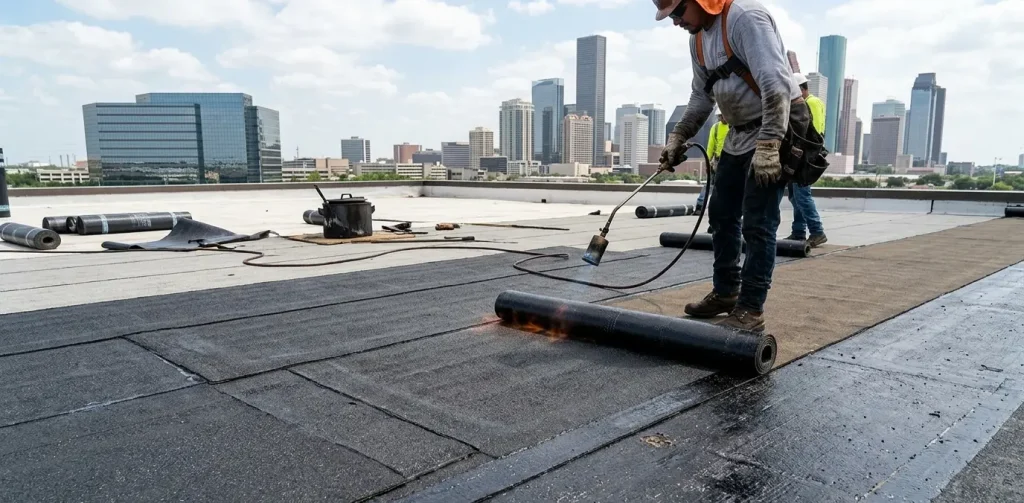
Houston’s climate can be extremely harsh on commercial roofing systems. Summer temperatures regularly climb above 95°F, while rooftop surfaces can exceed 150°F during peak heat. Heavy rainfall, high humidity levels between 70% and 80%, and hurricane-season storms also put flat roofs under constant pressure. Modified bitumen roofing performs well in these conditions because it is built to handle heat, moisture, and severe weather exposure across Houston commercial properties.
What is Modified Bitumen Roofing?
Modified bitumen roofing is an evolution of traditional built-up roofing (BUR). It takes asphalt and enhances it with polymers to improve performance. These polymers can be:
- APP (Atactic Polypropylene): plastic-based modifier that enhances heat resistance
- SBS (Styrene-Butadiene-Styrene): a rubber-like modifier that boosts elasticity in temperature changes
Unlike single-ply membranes like TPO roofing or EPDM roofing systems, modified bitumen comes in rolled sheets with at least two layers (base sheet and cap sheet) that are installed directly onto the roof substrate. This layered configuration gives it built-in redundancies and strong waterproofing.
How Do Modified Bitumen Roof Systems Work?
The performance of a modified bitumen roof depends on:
Polymer Type
- APP is more UV-resistant and heat-tolerant, ideal for hot climates like Houston
- SBS offers more flexibility for temperature swings, but may soften more in extreme heat
Installation Method
There are several ways to install modified bitumen:
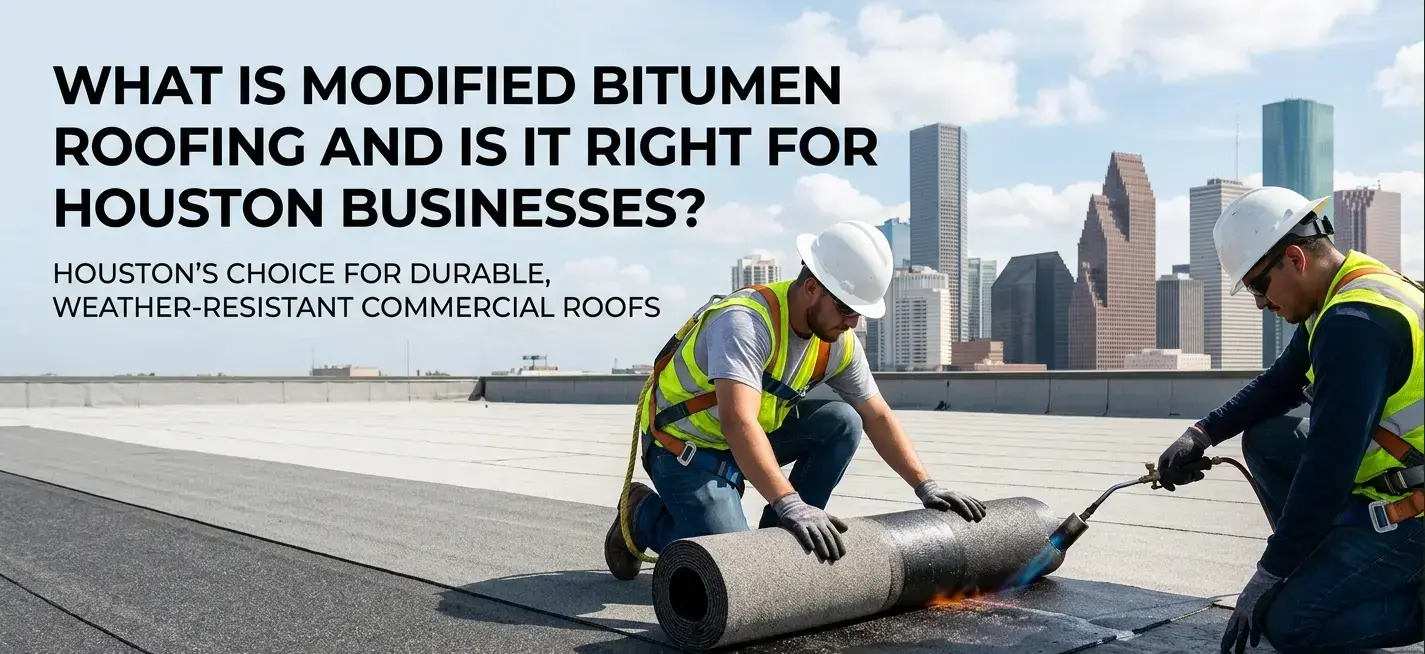
- Torch-applied – heat-fused seams create a strong waterproof bond
- Cold-applied – adhesives used instead of open flames
- Self-adhered – peel-and-stick membranes for quicker application
Each method affects cost, installation time, and performance; professional assessment is critical for the Houston climate.
Benefits of Modified Bitumen Roofing
Modified bitumen offers several benefits for commercial buildings:
- Durability and Weather Resistance
Because of its multi-ply design, modified bitumen resists tearing, punctures, and water intrusion more effectively than many single-ply membranes. It also handles the Gulf Coast heat, intense UV exposure, and heavy rain events common in Houston.
- Excellent Waterproofing
Overlapping membrane layers and sealed seams reduce opportunities for leaks, especially on low-slope roofs prone to ponding water.
- Repair-Friendly
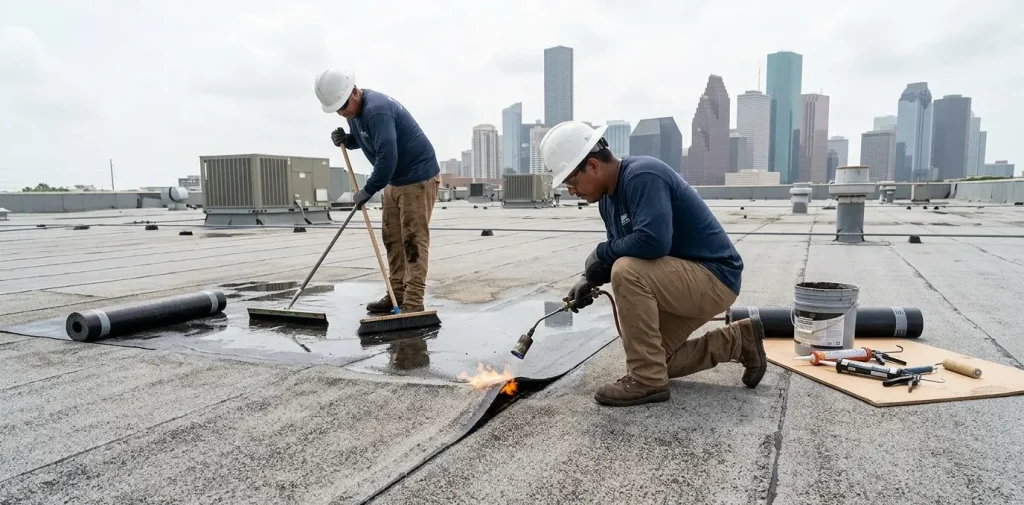
Unlike some systems where a full membrane must be replaced, modified bitumen sections can be patched or repaired without replacing the entire roof assembly.
- Proven Performance
Modified bitumen has been used in commercial roofing for decades and remains a reliable choice when installed properly. Its multi-layer design also makes commercial roof repair easier and more cost-effective because damaged sections can often be repaired without replacing the entire roofing system.
Considerations Before Choosing Modified Bitumen
No roofing system is perfect. Modified bitumen has some drawbacks to be aware of:
- Heat Absorption
Modified bitumen membranes are often darker and absorb heat more than reflective membranes like TPO or PVC, which can impact energy costs.
- Installation Complexity
Methods like torch-down application demand experienced contractors familiar with fire safety and Houston weather challenges.
- Lifespan
Typical lifespans are around 15–25 years, which can be shorter than some newer membrane systems, depending on climate and maintenance.
Is Modified Bitumen Right for Houston Businesses?
Yes, for many Houston commercial buildings, especially warehouses, retail centers, educational facilities, or industrial properties, modified bitumen is a strong candidate, particularly for:
- Low-slope or flat roofs
- Roofs needing durable waterproofing
- Buildings with foot traffic or rooftop equipment
- Owners seeking repair flexibility and proven performance
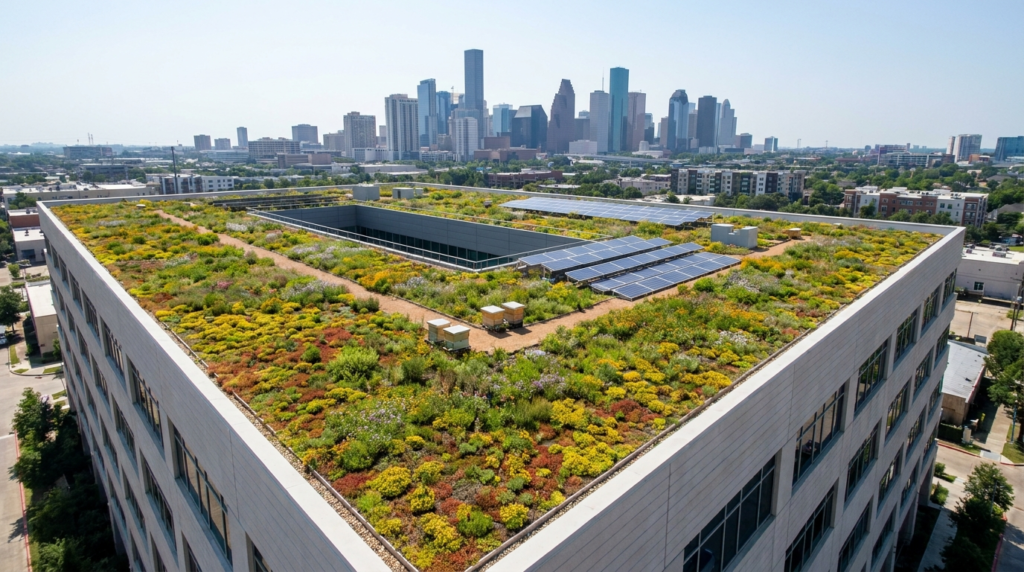
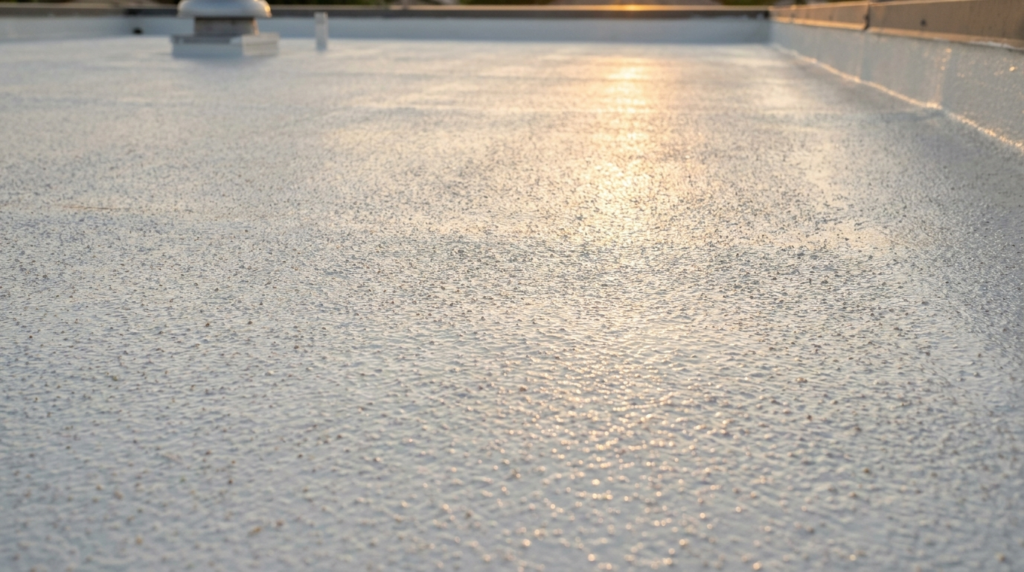
However, if your priority is cool roof reflectivity or maximum energy savings, you may also want to consider options like reflective roof coatings or single-ply membranes such as TPO or PVC, particularly when paired with high-performance coatings.
How Modified Bitumen Compares to Other Roof Systems
The following comparison table shows how modified bitumen roofing compares to other popular commercial roofing systems in terms of waterproofing, heat resistance, flexibility, installation complexity, and overall lifespan:
| Feature | Modified Bitumen | TPO | PVC | Built-Up Roofing |
| Waterproofing | Excellent | Good | Very Good | Excellent |
| Heat Reflectivity | Lower | High | High | Low |
| Flexibility | Moderate | Moderate | High | Low |
| Installation Complexity | Moderate to High | Moderate | Moderate | High |
| Typical Lifespan | 15–25 yrs | 10–20 yrs | 20–30 yrs | 20–40 yrs |
Modified bitumen sits between classic BUR systems and newer membranes. It offers durability and redundancy that many business owners value in demanding climates. Property owners looking for proven solutions in different markets often rely on professional roofing services in Arlington providers for long-term roof performance and maintenance. This reflects the industry’s focus on dependable systems that can withstand years of weather exposure and operational demands.
Maintenance Practices That Extend Roof Life in Houston’s Climate
A modified bitumen roof in Houston performs only as well as its maintenance plan. Houston’s extreme heat, heavy rainfall, humidity, and hurricane-season storms make regular roof maintenance essential for long-term performance.

- May to June (Pre-Hurricane Season)
Before hurricane season begins, schedule a professional commercial roof inspection to identify any issues that may have developed during winter and spring.
Key Areas to Inspect
- Seam separations
- Membrane blistering
- Flashing deterioration
- Drainage obstructions
- Ponding water areas
- Roof penetrations
Why It Matters
Addressing small problems before storm season helps prevent:
- Major leaks
- Wind-related membrane damage
- Water intrusion during hurricanes
- Expensive emergency roof repairs
- After Each Major Storm Event
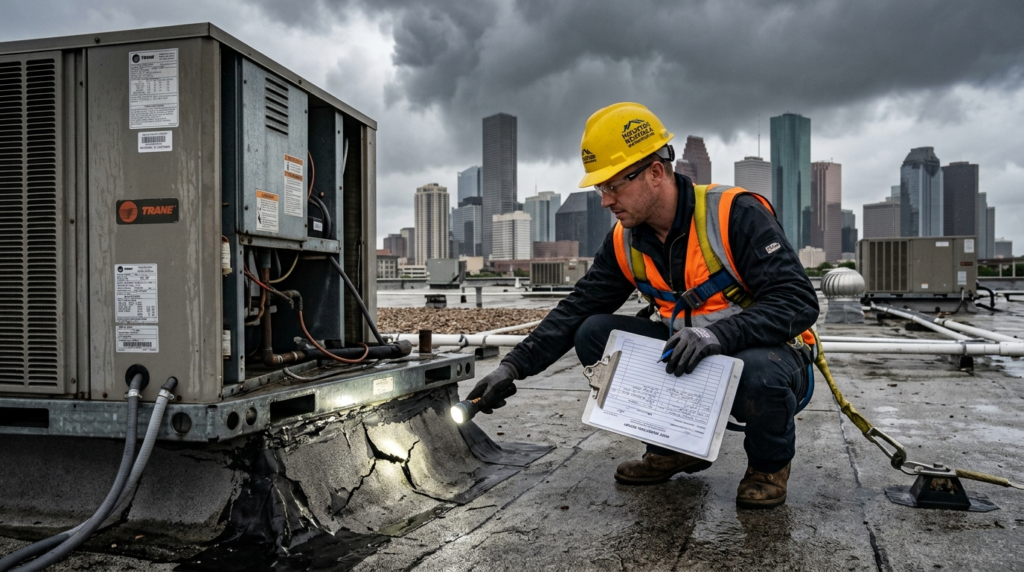
Houston storms can place significant stress on flat roofing systems, especially after heavy rainfall and high winds.
Perform a Visual Roof Inspection For the Following:
- Standing water
- Damaged flashing
- Loose membrane sections
- Drainage blockages
- Damage around rooftop HVAC equipment
- Debris accumulation
Important Tip
If standing water remains on the roof for more than 48 hours after rainfall stops, schedule a contractor assessment immediately. Persistent ponding water can shorten the lifespan of a modified bitumen roof.
- November to December (Post-Hurricane Season)
Once hurricane season ends, schedule a second professional roof inspection before winter arrives.
Post-Season Maintenance Checklist
- Clear drains and scuppers
- Inspect membrane seams
- Check flashing condition
- Evaluate the cap sheet granule loss
- Identify storm-related wear and tear
- Assess overall roof performance
Why This Inspection Is Important
Post-hurricane inspections help detect hidden damage that may not be immediately visible but could lead to leaks or membrane deterioration over time.
FAQs
Is modified bitumen roofing good for Houston’s climate?
Yes, modified bitumen roofing performs well in Houston because it is designed to handle extreme heat, heavy rainfall, high humidity, and severe storm conditions. Its multi-layer waterproofing system makes it a durable option for flat and low-slope commercial roofs across the Houston area.
How long does a modified bitumen roof last?
A properly installed and maintained modified bitumen roof typically lasts between 15 and 25 years. Factors such as roof maintenance, installation quality, weather exposure, and drainage performance can all affect its lifespan.
Can modified bitumen roofing be repaired instead of replaced?
Yes, one of the biggest advantages of modified bitumen roofing is its repair flexibility. Small punctures, seam damage, or isolated leaks can often be patched without replacing the entire roofing system, making commercial roof repair more cost-effective for building owners.
Is modified bitumen better than TPO roofing?
Both systems have advantages depending on the building’s needs. Modified bitumen offers strong waterproofing, durability, and repairability, while TPO roofing provides better heat reflectivity and energy efficiency. The right choice depends on your roof design, budget, and performance priorities.
How often should a modified bitumen roof be inspected in Houston?
Commercial roofing experts generally recommend inspecting modified bitumen roofs at least twice per year in Houston, ideally before and after hurricane season. Additional inspections should also be scheduled after major storms to identify leaks, ponding water, or membrane damage early.
Final Words
Modified bitumen roofing is a solid, proven commercial roofing system that blends old-world durability with modern polymer technology, making it a good option for many Houston businesses with flat or low-slope roofs.
If you want a roofing system with multi-layer waterproofing, strong weather resistance, and repair flexibility, a modified bitumen membrane may be right for your property. For personalized recommendations, a professional roof inspection and consultation are always the best next step.