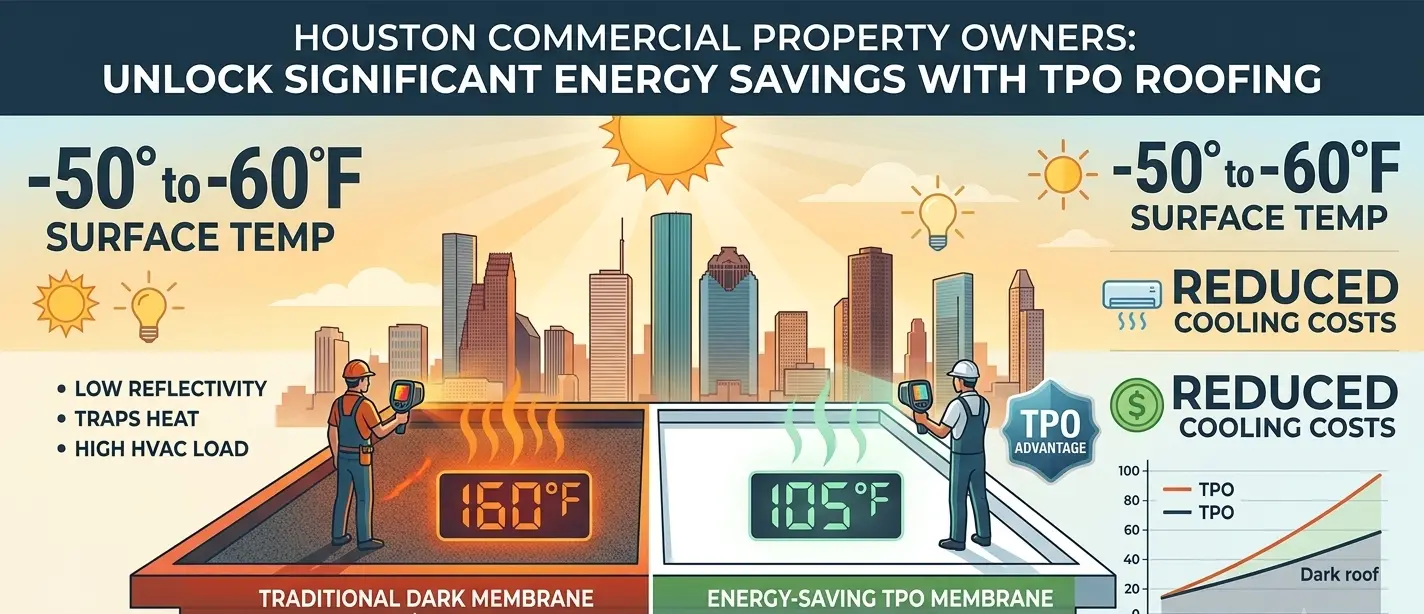
TPO roofing energy savings for Houston commercial properties are among the most significant advantages of this roofing system. TPO membranes reflect up to 80% of solar radiation, keeping rooftop surface temperatures 50 to 60 degrees Fahrenheit lower than traditional dark membranes. For Houston property owners exploring TPO roofing energy savings, the numbers speak for themselves.

In Houston’s brutal climate, where summer roof surfaces can exceed 160°F, this reflective technology directly reduces the heat load entering the building, cutting cooling costs by 10 to 30 percent annually and saving a 20,000-square-foot commercial facility anywhere from $3,000 to $8,000 per year on energy expenses alone.
What Makes TPO Roofing an Energy-Efficient Choice for Houston Buildings
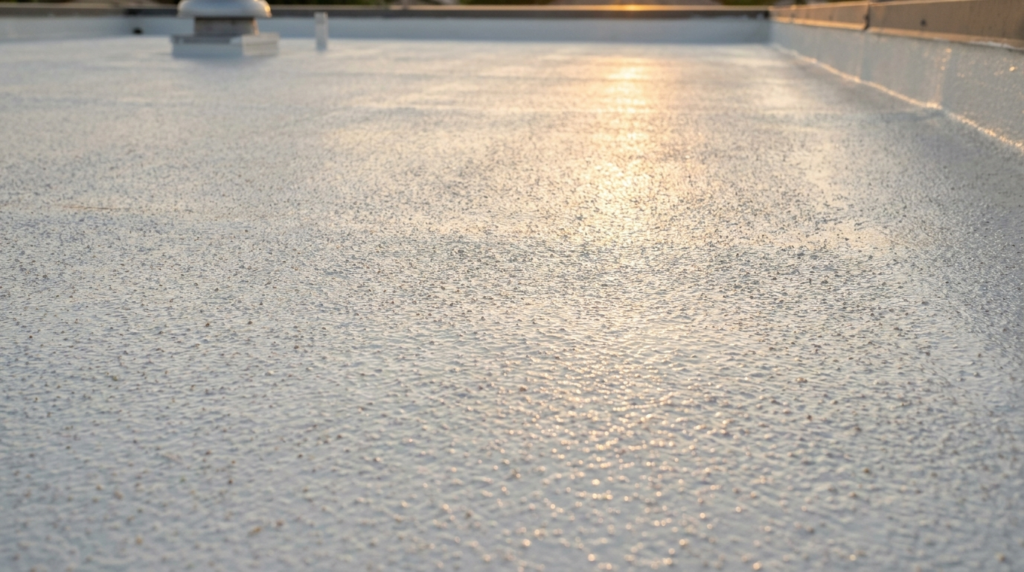
TPO roofing is a single-ply membrane made from a blend of rubber and plastic polymers. Unlike darker roofing systems that absorb heat, TPO membranes are designed with light colors and reflective surfaces that bounce a large portion of the sun’s rays away from the building. This reflects solar energy before it can turn into heat on the roof surface or inside the structure.
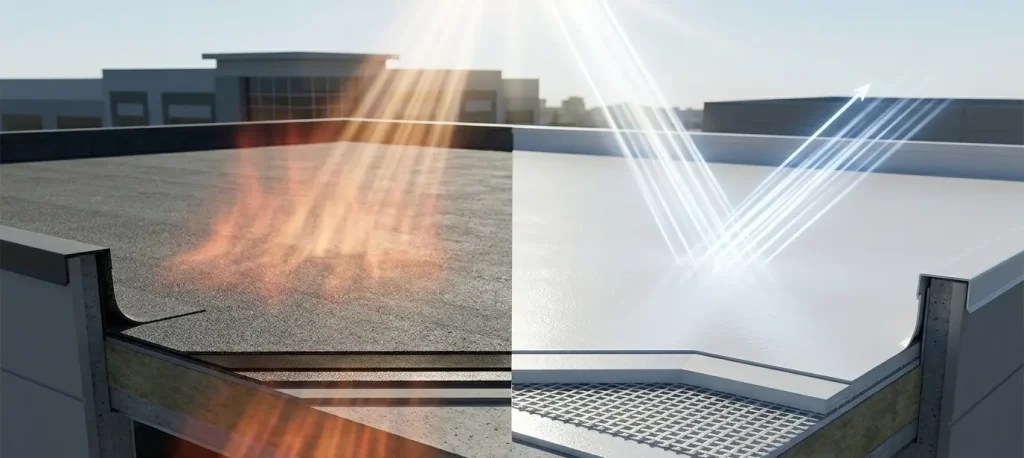
The reflective quality of TPO roofing helps maintain lower roof temperatures on hot days, which means:
- Less heat is transferred into the building
- Air conditioning systems work less to cool interior spaces
- Energy demand and utility bills are reduced
This is especially important in Houston’s subtropical climate, where summer temperatures routinely exceed 90°F and heat exposure lasts for months.
The Science Behind TPO Roofing Energy Savings
The energy-saving performance of roofing systems is measured by several factors:
Solar Reflectance
This refers to how much sunlight the roof reflects rather than absorbs. TPO roofs typically have high reflectance scores, meaning they keep surfaces cooler under direct sunlight.
Thermal Emittance
This measures how quickly a roof releases heat that it has absorbed. Even if the roof absorbs some heat during the day, its high emittance helps release that heat quickly after sunset, allowing the surface to cool down faster at night.
Thermal Resistance (R-Value)
While single-ply membranes like TPO have moderate insulation values, they are often paired with insulation boards to improve overall thermal resistance.
Together, these characteristics help reduce the cooling load on commercial HVAC systems. For Houston businesses with large square footage, even a few degrees of heat reduction at the roof level can translate into significant monthly savings.
Key Benefits of TPO Roofing for Houston Commercial Buildings
The following are the benefits of a TPO roofing system for Houston commercial buildings:
- Lower Cooling Costs
Houston summers are long and hot. A TPO roofing system helps commercial buildings reduce reliance on air conditioning by lowering the heat that enters through the roof.
- Improved Comfort and Indoor Temperatures
Buildings with TPO roofing often maintain more stable interior temperatures, boosting comfort without constant climate control adjustments.
- Extended Roof Life
Lower surface temperatures reduce thermal cycling stress on the membrane. Heat expands and contracts roofing materials, which over time can contribute to cracks and deterioration. TPO’s reflective properties mitigate this effect, potentially extending roof life and reducing the need for frequent commercial roof repair.
- Compliance with Energy Codes
Many local and national building codes encourage or require energy-efficient roof systems. TPO roofing’s thermal properties help buildings meet or exceed energy performance standards.
Property Types That Benefit Most from TPO Roofing in Houston
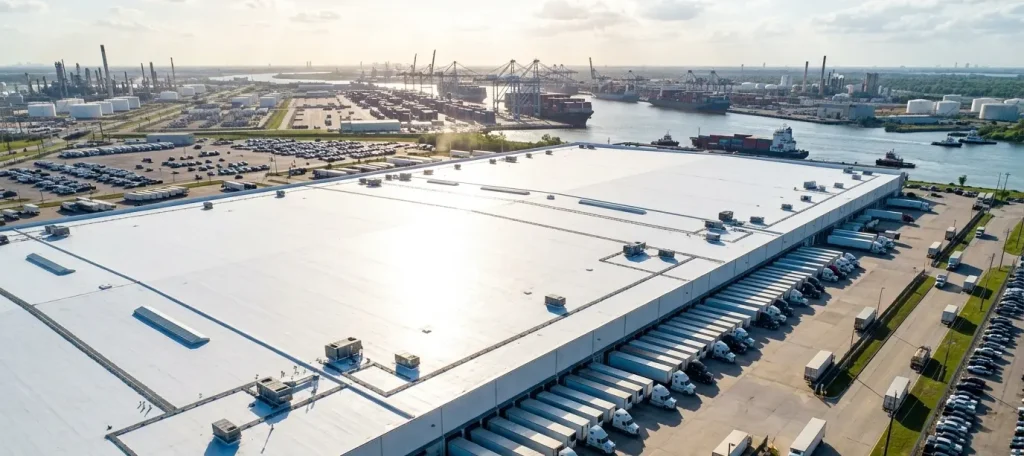
The following are the properties that benefit from TPO roofing in Houston:
1. Warehouses and Distribution Centers
Large, flat-roofed warehouse and distribution facilities have the most to gain from TPO’s reflective properties. A 100,000-square-foot distribution center in the Houston Ship Channel or near the Port of Houston represents a massive surface area exposed to direct sunlight. TPO significantly reduces that burden, keeps storage environments more stable, and extends the working life of equipment stored inside.
2. Retail Centers and Shopping Strips
Retail properties in Houston, from Westheimer corridor strip centers to large-format suburban retail parks, benefit from TPO’s combination of low-maintenance performance and energy savings. Consistent interior temperatures improve customer comfort during Houston’s long, hot summers, and lower utility costs directly improve the net operating income of investment properties.
3. Office Buildings
Commercial office buildings benefit from TPO both in terms of energy cost reduction and occupant comfort. When a roof keeps thermal load lower, the HVAC system maintains more consistent interior temperatures, reduces hot spots near the ceiling, and runs more efficiently.
4. Multifamily and Mixed-Use Developments
Apartment complexes and mixed-use developments with flat-roofed sections see TPO’s energy-saving benefit for both property owners and tenants. Reduced utility costs in common areas and improved comfort in upper-floor units are tangible advantages in a competitive Houston rental market.
5. Medical and Educational Facilities
Hospitals, medical office buildings, and school campuses in the Houston metropolitan area require consistent interior environments and face strict energy codes. TPO’s combination of ENERGY STAR qualification and robust seam integrity makes it a preferred specification for these facility types.
Cool Roof Houston Energy Savings: Real-World Considerations
Roof Insulation
Efficiency improves when TPO membranes are combined with high-quality insulation boards. A strong insulation layer boosts the system’s overall R-value.
Color and Coating Options
Though TPO is often white or light-colored for reflectivity, cool-roof coating systems can further enhance performance and help maintain reflectivity over time.
Professional Installation
Proper installation is essential. Seams must be heat-welded or mechanically secured correctly to prevent leaks and maintain energy performance. Poor installation can negate the benefits of a reflective system.
When Repair or Replacement Is Needed
Even the best roofing system requires maintenance over time. If your current roof is showing signs of wear, a professional assessment can determine whether commercial roof repair is sufficient or whether a full commercial roof replacement with a modern TPO system would deliver better long-term value.
Quantifying Reflective Roofing Houston’s Energy Savings
Studies show that reflective roofing systems like TPO can reduce cooling energy demands by 10 to 30 percent compared to darker, heat-absorbing roofs. Actual savings vary based on:
- Building size
- HVAC efficiency
- Insulation quality
- Local weather patterns
For many Houston commercial property owners, this translates into hundreds to thousands of dollars in annual utility savings.
FAQs
How much energy can TPO roofing save for a Houston commercial building?
TPO roofing can reduce cooling energy costs by 10 to 30 percent annually for Houston commercial properties. A 20,000-square-foot facility can save between $3,000 and $8,000 per year on energy bills alone, depending on building size, HVAC efficiency, and insulation quality.
Why is TPO roofing considered a cool roof in Houston?
TPO roofing is considered a cool roof because its white or light-colored membrane reflects up to 80% of solar radiation. This keeps rooftop surface temperatures 50 to 60 degrees Fahrenheit lower than traditional dark membranes, directly reducing the heat load on the building and lowering air conditioning demands.
Is TPO roofing energy-efficient enough for Houston’s extreme heat?
Yes. Houston’s subtropical climate, with roof surface temperatures exceeding 160°F in summer, makes TPO one of the most effective roofing choices for energy efficiency. Its high solar reflectance and thermal emittance ratings make it well-suited for the intense UV exposure and prolonged heat seasons that Houston commercial buildings face.
How long does TPO roofing last on a Houston commercial building?
TPO roofing systems typically last 15 to 30 years when properly installed and maintained. In Houston’s climate, TPO’s reflective properties also reduce thermal cycling stress on the membrane, which can extend roof life compared to darker, heat-absorbing systems.
Does TPO roofing qualify for energy efficiency incentives in Texas?
Many TPO roofing systems qualify for ENERGY STAR certification, which can make them eligible for certain energy efficiency incentives and help buildings meet local and national energy code requirements. Property owners should consult with their roofing contractor and a tax advisor to explore available programs.
Final Words
Thermoplastic polyolefin roofing offers a powerful combination of heat reflectivity, thermal performance, and durability that helps Houston commercial properties reduce energy bills, improve interior comfort, and protect roofing investments. Its energy-saving properties make it a compelling choice for low-slope and flat commercial roofs under intense sun and high heat.
Ready to explore whether TPO is the right fit for your building? Visit our homepage to learn more about our commercial roofing services and contact us today to schedule a free roof assessment with our certified Houston roofing specialists.