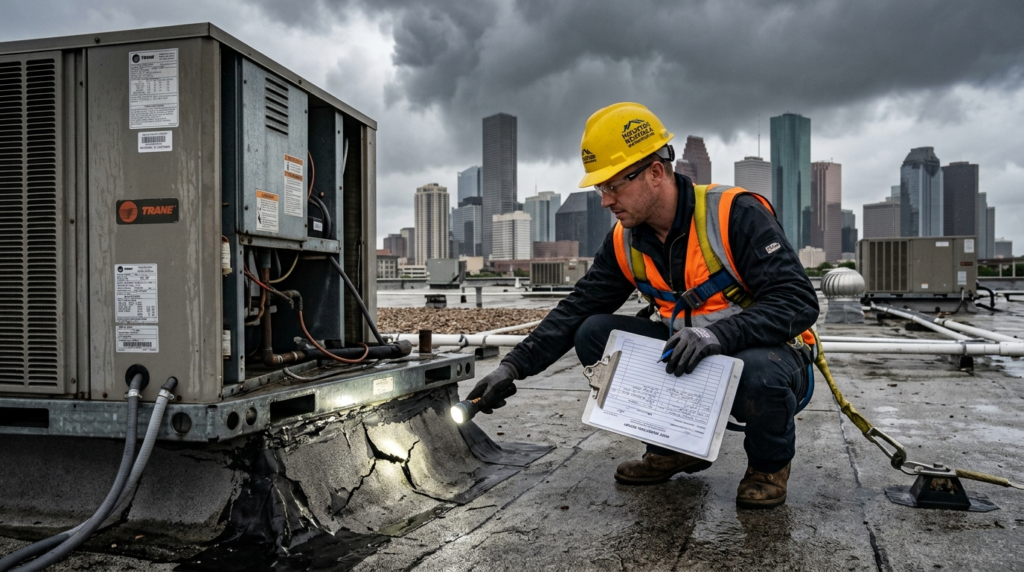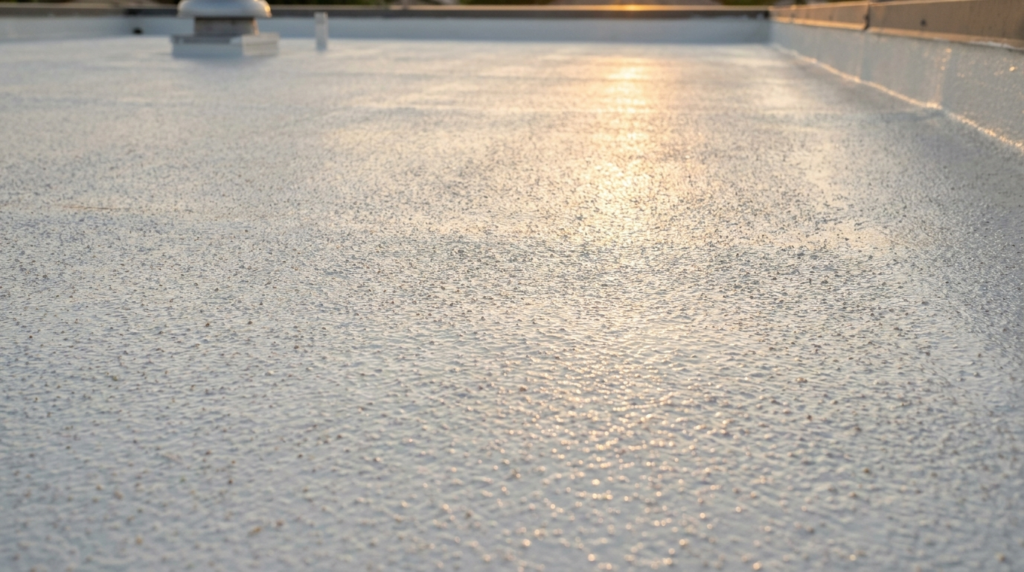
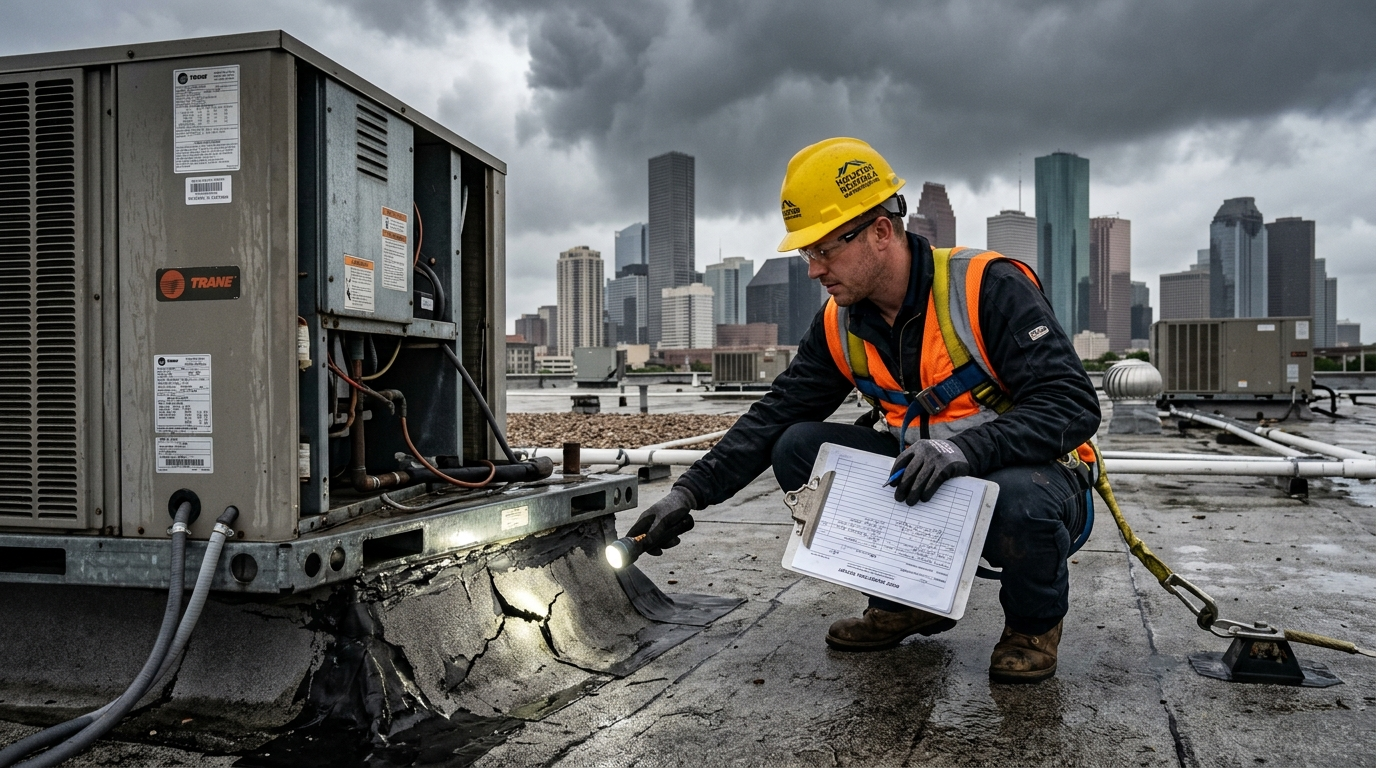
Your Houston commercial roof needs immediate repair if you notice water stains, ponding water, or cracked flashing. These signs point to a compromised roofing system that worsens fast without attention. Houston’s heat, humidity, and storm activity push roofs toward failure faster than milder climates allow. A roof that needs immediate repair rarely improves on its own, and delayed action usually raises the final cost. Commercial Roofing Houston provides fast, reliable repair service for businesses across Houston, Katy, and Sugar Land, helping property owners catch problems before they spread.
This guide covers the seven most reliable warning signs to watch for. Spotting them early keeps repair costs low and protects your building.
When Does a Commercial Roof Need Immediate Repair?
A commercial roof needs immediate repair when you notice active leaks, standing water, sagging sections, or damaged flashing. These signs point to a compromised roofing system that will worsen without prompt attention. Waiting even a few weeks can allow water to reach insulation, decking, and interior spaces.
Houston building owners should treat any of the seven signs below as a reason to schedule a professional inspection right away.
1. Water Stains or Discoloration on Ceiling Tiles
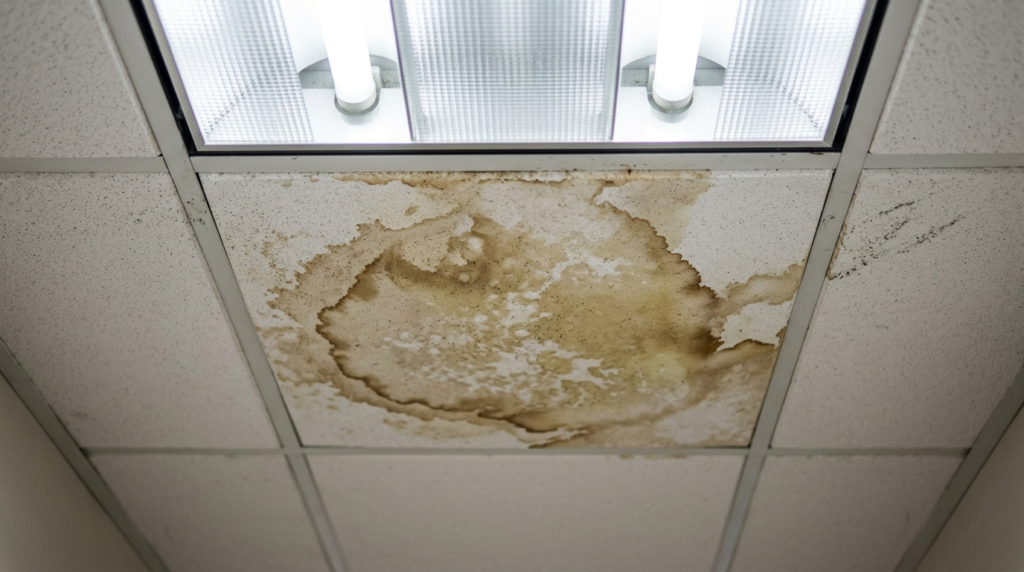
Water stains on ceiling tiles almost always mean water has already penetrated the roofing system. By the time a stain appears indoors, moisture has traveled through insulation and roof layers. This is one of the most reliable indicators that your commercial roof needs immediate repair.
Discoloration that keeps spreading or reappears after cleaning signals an active, ongoing leak. Mold growth often follows untreated water intrusion, creating health concerns for employees and customers. Schedule an inspection as soon as you notice any staining, even if it seems minor.
2. Ponding Water That Doesn’t Drain Within 48 Hours
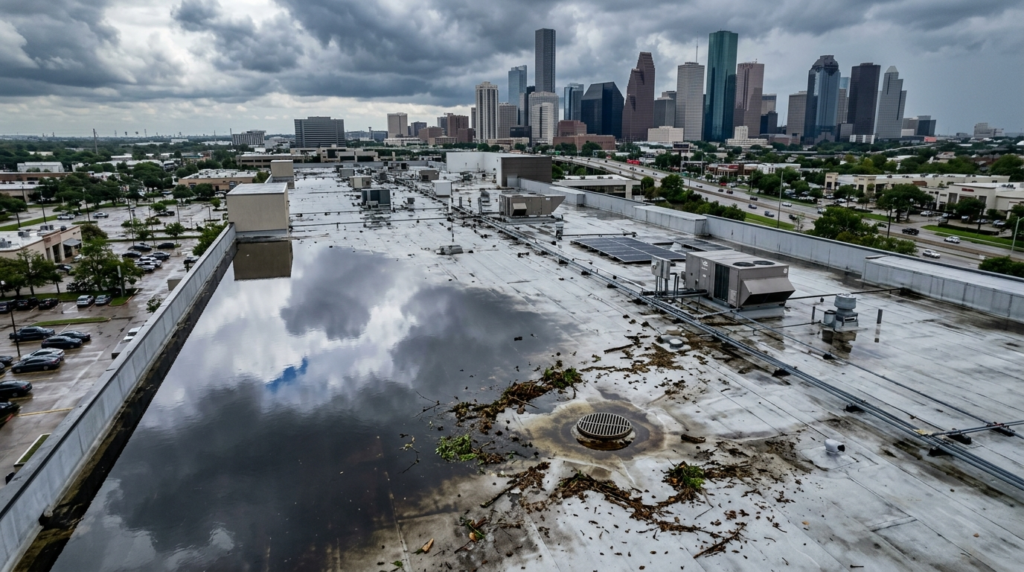
Flat and low slope commercial roofs rely on proper drainage rather than gravity alone. Standing water that remains more than 48 hours after rainfall points to a drainage or slope problem. Houston’s heavy annual rainfall makes this sign especially important for local building owners.
Ponding water adds significant weight to the roof structure over time. It also accelerates membrane breakdown and increases the risk of leaks at seams and penetrations. A professional can identify whether the issue involves clogged drains, low spots, or insufficient slope.
3. Bubbling or Blistering on the Roof Surface
Bubbles or blisters on a roofing membrane indicate trapped air or moisture beneath the surface. This commonly affects modified bitumen and built up roofing systems, though it can appear on most membrane types. Left untreated, these weak spots often develop into leaks or membrane splits.
Our guide on what modified bitumen roofing is and whether it fits Houston businesses explains why this system can be especially prone to blistering under intense heat. A trained technician can determine whether the affected area needs a patch repair or a larger membrane replacement.
4. Cracked, Loose, or Separated Flashing
Flashing seals the vulnerable transitions around vents, HVAC units, parapet walls, and roof edges. Cracked or separated flashing is one of the most common sources of commercial roof leaks. Houston’s wind driven storms put extra stress on these transition points throughout the year.
Damaged flashing rarely improves on its own and tends to worsen with each storm cycle. A quick repair at this stage costs far less than addressing water damage after a full leak develops. Our commercial roof repair team frequently resolves flashing issues before they escalate.
5. Unexplained Increases in Energy Bills
A sudden or gradual rise in HVAC costs often points to a compromised thermal barrier. Saturated insulation loses much of its effectiveness, forcing your HVAC system to work harder. This sign is easy to overlook because building owners often blame other factors first.
If your energy bills climb without a clear explanation, consider it a signal to schedule a roof inspection. Comparing membrane types can also help control long term energy performance. For more on this, see our comparison of TPO, EPDM, and PVC roofing membranes for Houston buildings.
6. Sagging or Uneven Roof Sections
A roof deck should maintain a consistent, level appearance across its entire surface. Sagging, dipping, or uneven sections often indicate saturated insulation or structural stress underneath. This sign requires immediate professional attention due to potential safety risks.
In more advanced cases, sagging can signal that the roof has moved past the point where repair alone will solve the problem. A qualified contractor can assess whether commercial roof replacement makes more sense than continued repairs. Never walk on a roof section that appears to be sagging without a professional evaluation first.
7. Storm Damage After Heavy Wind, Rain, or Hail
Houston sits within an active hurricane and severe storm region, and roofs take the brunt of that exposure. High winds can lift edges and seams, while hail can bruise membranes and loosen granules. Even when damage isn’t visible from ground level, storms often compromise the roof’s protective layers.
The Insurance Institute for Business & Home Safety notes that older, poorly maintained roofing systems face a significantly higher risk of failure during severe wind events, which reinforces why a post storm inspection matters for every Houston commercial property. Scheduling an inspection after any significant storm helps catch damage before the next rain event turns it into an active leak. You can review general storm preparedness guidance directly from IBHS for additional context on how storms affect commercial roofing systems.
What Happens If You Ignore These Signs?
Delaying repairs almost always increases the total cost of fixing the problem. A small seam separation can turn into a full membrane leak within a single storm season. Saturated insulation loses effectiveness and often requires full replacement rather than a simple patch.
Interior damage, including mold growth and damaged inventory, adds further cost beyond the roof itself. Business operations can also face disruption if leaks affect electrical systems or customer facing areas. Addressing these seven warning signs early keeps repair costs manageable and protects daily operations.
How Often Should Houston Commercial Roofs Be Inspected?
Most commercial roofing manufacturers recommend inspections twice a year, typically in spring and fall. Houston properties benefit from an additional inspection after any major storm passes through the area. Regular inspections catch small issues while they remain simple, affordable repairs.
Building owners who follow a consistent inspection schedule typically see longer roof lifespans and fewer emergency repair calls. Pairing inspections with prompt repairs is the most reliable way to avoid full roof replacement ahead of schedule.
Frequently Asked Questions
How urgent is a commercial roof leak?
Any active leak should be treated as urgent. Water intrusion spreads quickly through insulation and can reach electrical systems or structural components within days.
Can I inspect my Houston commercial roof myself?
A visual check from the ground or through interior signs like water stains is a reasonable first step. Rooftop inspections should always be handled by a trained professional due to safety risks.
Does insurance cover storm related roof repairs in Houston?
Many commercial insurance policies cover storm damage, though coverage details vary by policy. Document damage with photos and contact your insurer promptly after any major storm.
How long does a typical commercial roof repair take?
Most localized repairs, like flashing or seam fixes, take one to two days. Larger repairs involving insulation or structural sections may take longer depending on scope.
Is it cheaper to repair or replace a commercial roof?
Repair costs less upfront for isolated issues on a roof with useful life remaining. Roofs nearing the end of their expected lifespan often see better long term value from full replacement.
Final Words
Catching these seven warning signs early protects your building, your budget, and your daily operations. Our licensed team provides thorough inspections and fast, reliable repairs for businesses across Houston, Katy, and Sugar Land. We handle everything from minor flashing repairs to full storm damage assessments.
Noticing any of these warning signs on your roof? Contact our team today for a free commercial roof inspection.