Blistering and bubbling on commercial roofs can develop when air, moisture, or vapor becomes trapped beneath roofing materials. Houston’s intense summer heat can increase pressure inside these pockets, causing raised areas across the roof surface. Some blisters remain stable, while others weaken membrane seams and require professional repair.
Commercial buildings across Houston experience strong sunlight, high humidity, heavy rainfall, and changing temperatures. These conditions can expose weaknesses in roof installation, moisture control, and membrane adhesion. Understanding why commercial roof blistering happens helps property owners choose the right repair before a small defect affects a larger roof area.
What Is Blistering on a Commercial Roof?
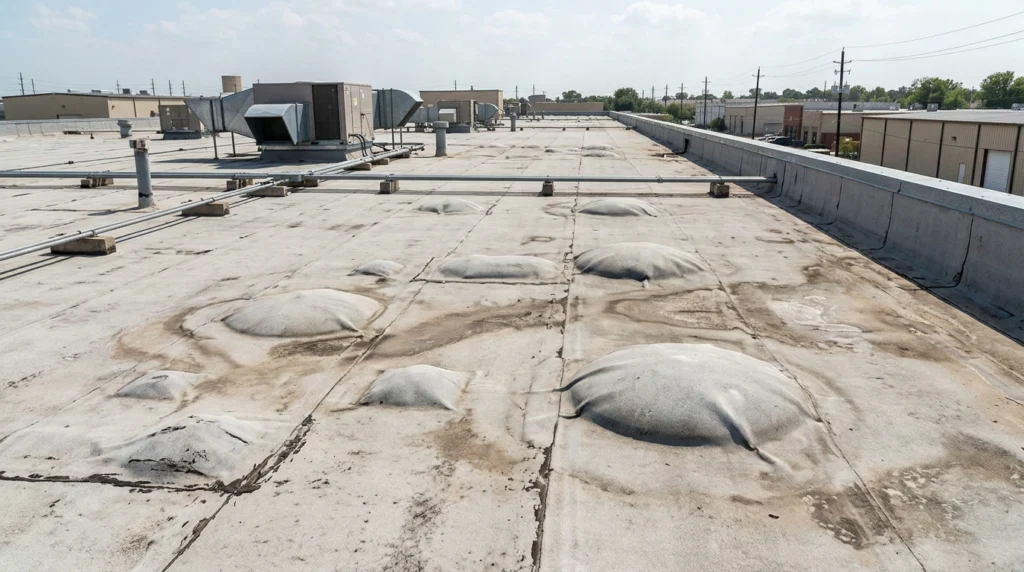
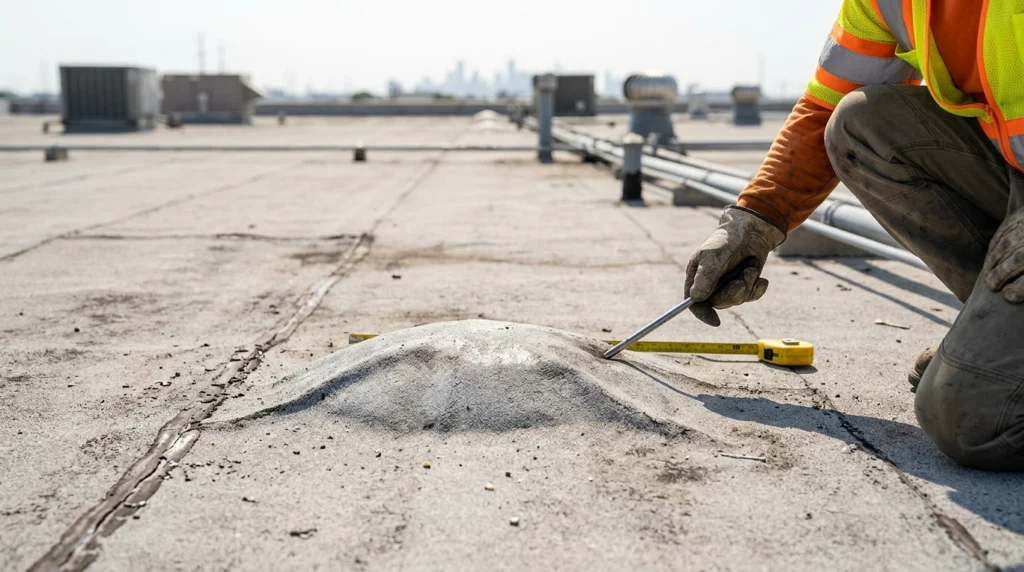
Commercial roof blistering occurs when a raised pocket forms within the roofing membrane or between roofing layers. These pockets may contain trapped air, moisture, or vapor. As the roof heats up, the contents can expand and place pressure on the surrounding materials.
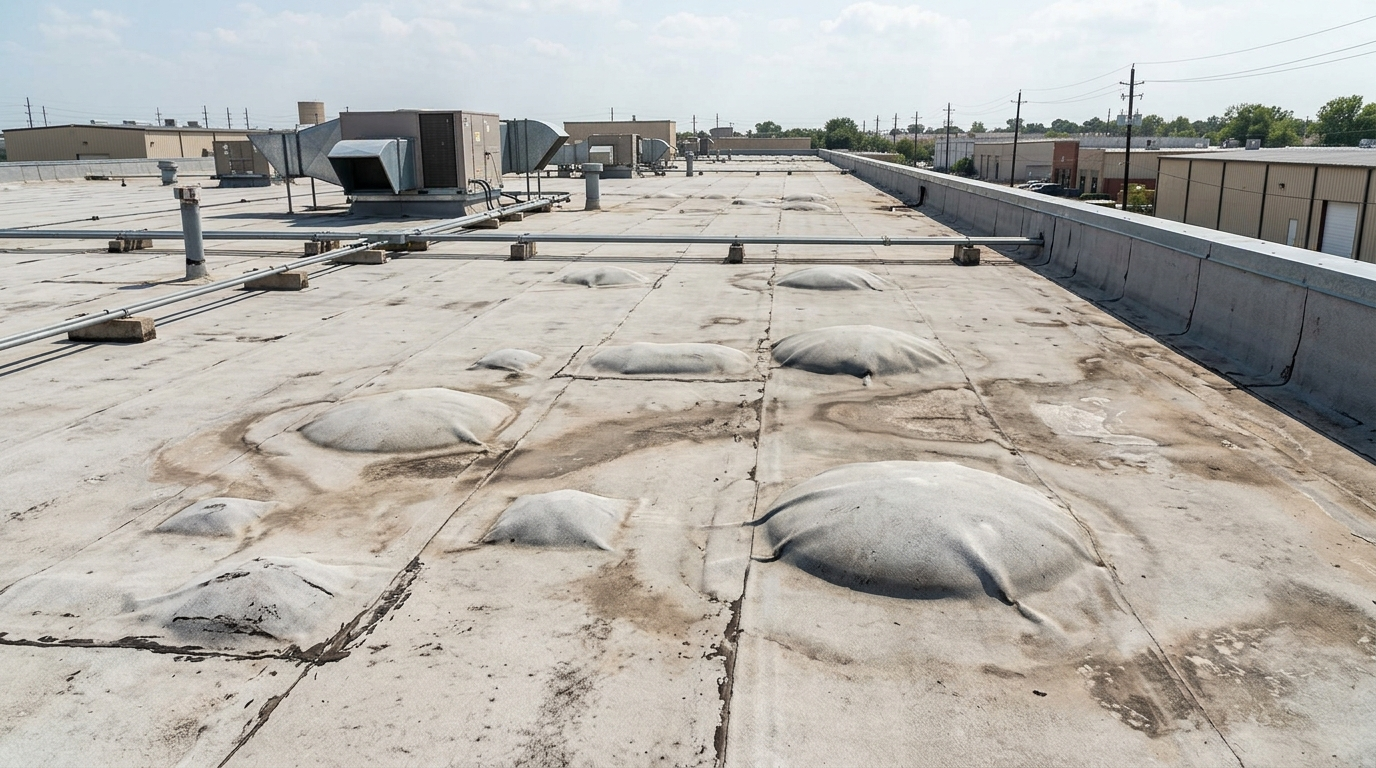
Blisters often appear as rounded bumps or bubbles on flat and low slope commercial roofs. They can vary in size, from small raised spots to larger areas where the membrane has separated from the layer below.
Blistering commonly affects built up roofing and modified bitumen systems. However, other roofing assemblies can also develop raised areas when adhesion, moisture, or installation conditions become unsuitable.
A visible blister does not automatically mean the entire roof needs replacement. The important factors include its location, size, movement, surface condition, and effect on nearby seams.
Why Does Houston Heat Cause Roof Blistering?
Houston’s summer temperatures place significant thermal stress on commercial roofing systems. Direct sunlight heats exposed roof surfaces, causing roofing materials to expand. Air and moisture trapped inside existing pockets can also expand as temperatures rise.
The National Roofing Contractors Association has documented how temperature changes can increase pressure inside roof blisters. Its research explains why blisters can grow as trapped air expands during sunny weather.
Heat is not always the original cause, however. Blisters often begin with trapped moisture, air pockets, poor adhesion, or installation defects. Hot weather can make these existing weaknesses more visible.
Houston’s humidity and rainfall add another consideration. Moisture can become trapped within a roof assembly during installation or enter through existing defects. If that moisture cannot escape, changing roof temperatures can increase vapor pressure inside the affected area.
For commercial property owners, the key is identifying what created the blister rather than assuming heat alone caused it.
What Causes Blistering and Bubbling on Commercial Roofs?
Several conditions can contribute to commercial roof blistering. An accurate diagnosis should consider the roofing material, installation history, moisture conditions, and overall roof assembly.
Roof blisters can develop when air or moisture becomes trapped beneath roofing materials or when adhesion fails. The National Roofing Contractors Association’s roofing guidelines provide additional guidance on roof blistering and related roofing issues.
1. Trapped Moisture Beneath the Membrane
Moisture is one of the most important causes of roofing blisters. Water may become trapped between membrane layers, within insulation, or between the roofing membrane and its substrate.
Solar heating can turn trapped moisture into vapor. As pressure increases, the membrane may lift and form a visible bubble.
Moisture can enter during installation if materials or surfaces are damp. Existing leaks can also introduce water into the roof assembly.
A contractor should determine whether the affected area contains moisture before selecting a repair. Covering a wet roof section without correcting the underlying condition can lead to recurring blistering.
2. Poor Membrane Adhesion
Roofing membranes need suitable adhesion or secure attachment according to their system design. If bonding is incomplete, pockets can develop between the membrane and the surface beneath it.
Poor adhesion can result from improper installation, unsuitable application conditions, contaminated surfaces, or incompatible materials.
On modified bitumen roofs, inadequate bonding between membrane layers can create interply blisters. These blisters may become more pronounced as the roof heats up.
The correct repair depends on the membrane system and the extent of separation.
3. Improper Installation Conditions
Roofing installation requires careful control of materials, temperatures, surface preparation, and weather conditions.
Applying materials over damp surfaces can trap moisture within the assembly. Incorrect adhesive application or incomplete bonding can also leave air pockets between layers.
For hot applied roofing systems, application temperature and installation technique affect bonding. If the materials do not bond correctly, blistering may appear later.
Proper installation procedures and manufacturer guidance help reduce the likelihood of these defects.
4. Trapped Air and Vapor
Not every roof blister contains liquid water. Some contain air or vapor trapped between roofing layers.
As the roof warms, the trapped gases expand. Pressure can lift the membrane and enlarge the affected area.
Temperature changes can also influence pressure inside a blister throughout the day. This explains why some bubbles appear more pronounced during hot, sunny weather.
A professional assessment helps distinguish air related blistering from moisture related conditions.
5. Aging Roofing Materials
Commercial roofing materials change as they age. Repeated exposure to sunlight, temperature changes, moisture, and normal building movement can affect their flexibility and adhesion.
An older membrane may have existing weak points that allow blisters to develop or expand.
However, age alone does not confirm that the roof needs replacement. Some isolated blisters can be monitored or repaired when the surrounding roofing system remains in suitable condition.
The overall membrane, seams, flashing, insulation, and drainage should guide the decision.
6. Moisture Within Roof Insulation
Insulation beneath the roof membrane can retain moisture when water enters the roofing assembly. Moisture can also become trapped if the roof was installed over unsuitable conditions.
When solar heating increases vapor pressure, the membrane may separate from the layers beneath it.
A surface patch may not solve this type of blister because the underlying insulation may remain wet.
Where moisture is suspected, the contractor should evaluate the affected roof assembly and determine whether insulation replacement or broader restoration is necessary.
7. Incompatible Roofing Materials
Roofing systems use materials designed to work together. Combining incompatible membranes, adhesives, insulation, or repair products can affect bonding and long term performance.
Previous repairs may also introduce materials that do not match the existing roof system.
Before applying a patch or coating, the contractor should identify the existing membrane and confirm product compatibility.
This is particularly important for commercial roofs that have received several repairs over their service life.
Which Commercial Roof Systems Can Develop Blisters?
Blistering can occur in several types of commercial roofing systems, although the causes and repair methods differ.
Built Up Roofing
Built up roofing uses multiple layers of bitumen and reinforcing materials. Blisters can develop between membrane plies or between the membrane and the underlying surface.
Trapped air, moisture, incomplete bonding, and installation conditions can contribute to these raised areas.
Modified Bitumen Roofing
Modified bitumen membranes can develop blisters when moisture or air becomes trapped between layers. Incomplete embedment can also contribute to blistering.
Our related guide, Modified Bitumen APP vs. SBS: Which Performs Better in Houston’s Heat?, explains the differences between these roofing materials and their performance characteristics in Houston conditions.
TPO, EPDM, and PVC Roofing
Single ply roofing systems can develop raised areas when adhesion, attachment, insulation, or moisture conditions are unsuitable.
The cause should be identified before a repair method is chosen. Not every bubble on a single ply roof has the same underlying explanation.
Read our guide to TPO vs. EPDM vs. PVC commercial roofing membranes to understand the differences between these membrane systems.
How to Identify Blistering on a Commercial Roof
Blisters are usually visible as raised areas on the roof surface. However, a visual inspection alone may not reveal what is trapped beneath the membrane.
Property managers should look for changes in the roof surface and any signs that the membrane has separated or deteriorated.
Raised or Rounded Roof Areas
Look for bumps, bubbles, or rounded areas that stand above the surrounding membrane. Note their locations and whether similar areas appear nearby.
Photographs taken during routine inspections can help track changes over time.
Soft or Spongy Sections
Some blisters feel soft under pressure because the membrane has separated from the layer beneath it. Do not press, puncture, or walk over suspicious areas to test them.
Walking on a blister can stretch or split the membrane and create a direct path for water.
Cracked or Separated Seams
A blister becomes more concerning when it affects a membrane lap or seam. If the raised area stretches or separates the joint, water may enter the roof assembly.
The NRCA notes that some blisters do not require repair, but blisters with separated laps need attention. A qualified contractor should assess the seam and the surrounding membrane before deciding on treatment.
Loose Surface Coating or Exposed Roofing Layers
Some blistered areas lose protective surfacing as the membrane lifts. Exposed roofing layers may then face greater weather exposure.
These areas should be evaluated to determine whether localized repair is sufficient.
Interior Water Stains
Ceiling stains, damp insulation, and recurring leaks can indicate that the roof assembly has been affected.
A blister does not always cause a leak immediately. However, a blister combined with a damaged seam or membrane opening requires prompt attention.
Are Commercial Roof Blisters Always a Serious Problem?
Not every blister requires immediate repair or full roof replacement. Some small, stable blisters remain intact for extended periods without allowing water into the building.
The condition becomes more concerning when the blister grows, splits, affects a seam, exposes underlying materials, or appears alongside signs of moisture intrusion.
Blisters in high traffic areas also deserve closer attention because foot traffic can damage the raised membrane.
The right decision depends on the roof system, the blister’s condition, the surrounding membrane, and the possibility of trapped moisture. A professional inspection can determine whether monitoring, localized repair, or broader restoration is appropriate.
How to Fix Blistering and Bubbling on Commercial Roofs
The correct repair starts with identifying the cause. A surface patch alone may not address trapped moisture, poor adhesion, or damaged insulation.
1. Inspect the Blister and Surrounding Membrane
The contractor should examine the blister, nearby seams, flashing, roof surface, and surrounding drainage conditions.
The inspection should establish whether the membrane remains intact and whether moisture may be present beneath it.
If the roof is under warranty, the property owner should review the warranty requirements before authorizing invasive repairs.
2. Determine Whether the Roof Contains Moisture
If trapped moisture is suspected, the contractor should assess the affected roof assembly using suitable inspection methods.
Wet insulation may need to be removed and replaced. Installing new material over moisture can allow the same condition to continue beneath the repair.
The extent of the moisture should guide the repair plan.
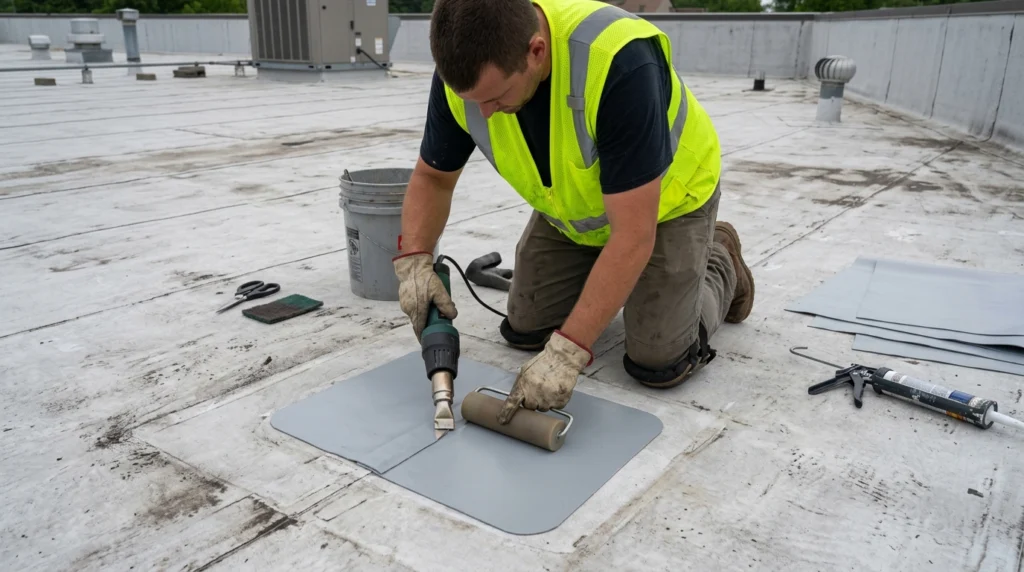
3. Repair Localized Blisters When Appropriate
A small, stable blister may need monitoring rather than immediate intervention. A blister with a split membrane, exposed material, or separated seam may require repair.
The repair method depends on the roofing material and manufacturer instructions. Some systems require the affected section to be opened, prepared, dried, and repaired with compatible materials.
This work should be performed by a qualified commercial roofing contractor. Cutting or puncturing blisters without understanding the roof assembly can make the condition worse.
4. Restore Separated Membrane Seams
When blistering affects a membrane lap, the contractor should evaluate the seam and surrounding materials.
The repair may require restoring the bond, replacing a damaged section, or rebuilding the affected detail.
The objective is to restore the roofing system’s intended waterproofing rather than simply flattening the raised area.
5. Replace Wet Insulation or Damaged Roofing Sections
If moisture has affected the insulation or underlying materials, localized replacement may be necessary.
The contractor should remove unsuitable materials, address the moisture source, and install compatible replacement components.
If damage extends across a large area, broader restoration or roof replacement may be more appropriate.
Our commercial roof repair service in Houston addresses blisters, bubbles, membrane damage, roof leaks, damaged flashing, and other commercial roofing conditions.
6. Consider Roof Restoration or Replacement
If the existing membrane remains suitable, a targeted repair or restoration may extend the roof’s service life.
If the roof has widespread blistering, extensive moisture, repeated seam separation, or multiple deteriorated components, replacement may offer a more practical long term solution.
Our commercial roof replacement service can help property owners evaluate the complete roof assembly before choosing the next step.
Can Roof Coatings Fix Blistering?
Roof coatings can protect suitable existing roof surfaces, but they should not simply cover active blisters.
The contractor must first determine whether the membrane is stable, whether moisture is present, and whether the existing surface can support the coating system.
Coating over trapped moisture or poorly bonded roofing may conceal the underlying condition without correcting it.
When the roof is suitable for restoration, a compatible coating may provide an additional protective layer. Our commercial roof coatings service offers options for eligible commercial roof systems.
The correct approach is to assess the existing roof, repair necessary defects, and confirm compatibility before applying a coating.
How Ponding Water and Flashing Problems Relate to Roof Blistering
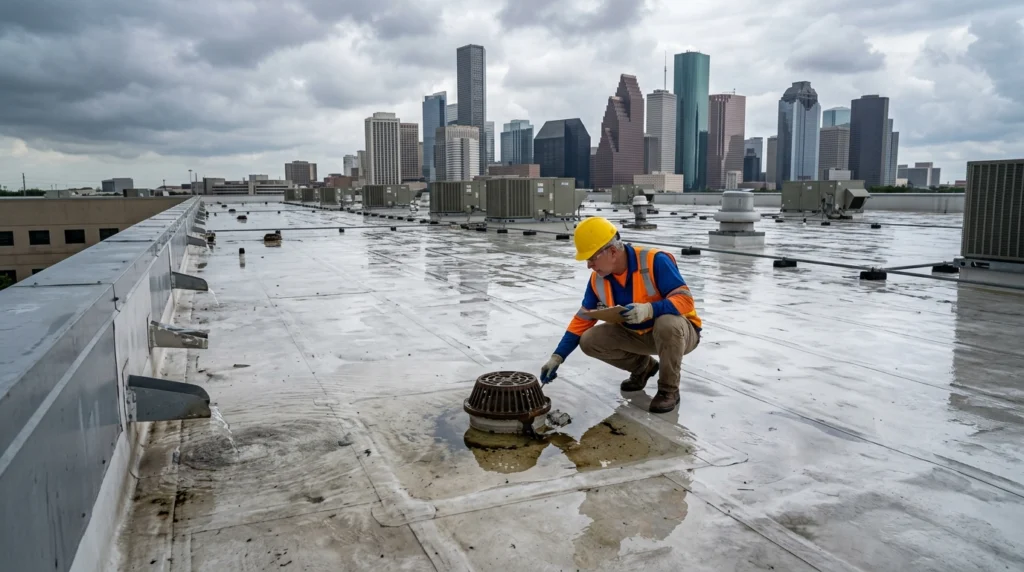
Blistering can occur alongside other commercial roofing conditions. Ponding water, flashing defects, and membrane separation may affect different parts of the same roof.
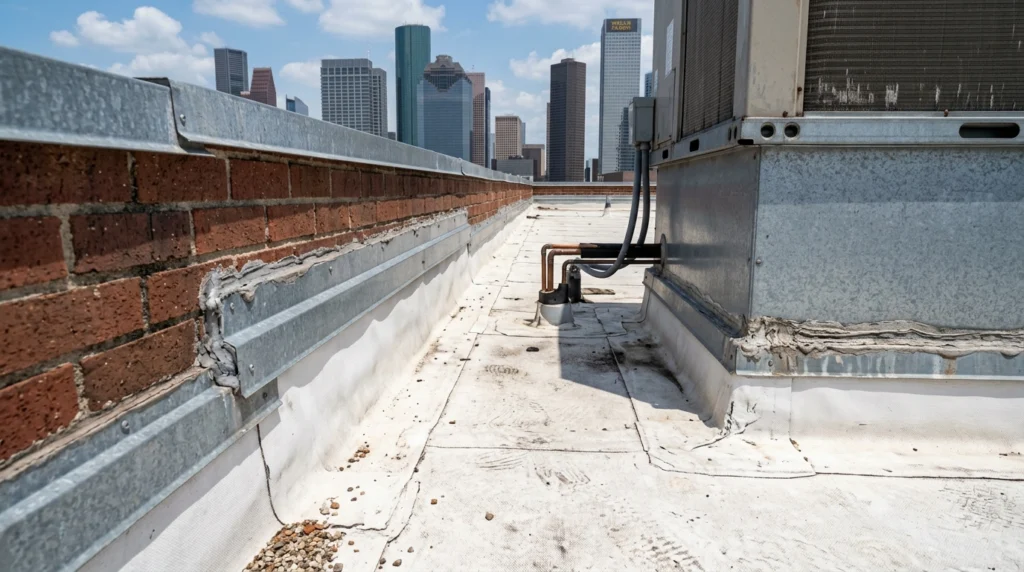
Standing water can indicate inadequate drainage or low areas. Flashing defects can allow moisture to enter around parapet walls, HVAC curbs, penetrations, and roof edges.
If moisture enters the roofing assembly, the contractor should investigate whether it has reached insulation or other layers beneath the membrane.
Read our related guide to ponding water on flat roofs in Houston to learn about drainage causes and solutions.
You can also read Commercial Roof Flashing Failures: What They Are and How to Fix Them for a closer look at roof transitions, failed sealants, and flashing repairs.
Together, these articles cover three connected commercial roofing topics: membrane blistering, drainage conditions, and flashing performance.
Commercial Roof Blistering Across Houston Service Areas
Houston’s heat, humidity, and seasonal storms affect commercial roofing systems throughout the metro area. Blistering can develop when moisture or air becomes trapped beneath roofing materials, while temperature changes increase pressure inside existing pockets. Regular inspections help businesses identify these conditions and choose suitable repairs.
Commercial properties in Katy, TX need roofing systems that handle summer heat, heavy rainfall, and seasonal storms. Professional inspections can help identify membrane bubbles, loose seams, and other signs that require attention.
Businesses looking for commercial roofing in Sugar Land can arrange roof inspections, repairs, and replacement assessments. Inspectors should check for raised membrane areas, moisture beneath the roof surface, and deterioration around flashing details.
For commercial roofing in Cypress, TX, roof maintenance should account for intense sunlight, humidity, and storm exposure. Identifying blisters early can help property managers assess whether localized repairs or broader restoration may be appropriate.
Property owners seeking commercial roofing in Missouri City should also monitor membrane condition, roof seams, drainage areas, and flashing connections. These details can help reveal whether blistering is an isolated concern or part of a wider roofing issue.
Commercial buildings in Pearland, TX face Gulf Coast weather conditions that make roof inspections and drainage maintenance important. When bubbles appear alongside standing water or interior stains, a professional assessment can help identify the underlying cause.
Businesses needing commercial roofing in Spring, TX can include membrane blistering, loose seams, and moisture concerns in their regular roof inspections. Addressing these conditions early can help property managers plan repairs before the affected area expands.
Across these service areas, the right solution depends on the existing roofing system and the condition beneath the blister. A qualified commercial roofing contractor can assess the affected area and recommend monitoring, localized repair, insulation replacement, or broader restoration.
When Should You Call a Houston Commercial Roofing Contractor?
Arrange a professional inspection when blisters begin growing, seams separate, the membrane cracks, or water stains appear inside the building.
You should also seek an assessment when raised areas appear across multiple roof sections or when previous repairs have not resolved the condition.
A contractor can determine whether the roof needs monitoring, localized repair, insulation replacement, restoration, or full replacement.
Commercial property owners should avoid puncturing blisters or applying generic sealants without knowing the roofing system. An unsuitable repair can create additional damage and complicate future work.
Frequently Asked Questions
What causes blistering on commercial roofs?
Blistering can result from trapped air, moisture, vapor pressure, poor membrane adhesion, unsuitable installation conditions, and moisture within the roof assembly.
Does Houston heat cause roof bubbles?
Heat can increase pressure inside existing air or moisture pockets, making blisters more visible or causing them to grow. However, the original cause may involve moisture, poor adhesion, or installation defects.
Can roof blisters cause leaks?
Yes, blisters can contribute to leaks when they split, damage membrane seams, or expose underlying roofing layers. Some intact blisters may remain stable, so the condition should be assessed individually.
Should every commercial roof blister be repaired?
No. Some stable blisters can be monitored. Blisters that grow, split seams, expose roofing materials, or occur with moisture intrusion need professional evaluation.
Can I puncture a roof blister to release trapped air?
No. Puncturing a blister without understanding the roof assembly can damage the membrane and create a path for water. A qualified contractor should determine the appropriate treatment.
Can roof coatings prevent blistering?
Coatings may protect suitable roof surfaces, but they do not automatically correct trapped moisture or poor adhesion. The roof must be evaluated and prepared before coating application.
Does blistering mean I need a new commercial roof?
Not necessarily. Localized blisters may be repairable when the surrounding roof remains in suitable condition. Widespread blistering, wet insulation, and recurring membrane separation may require broader restoration or replacement.
How often should commercial roofs be inspected in Houston?
Inspection frequency depends on the roof system, age, condition, and maintenance requirements. Regular professional inspections and additional checks after major storms help identify developing concerns.
Final Thoughts
Blistering and bubbling on commercial roofs can develop when air, moisture, or vapor becomes trapped within the roofing assembly. Houston’s intense heat can increase pressure inside these pockets, exposing weaknesses in membrane adhesion and installation.
The right repair depends on the cause and condition of the affected area. Some blisters need monitoring, while others require seam repairs, replacement of wet insulation, or broader roof restoration.
If your Houston commercial roof has raised membrane areas, recurring leaks, or separated seams, arrange a professional inspection before choosing a repair method.
Contact our Houston commercial roofing team to discuss your roof condition and determine the appropriate next step.